Nestlé Opens Swiss Deep Tech Hub to Shrink Product Timelines and Factory Costs
Published on 11/21/2026 at 00:30 | Editorial boerse-global.de
Nestlé has cut the ribbon on a Deep Tech Center in the Swiss town of Orbe, a facility the company describes as the first of its kind in the food industry. Roughly 60 employees are on board at launch, and headcount is expected to climb over the medium term. The site's mandate spans artificial intelligence, smart sensors, robotics and connected systems, with work stretching from consumer-facing products to research and industrial manufacturing.
The opening matters to investors for a reason beyond automation: it is a bet on getting new products to market faster while trimming production costs. Chief executive Philipp Navratil believes development time in certain cases could eventually be halved. That is a forward-looking ambition rather than a gain already achieved across the group, and the distinction is central to how the project should be judged.
From prototype to plant-wide rollout
Orbe is designed as more than an idea lab. Nestlé intends to develop, test and validate applications in pilot lines there, with company-wide deployment only after successful validation. A technology hub in Shenzhen complements the Swiss site, tasked with spotting local technologies and speeding their adoption at Nestlé.
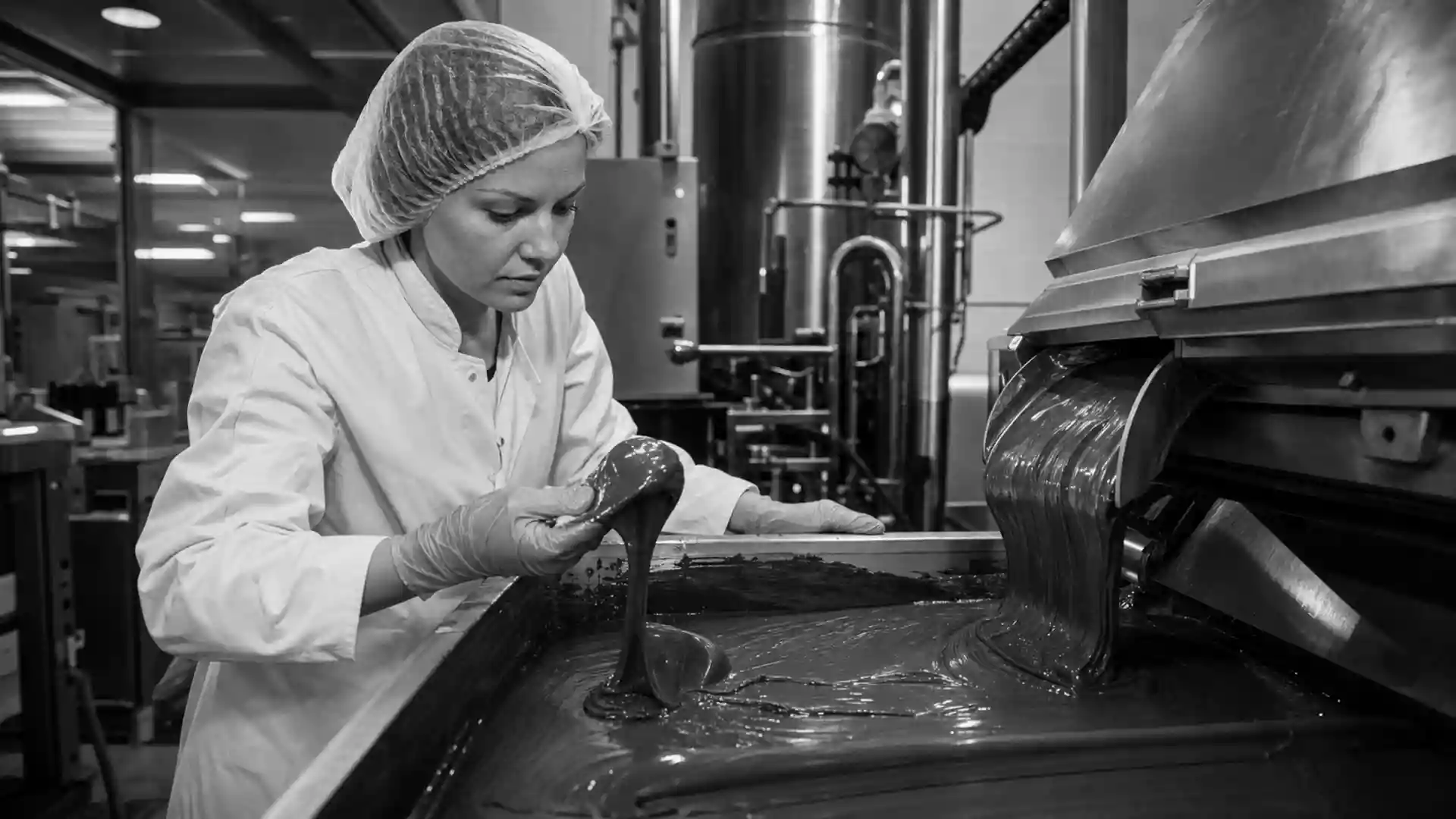
The breadth of the brief — customer experience, R&D and production — is what gives the project its economic weight. New consumer offerings sit alongside more efficient internal operations. In factories, the emphasis falls on better quality, smoother workflows and handing repetitive or physically demanding tasks to machines.
Should investors sell immediately? Or is it worth buying Nestlé?
Nestlé spends around CHF 1.7 billion a year on research and development. AI and related technologies still account for a relatively small but growing slice of that budget.
Microsoft, Boston Dynamics and IBM on board
Technology partners include Microsoft and Boston Dynamics. According to chief technology officer Stefan Palzer, the two supply hardware and AI for factory operations as well as consumer products, and both have confirmed the collaboration. Planned uses range from personalised coffee offerings and more advanced coffee machines to technologies that yield new insights into pet health. Nestlé also wants to read shifting consumer habits more sharply and speed up food development.
Those tie-ups sit alongside an existing arrangement with IBM, based on a 2025 agreement, focused on AI-driven packaging innovation. The company is thus spreading its bets across different partners for different jobs.
Some applications are already concrete. Fifteen robot dogs inspect Nestlé factories for gas leaks and overheating equipment, according to reports from RSI and ATS. AI flags defective coffee capsules, and robots carry out repeated stress tests on coffee machines. The practical thrust is clear: catch faults, support inspections and make operations safer.
Navratil says automation is not meant to push people out of the factories but to change what they do — while creating new specialised roles.
Nestlé at a turning point? This analysis reveals what investors need to know now.
Connectivity brings a security bill
More connected plants raise the bar on cybersecurity, a risk Navratil says he takes seriously. An incident must not endanger either production or customer data.
For shareholders, the venture pairs operating upside with added technical demands. What counts is not the number of applications tested but their successful use across the group. Faster launches, more reliable quality and lower production costs are the yardsticks against which Nestlé's technology push will be measured — and the announcement maps out that path rather than a contribution already booked.
Ad
Nestlé Stock: New Analysis - 21 November
Fresh Nestlé information released. What's the impact for investors? Our latest independent report examines recent figures and market trends.