Nokia's AI Order Book Swells Past EUR 5.3 Billion, but Factory Capacity Sets the Pace
Published on 11/20/2026 at 04:01 | Editorial boerse-global.de
Nokia's sales pipeline is filling faster than its production lines can empty it. That gap — between what customers want to buy and what the company can physically ship — has become the central question for anyone weighing the Finnish network equipment maker's stock.
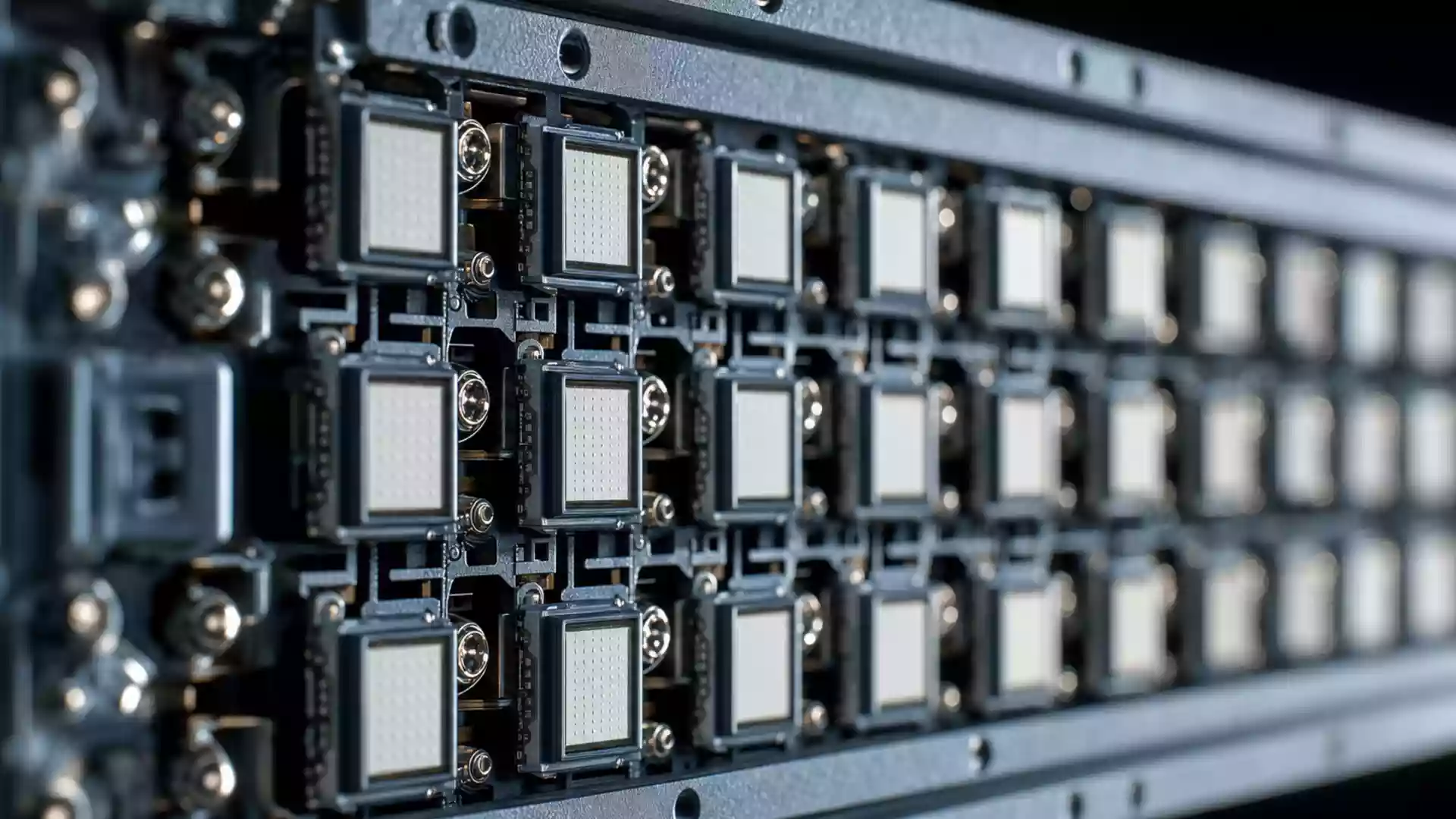
Finance chief Marco Wirén put the order intake from AI and cloud customers at EUR 5.3 billion during Morgan Stanley's European technology, media and telecom conference, a jump of nearly 300% from a year earlier. For IP and optical networks, he projected growth of 25–30%. Demand, in his telling, is not the problem. Manufacturing constraints are what stand between those orders and the revenue line, and they are the main near-term brake on expansion.
Two Yardsticks, Two Verdicts
The market has already priced in a good deal of optimism. A comparison published Thursday puts Nokia's price-to-earnings ratio at 51.0, against 25.3 for the communications sector and 25.9 for a broader peer group. On that earnings-multiple basis, the shares trade above what is modelled as fair value. An analyst-estimate-based valuation, by contrast, concludes the stock sits below its fair worth — a split that hinges on how quickly booked orders turn into delivered equipment.
That divergence explains why Wirén's caveat about production matters more than his headline on demand. The order book shows where the business can grow; the factory floor determines how fast.
A Live Corridor, Not a Demand Gauge
Optical networking has a tangible showcase. Nokia said its optical technology underpins CMC Networks' EMEA-R corridor, a route linking nodes in Johannesburg and Cape Town through Jeddah to Marseille, Frankfurt and London. The project illustrates what the gear does in practice — but it is neither a read on data-centre customer appetite nor evidence that Nokia has cleared the manufacturing bottlenecks Wirén described. Keeping those threads apart is essential: a concrete deployment makes the technology visible, while the speed at which Nokia can serve strong demand is a separate matter entirely.
Should investors sell immediately? Or is it worth buying Nokia?
Bank of America Securities reaffirmed its buy rating and EUR 13.50 price target on 12 November, pointing to growth in optical networks and the outlook for commercial rollout of AI technology in radio access networks in 2027. The call rests on two distinct pillars — optical momentum today and a future radio launch — and Wirén's remarks add the near-term tempo question to that picture.
Ownership Changes Tell You Little About the Roadmap
Nvidia's disclosure that it sold 93.53 million Nokia shares between July and September 2026 has trimmed its stake, but the filing says nothing about how far the two companies' joint work on AI radio technology has advanced. Nokia said Monday that the strategic partnership with Nvidia is proceeding as planned, and both firms continue developing the technology with commercial introduction targeted for 2027, according to Fierce Network. That is a goal, not a milestone already banked — and it likewise does not answer how tightly manufacturing will cap growth in the near term.
Separately, VodafoneThree said Wednesday it will test the Nokia–Nvidia radio technology, first in a UK laboratory and then at selected sites. Early lab measurements with Deutsche Telekom showed typical gains of 10–15% in uplink throughput from device to network. Field trials will reveal whether that edge holds outside controlled conditions. Nokia is chasing operator sales from 2028.
What to Watch Next
The two growth engines sit at very different stages. IP and optical networks already have orders on the books; AI-driven radio must still prove itself in the field. Because both belong to the same infrastructure narrative, it is tempting to fold them into a single growth story — a temptation that offers little help in judging the equity.
For cloud and data-centre customers, Wirén is already describing robust demand. For the joint radio technology with Nvidia, the conversation is about an intended commercial launch. One reflects customer interest; the other, a timeline for a project.
That is why the manufacturing caveat, rather than the upbeat demand signal, deserves the closer read. It supplies a concrete yardstick for management's next set of comments: the question is not simply whether Nokia keeps reporting strong interest, but whether its plants can convert more of it into shippable equipment. As long as production remains the chief short-term constraint in the finance chief's own words, hefty demand stands as an argument for business potential — not a promise of faster growth.
Ad
Nokia Stock: New Analysis - 20 November
Fresh Nokia information released. What's the impact for investors? Our latest independent report examines recent figures and market trends.