

Nvidia's Alliance Web Stretches From Copenhagen Labs to Paris Startups
Published on 10/14/2026 at 15:31 | Editorial boerse-global.de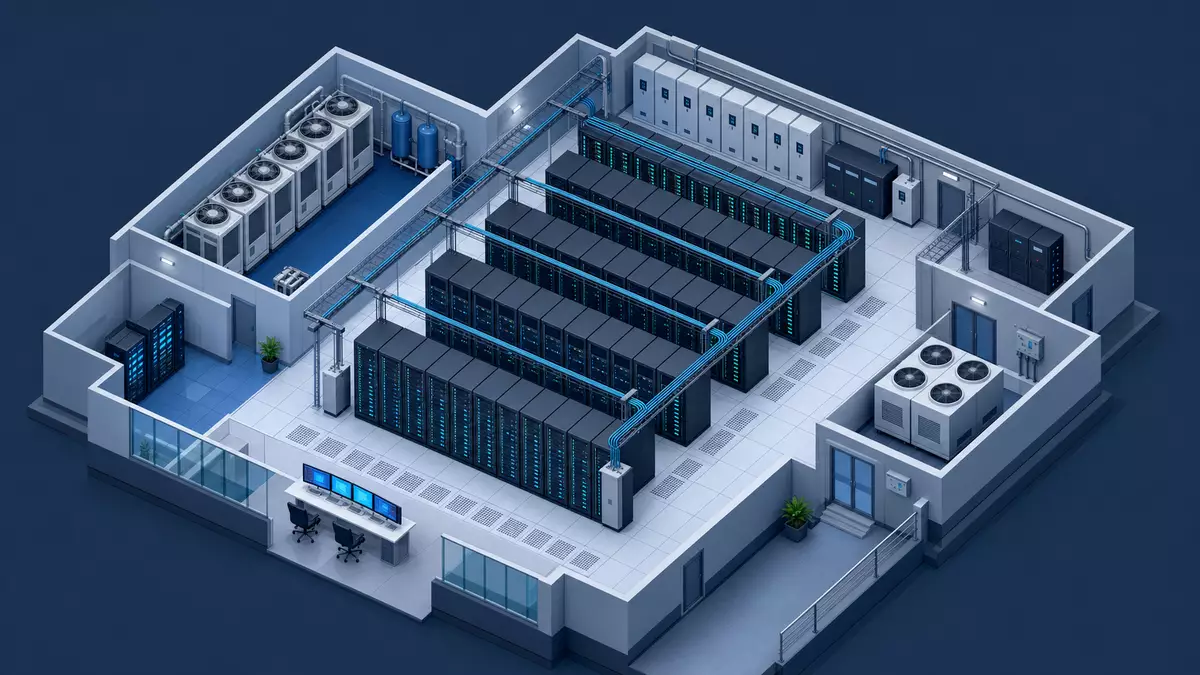
Nvidia's partner roster grew on two fronts this week, with a French cloud provider naming its hardware for a planned Nordic site and a string of equity deals tying the chipmaker to four French startups. Neither development translates directly into chip revenue, yet together they sketch the widening surface area of Nvidia's ecosystem play.
Scaleway disclosed yesterday that its new artificial-intelligence computing site in Copenhagen will run on NVIDIA HGX B300 systems. The company named the specific hardware, giving the project a concrete technical anchor rather than a vague pledge to expand AI capacity. That said, the announcement covers a future facility, not one already humming with workloads — so no revenue figure or delivery timeline can be read off it. What matters for investors is the technology choice itself; the eventual scale and execution will determine whether it carries financial weight.
A different route into French AI
Where Scaleway represents a hardware commitment, Nvidia's French startup positions follow a separate logic. Reuters reported yesterday, citing Les Echos, that the company has agreed stakes in Doctolib, Genesis AI, Pigment and Entalpic. Doctolib confirmed a minority investment, while Genesis AI confirmed Nvidia as a strategic investor.
No size or valuation was disclosed for the Doctolib holding, leaving the health-platform stake impossible to quantify. Genesis AI's confirmation amounts to an investor relationship, not evidence of a specific order for Nvidia gear. The distinction matters: an equity agreement describes a capital tie-up, whereas Scaleway's move concerns the planned deployment of named systems. Both can shape Nvidia's trajectory, but they substantiate different economic facts — and investors should resist bundling them into a single revenue narrative.
Danaher brings the laboratory into view
A third thread runs through Nvidia's push beyond the data center. Its newly announced collaboration with Danaher aims to fuse scientific instruments, lab workflows and data with Nvidia technology, targeting what the partners call autonomous science. The emphasis lands on day-to-day research utility — not raw compute alone, but what that compute does for specific tasks.
Should investors sell immediately? Or is it worth buying Nvidia?
The timing is notable. Reuters reported yesterday on concerns about the scale and returns of AI spending, and the Danaher tie-up offers a fresh application angle against that worry. Whether it pays off commercially remains unproven.
The same question applies to the London Stock Exchange Group, which Reuters says will work with Nvidia to help financial institutions process and analyze historical tick data faster and at greater scale. Danaher addresses scientific workflows; LSEG tackles market-data crunching. Two distinct tasks, one shared test: can new applications justify sustained additional compute capacity? A partnership can unlock technical possibilities, but durable demand requires a payoff that makes further customer investment economically rational.
UBS stays constructive as skeptics speak up
Weighing against the optimism, UBS analyst Timothy Arcuri reportedly reaffirmed his buy rating and $300 price target on Friday, pointing to strong Taiwanese exports of computer equipment in September as a sign of enduring AI infrastructure demand. That view offers a counterweight to the gloomier camp.
Not everyone shares it. Reuters reported yesterday on unease across the chip sector, with Broadcom chief Hock Tan likening AI-sector investment to casino gambling. Reports of progress at Chinese memory-chip maker CXMT added to competitive jitters. The danger for Nvidia is a widening gap between expanding use cases and customers' willingness to keep spending — partnerships could broaden the technology's reach without generating matching demand. Strong equipment orders and convincing customer returns are, after all, different kinds of evidence.
Nvidia is also seeding longer-horizon research. On October 8 it pledged $1 billion over five years for US science, spanning quantum computing, healthcare and energy security. Those commitments are not customer revenue, but in a favorable scenario they could cultivate applications that later carry commercial demand — a long-term option worth separating from the infrastructure orders already visible.
A technical yardstick for the build-out
One tangible checkpoint arrived Monday, when Nvidia and Cisco unveiled an optical module format for AI-factory networks designed to hit 400 Gb/s per channel. Nvidia is working with TE Connectivity and Amphenol on a multi-vendor hardware ecosystem around it.
Progress on that standard, alongside the Danaher and LSEG collaborations, could form the next chain of evidence — from technical infrastructure through practical applications to economically viable demand. For the investment case, what counts is not another announcement but visible movement along that chain.
Ad
Nvidia Stock: New Analysis - 14 October
Fresh Nvidia information released. What's the impact for investors? Our latest independent report examines recent figures and market trends.


