
Rheinmetall's December Deadline: A €12.4 Billion Bet That Could Break the Slump
Published on 09/09/2026 at 13:51 | Editorial boerse-global.de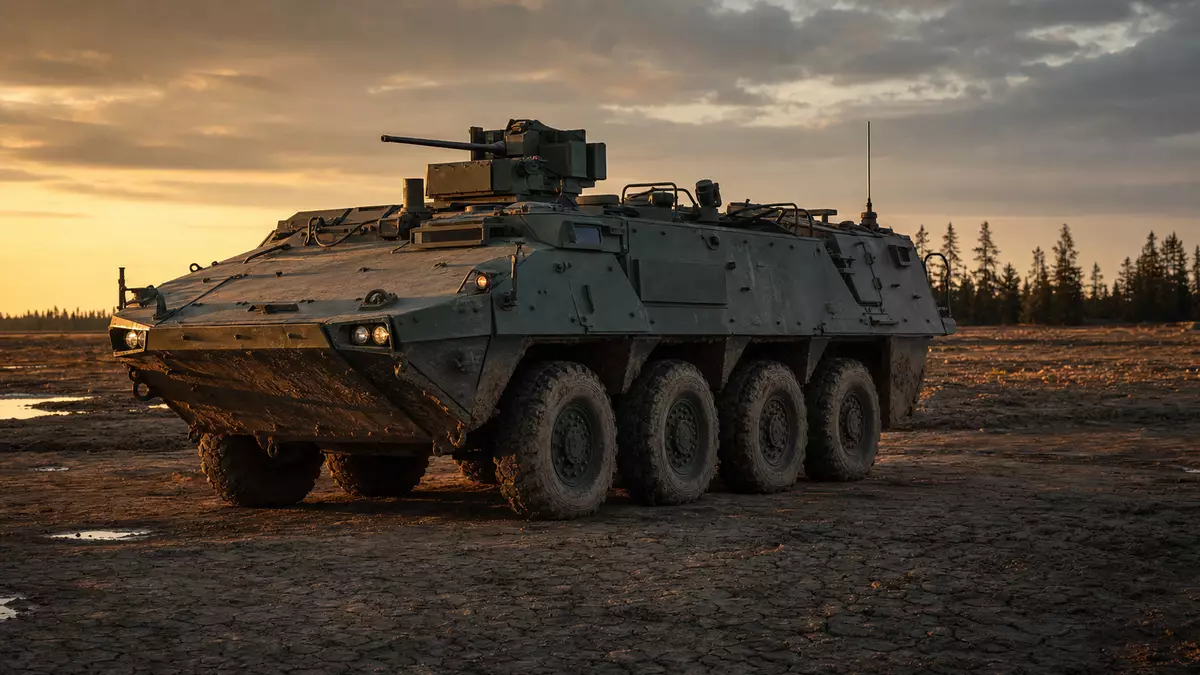
The arithmetic of Rheinmetall's current market predicament is stark. The Düsseldorf-based defence group has just posted what it calls the best quarter in its 137-year history, yet its shares have shed roughly a third of their value since January. The disconnect between operational excellence and investor sentiment has rarely been wider — and the next few months will determine whether the gap finally begins to close.
A Record Quarter That Failed to Impress
The numbers from the second quarter were, by any standard, exceptional. Revenue surged 69 percent to €3.289 billion, operating profit jumped 115 percent to €562 million, and the operating margin came in at 17.1 percent. Management described the period as the strongest in the company's long history.
The market's response was anything but celebratory. On the day the figures were released, the stock at one point tumbled 8.5 percent. Wednesday brought another 2.8 percent decline, undoing much of the previous session's 3 percent rebound from the lowest level since July. No single catalyst explained the latest drop — it appeared to reflect a broader mood in which even stellar operational data is no longer sufficient to win back wary investors.
Guidance Trimmed Despite Record Backlog
Part of the scepticism has a rational foundation. Despite the strong quarterly performance, Rheinmetall was forced to lower its revenue guidance for 2026 following the cancellation of the F126 frigate project. The company now expects annual sales of €13.7 billion to €14.2 billion with an operating margin of around 19 percent — a reduction of roughly €300 million from its earlier projection.
The order book, meanwhile, tells a different story. Backlog has swelled to €80.467 billion, a figure that underscores the group's long-term capacity utilisation and stands in sharp contrast to the short-term share price weakness. New business continues to flow in: in August, the Bundeswehr awarded Rheinmetall a contract for 149 additional mobile rescue stations worth over €500 million, bringing the total value of orders in that segment to more than €600 million.
Should investors sell immediately? Or is it worth buying Rheinmetall?
Pentagon Pipeline Keeps Flowing
The transatlantic channel remains active as well. Early September brought a U.S. Navy order to the Canadian subsidiary Rheinmetall Canada for replacement components for MSU-200NAV mobile launcher systems, valued in the single-digit millions with deliveries running through the end of 2028. That followed a September 2 award from Kongsberg Defence & Aerospace to American Rheinmetall for roughly $710,000 worth of machined components for MCT-30 turrets, to be produced at the Lapeer and Lansing facilities with shipments scheduled for 2026 and 2027.
These contracts are individually modest in financial terms, but they reinforce the group's deepening roots in the American defence ecosystem. The delivery of the first Lynx XM30 prototype to the U.S. Army and a planned investment of around €270 million to expand the Kassel site into a tank and logistics hub round out the picture of a company steadily embedding itself in U.S. procurement programmes.
The Munitions Debate Casts a Shadow
What weighs on the share price, however, is not the order pipeline but the politics of defence spending back home. Media reports about potential cuts to German ammunition expenditures from 2027 onwards have injected a dose of uncertainty into a stock whose entire growth narrative rests on rising European defence budgets. The debate remains preliminary — no decisions have been taken — but for a company so closely tied to government spending, the mere prospect of contraction is enough to give investors pause.
The scale of the retreat is considerable. The stock closed Tuesday at €1,050.00, up 2.7 percent on the day, but that leaves it 48 percent below its 52-week high of €2,007.00 reached on October 3, 2025. It also trades more than 26 percent beneath its 200-day moving average of €1,387.63. Since the start of the year, the decline amounts to 32 percent.
Arminius: The December Catalyst
Attention is now turning to a specific event that could shift the narrative. Project Arminius — the procurement of Boxer wheeled vehicles for the Bundeswehr — enters its final negotiation phase in the second week of September, with parliamentary consideration scheduled for December 9. According to media reports, the deal involves a fixed contract worth approximately €12.4 billion for the vehicles with delivery through 2029, plus a service agreement valued at €4 billion, of which around €2 billion would accrue to Rheinmetall. Combined, that puts roughly €14.4 billion to €14.5 billion of largely secured revenue on the horizon.
Analyst opinion on the stock remains divided. MWB Research upgraded Rheinmetall from Sell to Hold on September 2, yet set a price target of €1,050.00 — essentially the current level — signalling that near-term headwinds are still very much in play.
Management will have opportunities to make its case in the coming days, with appearances scheduled at the Bernstein 23rd Annual Pan-European Conference and the Jefferies Industrials Conference. Those sessions could offer a platform to address the munitions debate directly and contextualise the order flow. Whether that will be enough to reverse the downward drift before the Arminius decision lands in December is another question entirely. For a company delivering record results and accumulating backlog at an unprecedented pace, the market is demanding proof of something more — and the Boxer contract may be the clearest evidence available.
Ad
Rheinmetall Stock: New Analysis - 9 September
Fresh Rheinmetall information released. What's the impact for investors? Our latest independent report examines recent figures and market trends.


