
Rheinmetall's Two-Front Battle: A Pipeline Full of Promise, a Share Price Full of Pain
Published on 09/08/2026 at 15:11 | Editorial boerse-global.de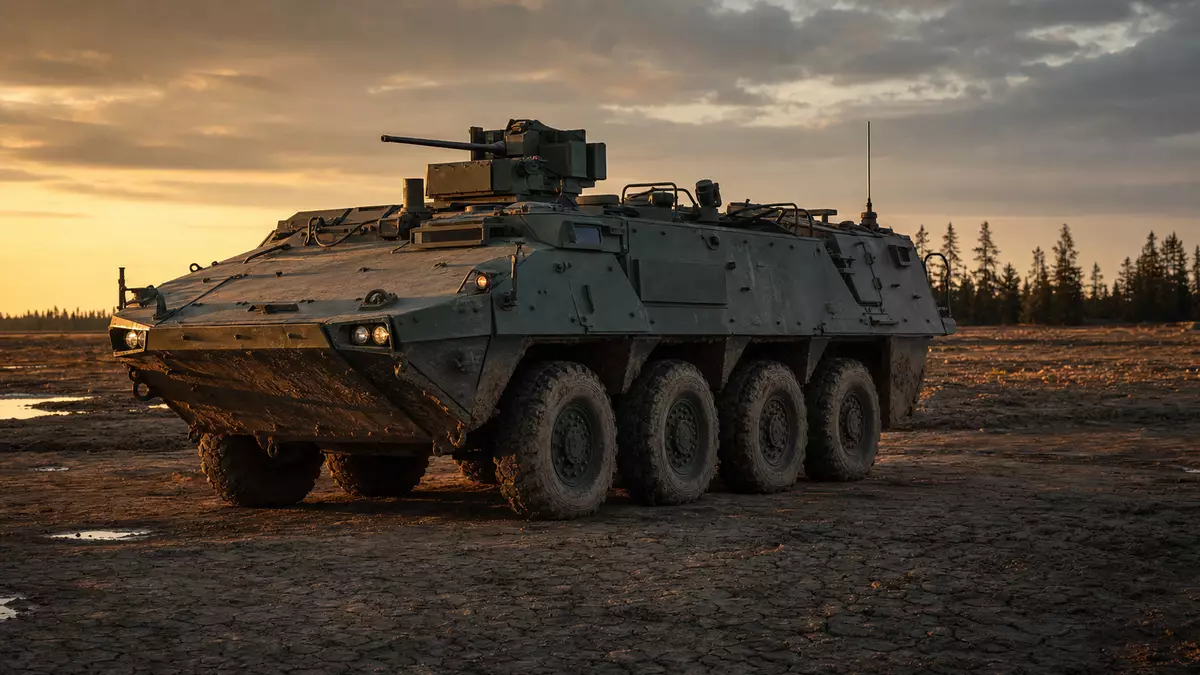
The arithmetic of Rheinmetall's current predicament is brutally simple. The Düsseldorf-based defense group is chasing potential contracts worth tens of billions of euros, its order book has blown through the €80 billion mark, and governments on both sides of the Atlantic keep signing checks. Yet the stock has shed roughly a third of its value since January and sits nearly 50 percent below the all-time high it touched in October. Few European defense names offer such a stark disconnect between operational momentum and market sentiment.
That gap was on full display this week. The shares clawed back 2.3 percent to €1,046.40 on Tuesday, a modest bounce that still leaves the equity trading comfortably beneath its 50-day moving average of €1,098.44. The longer-term picture is even less forgiving: the stock stands about 25 percent below its 200-day average, and on a 30-day view it has fallen 11 percent. Monday's close of €1,023.00 marked a 1.1 percent decline, extending a slide that has wiped out roughly one-third of shareholder value since the start of the year.
The Pipeline: Billions in Play
For all the bearish noise, the contract pipeline has rarely looked richer. In the United States, American Rheinmetall has delivered the first of eight Lynx XM30 prototypes to the US Army, with the vehicle competing for a program covering roughly 4,000 tracked combat vehicles — a prize valued at over $45 billion. A decision remains pending, but the prototype phase is now underway.
Across the Atlantic, the Romanian "Arminius" project is approaching a critical juncture. Final negotiations are slated for the second week of September, with parliamentary consideration scheduled for December 9. The fixed vehicle contract is expected to be worth around €12.4 billion, with deliveries running through 2029. A separate service agreement adds €4 billion to the equation, of which Rheinmetall's share would be €2 billion. An advance payment of roughly 30 percent is anticipated by late December or January.
Smaller but still meaningful orders have been landing with regularity. The Bundeswehr placed an order in late August for 149 additional mobile rescue stations, a contract worth over €500 million that brings the total to 165 systems with a gross value exceeding €600 million. Rheinmetall Canada secured a US Navy order for replacement components of the MSU-200NAV system — a single-digit million-euro deal with deliveries scheduled between late 2026 and late 2028. In the UK, the company participates in the Omnia Training consortium, which has handled the digitalization of combat training since July, with Rheinmetall's share approaching €1 billion spread over 15 years. The group is also investing more than €260 million in expanding its Kassel tank plant.
Should investors sell immediately? Or is it worth buying Rheinmetall?
The Setbacks: F126 and the Delivery Question
Yet for every step forward, there appears to be a stumble. Germany has halted the F126 frigate program, originally valued at €12.8 billion, after already spending around €2.3 billion on it. Instead of the original plan, eight smaller MEKO A-200 frigates will now be built — by ThyssenKrupp Marine Systems, not by Rheinmetall as prime contractor. The loss of that flagship project, which the company had viewed as strategically important, removes a major growth pillar from its naval ambitions.
Delivery schedules are also coming under scrutiny. Media reports citing internal documents from the Bundeswehr and the federal procurement office point to delays in two key programs. The "Schwerer Waffenträger Infanterie" armored wheeled vehicle is reportedly at least eleven months behind its contractual timeline. For the Skyranger air defense tank, originally slated for delivery starting in mid-2026, series production is now said to begin only in mid-2027. Rheinmetall disputes these characterizations, acknowledging only a delay of roughly five months on the Skyranger. Reports of potential quality issues with protective plates produced within the group's orbit have added to the negative headlines.
The Numbers Behind the Skepticism
The market's wariness traces back to early August, when Rheinmetall posted a record quarter — record revenue, record margin, record order intake — but paired those achievements with a lowered annual guidance and a sharply negative free cash flow. The stock dropped as much as 8.5 percent to €1,111 at the time and has never sustainably recovered.
The 2026 outlook has since been trimmed to revenue between €13.7 billion and €14.2 billion, below what the company had previously signaled. Management maintains its operating margin target of roughly 19 percent despite the reduced sales forecast — a signal that profitability, rather than growth, will be the near-term priority. The negative free cash flow in the latest quarter was attributed to shifted advance payments, higher customer receivables from end-of-quarter revenue recognition, and inventory buildup for coming periods.
The order book nonetheless remains a formidable buffer. New order nominations of €11.371 billion in the second quarter pushed the total backlog past €80 billion — evidence, if any were needed, of the group's underlying operational substance.
A Leadership Test
The accumulation of negative headlines is intensifying pressure on CEO Armin Papperger, particularly with the stock trading far below its 200-day average of €1,394.54. Management changes have already begun: Vera Saal took over as head of human resources and labor director on September 1, 2025.
The immediate test comes on November 5, when Rheinmetall releases its third-quarter results — the first opportunity to demonstrate whether the revised guidance holds. Between now and then, the Romanian negotiations and the US vehicle decision will dominate attention. For a stock that has become highly sensitive to news flow, the coming weeks offer ample opportunity for the narrative to shift in either direction.
Ad
Rheinmetall Stock: New Analysis - 8 September
Fresh Rheinmetall information released. What's the impact for investors? Our latest independent report examines recent figures and market trends.


