
Siemens Energy's CEO Steps Into the Political Fray While the Company Pushes Deeper Into Nuclear
Published on 09/09/2026 at 10:53 | Editorial boerse-global.de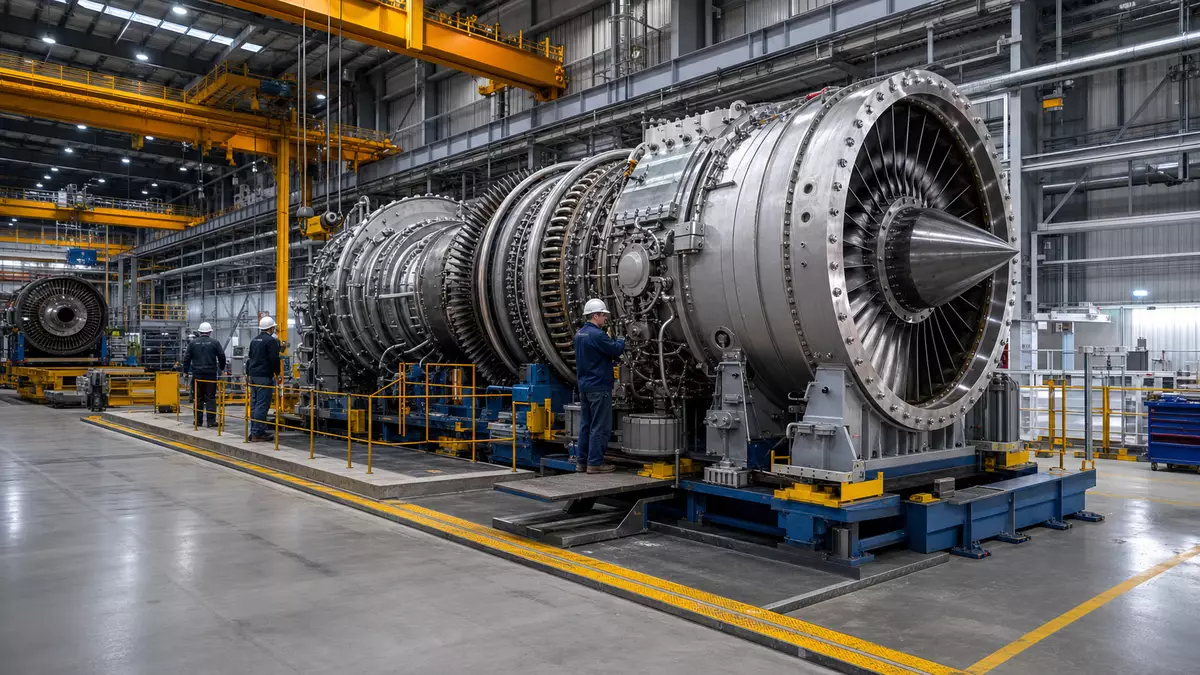
The chief executive of Siemens Energy has never been one to shy away from a difficult conversation, but Christian Bruch's latest intervention marks a notable departure from the usual script of order books and turbine margins. In a pointed warning issued on Friday, Bruch criticised the economic platform of Germany's AfD party, describing any potential pivot back toward coal and nuclear power as a "dramatically wrong signal" for the country as an industrial hub.
The timing is anything but accidental. Siemens Energy is in the midst of preparing the carve-out of its "Transformation of Industry" division, a unit employing roughly 17,000 people and generating around €5.7 billion in revenue. With that demerger set to define the company's capital markets narrative over the coming months, Bruch's willingness to take a public stance suggests a leader confident enough in his operational footing to wade into contested political terrain.
That confidence is underpinned by a formidable run of numbers. Third-quarter order intake hit a fresh record at €17.9 billion, the backlog swelled to €162 billion, and the previously troubled wind turbine subsidiary Siemens Gamesa posted its first profitable quarter since fiscal 2022. A company wrestling with operational weakness would scarcely have the luxury of speaking out on such matters; Bruch's clarity reflects the strength of the underlying business.
Yet the share price tells a more nuanced story. The stock currently changes hands at €147.58, roughly 24 percent below its 52-week high of €195.38 reached in April. At the same time, it remains comfortably above the €88.42 trough struck last September — evidence that the broader upward trajectory of the past twelve months remains intact, even if momentum has cooled of late. The closing price of €147.64 on Tuesday sat approximately three percent beneath the 50-day moving average of €152.24, pointing to a consolidation phase after a 23 percent advance since the start of the year.
Should investors sell immediately? Or is it worth buying Siemens Energy?
Where Bruch's political commentary has drawn attention to the energy transition, the company has simultaneously been building bridges to a technology that his remarks implicitly criticised. Siemens Energy has agreed to manufacture steam turbine components for Rolls-Royce SMR's small modular reactors at its Newcastle facility, according to media reports. The arrangement positions the German group as a supplier to the British partner's nuclear division, extending its reach beyond conventional gas turbines and grid equipment into the emerging field of compact atomic power.
Small modular reactors are increasingly viewed in several countries as a building block for future energy supply, particularly where decentralised, low-carbon capacity is in demand. For Siemens Energy, the collaboration adds another leg to its component business, though the financial dimensions of the deal have not been disclosed.
The nuclear tie-up sits awkwardly alongside Bruch's warning about a return to atomic power in Germany — a tension that reflects the company's global footprint versus its domestic political sensitivities. In Germany, the CEO has also cautioned that the country would be hit particularly hard in the event of attacks on energy infrastructure, a remark that lands amid growing political focus on supply security and the protection of critical assets.
Analysts remain divided on the equity story. MWB Research reaffirmed its sell recommendation on Friday, describing the valuation as still "demanding" relative to fundamental metrics. That sceptical voice stands against a largely optimistic backdrop from other investment banks, underscoring the divergence of opinion as the shares navigate a period of elevated volatility — the 30-day figure stands at 44 percent, a level that suggests sharp swings in either direction remain likely.
For investors, the picture is one of countervailing forces. The Rolls-Royce SMR agreement strengthens the long-term strategic position in nuclear technology, while the record order pipeline and the forthcoming spinoff provide tangible catalysts. Against that, valuation concerns persist, and Bruch's willingness to engage in political debate introduces a variable that is difficult to model.
The chief executive's intervention may yet prove consequential in ways that extend beyond the share price. By staking out a position on the future of Germany's industrial policy, Bruch has signalled that Siemens Energy intends to be a participant in the national conversation about energy — not merely a beneficiary of it. Whether that bet pays off commercially remains to be seen, but the company's leadership has clearly concluded that silence was no longer a viable option.
Ad
Siemens Energy Stock: New Analysis - 9 September
Fresh Siemens Energy information released. What's the impact for investors? Our latest independent report examines recent figures and market trends.


