Thyssenkrupp's Duisburg Delay Puts Project Execution, Not Steel Sentiment, at the Heart of the Investment Case
Published on 11/15/2026 at 10:21 | Editorial boerse-global.de
Thyssenkrupp shares fell 2.1% on Friday, dragged down by a weak session for European steel names. But for anyone weighing a position in the stock, the more consequential question sits elsewhere: whether the group can deliver on a flagship project whose timetable has just moved sharply to the right.
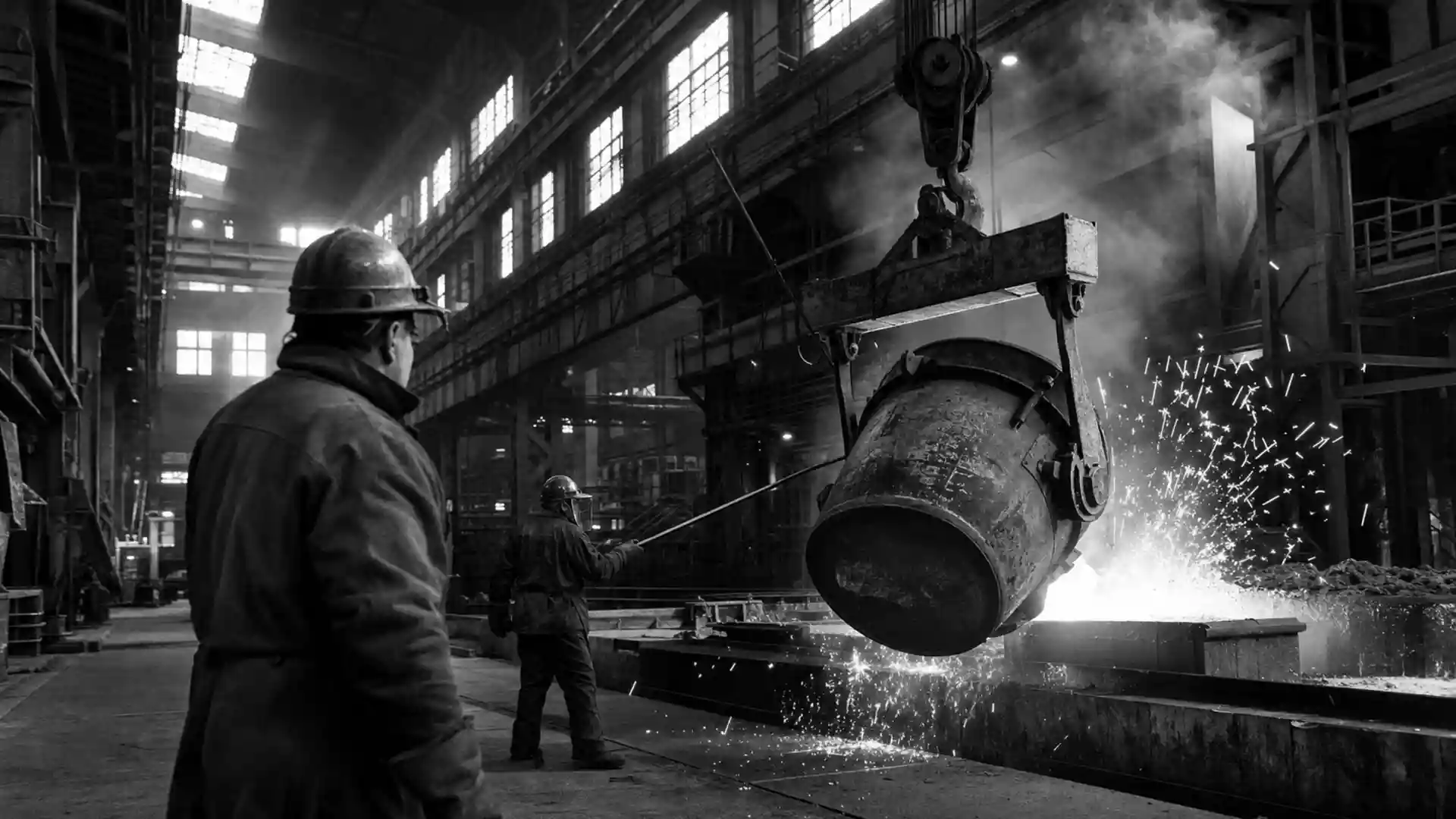
That project is the direct-reduction plant in Duisburg. Thyssenkrupp Steel Europe confirmed on 6 November that the facility will not start operating until 2029, two years later than the original 2027 target. The company pointed to the engineering phase as the main reason for the shift.
The revised schedule turns project reliability into a central test. A brighter mood across steel equities might ease valuation pressure, but on its own it would say nothing about progress at the plant. Investors betting on a durable re-rating should keep those two layers apart: a sector recovery is a market signal, while credible advances in Duisburg would be a company-specific argument.
A Lower Target, an Unchanged Rating
LBBW offered a useful reference point on 4 November, trimming its price target to EUR 18 from EUR 19 while keeping its "Buy" rating. The pairing is striking — the analysts cut their headline number without abandoning their positive view on the equity. It is not a contradiction, but it does underline the difference between an overall assessment of a stock and the level of expectations attached to it.
Should investors sell immediately? Or is it worth buying Thyssenkrupp?
That distinction matters more than usual for a company in the middle of a decarbonisation programme. Announcing a plant and commissioning it are separate stages, and the technical planning is part of the project rather than a footnote to it. A single trading session is far too short a yardstick for judging an industrial transformation — just as it would be too convenient to wave away every operational setback by pointing to long-term prospects.
Two Risks That Demand Different Answers
The genuine danger lies in the combination of a persistently soft sector and fresh trouble in project execution. The Duisburg delay concerns a specific undertaking by Thyssenkrupp Steel Europe, and each of the two pressures requires its own response. Should the new timetable come under strain again, confidence in the plan's predictability would suffer — and a rally in rival steelmakers could not offset that. Conversely, a stable project schedule would not by itself answer a tougher pricing environment.
A more cautious stance therefore rests on more than the latest share-price drop. It rests on the judgment that operational confirmation may take longer to arrive while the sector offers little support — a substantive counterargument to hopes of a swift re-rating.
The more favourable scenario requires the sector headwind to fade and the new project roadmap to hold. Under those conditions, the debate could shift back towards what Thyssenkrupp is actually delivering. The delay would remain part of the valuation, but it would not have to overshadow every operational development indefinitely. Even then, an unchanged schedule would be a precondition rather than proof of a successful project.
The Next Hard Date
The release of the 2025/2026 annual report is scheduled for 8 December, alongside an annual press conference and a call for analysts and investors. That gives shareholders the next announced opportunity to assess results and management commentary side by side.
The order matters: judge the business first, then weigh the promise of the transformation. A forward-looking narrative should complement the economic stocktaking, not replace it — and a long project runway should not automatically dictate the entire investment verdict. LBBW's combination of a lower target and a maintained Buy makes that tension visible without resolving it. What it does supply is a sensible test: Thyssenkrupp should be measured not by the scale of its industrial ambition alone, but by how business performance, execution and expectations fit together.
Ad
Thyssenkrupp Stock: New Analysis - 15 November
Fresh Thyssenkrupp information released. What's the impact for investors? Our latest independent report examines recent figures and market trends.