VanEck Rare Earth ETF Clings to 9.15 Euros as Tokyo's Yttrium Warning Collides With GM's Cancelled Magnet Deal
Published on 10/24/2026 at 18:50 | Editorial boerse-global.de
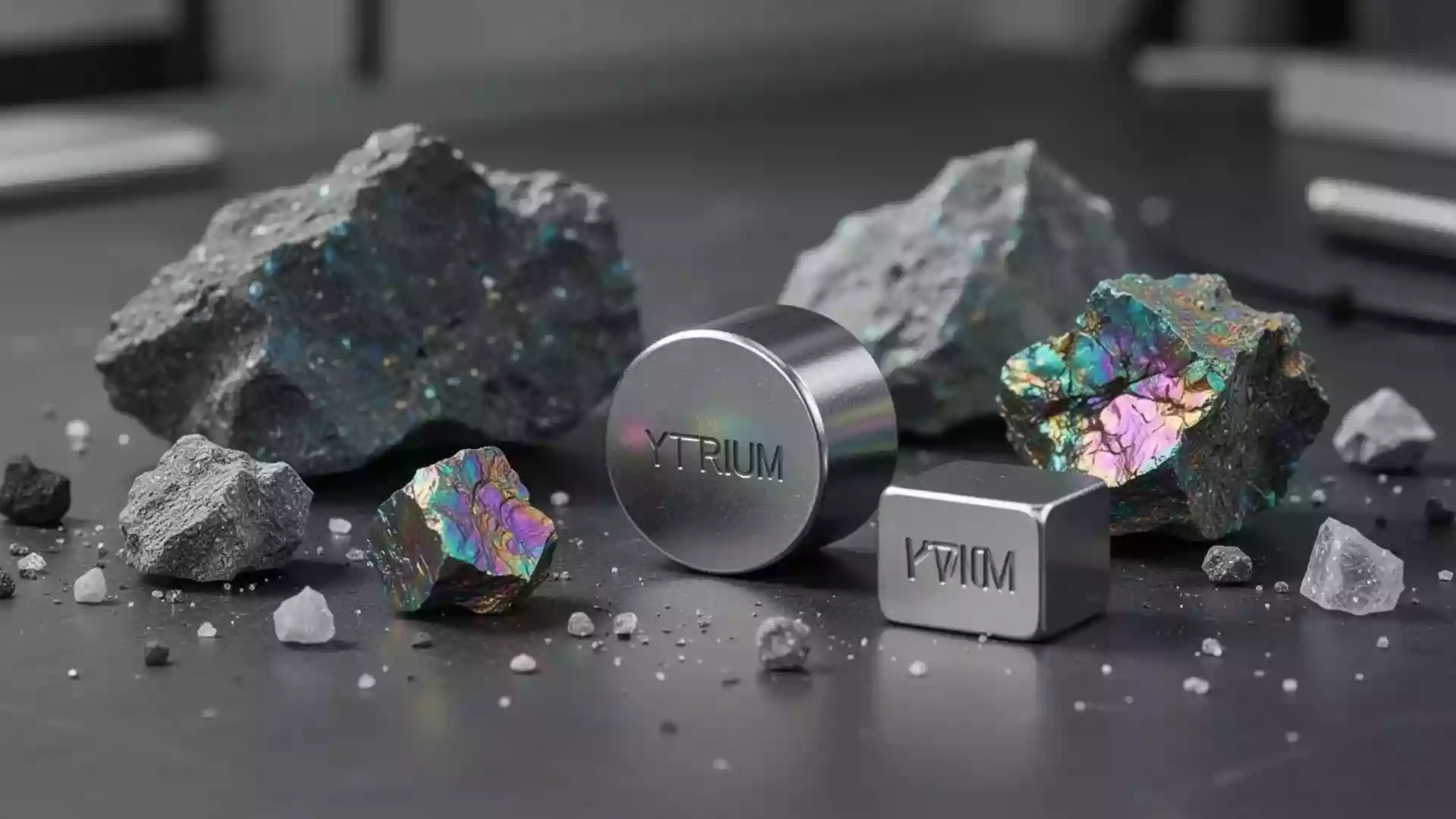
Japan has asked Washington to lean on Beijing to loosen its rare earth export restrictions, the Financial Times reported, amid fears that Tokyo could run short of yttrium — a metal used in high-performance magnets and lasers — within months. The request, made on Tuesday, marks an escalation in the dispute between China and Japan, and it lands squarely on a sector already nursing heavy losses.
Beijing pushed back the following day. Foreign ministry spokesperson Mao Ning defended the export curbs on Japan, citing concerns about the country's "remilitarisation" in comments reported by Anadolu. The exchange makes plain how tightly Peking now wields rare earth control as a foreign policy lever — a pattern already on display in the export restrictions on rare earth magnets imposed in September.
Buyers Start Rethinking Their Supply Lines
Uncertainty over supply chains is pushing even the largest corporate buyers to act. Taiwan Semiconductor Manufacturing Company, according to Reuters, has spent roughly the past two days quizzing suppliers about motors built without rare earths for its factory automation, aiming to cut its exposure to Chinese export controls. Those talks are still at an early stage and no broad shift is yet visible, but the fact that one of the world's most important technology companies is asking the question at all shows how seriously industry is treating the risk of another supply interruption.
For holders of the VanEck Rare Earth ETF (ISIN IE0002PG6CA6), that cuts both ways. The spat between Peking and Tokyo sharpens scarcity worries around individual metals such as yttrium, which could push prices higher. Yet moves like TSMC's signal that big consumers are working to reduce their dependence over the longer haul — a factor that could weigh on demand down the road.
A Cancelled Contract in South Carolina
The news flow has not been one-way. General Motors has scrapped its long-term supply agreement with e-VAC Magnetics, the US subsidiary of Germany's Vacuumschmelze, which was to have delivered magnets from a plant in South Carolina, Reuters reported. VAC has since launched arbitration proceedings. Energy Fuels, which agreed in June to acquire VAC, disclosed the termination in filings with the US Securities and Exchange Commission.
Should investors sell immediately? Or is it worth buying VanEck Seltene Erden ETF?
The episode throws a harsh light on the vulnerability of Western plans to build magnet production independent of China — precisely the projects meant to loosen reliance on Chinese supply chains and a core plank of the investment case for the sector the ETF tracks. When a major customer like GM walks away, the economics of new US capacity come into question before it has even ramped up.
Price Action Tells Its Own Story
The fund closed Friday at 9.15 euros, up 0.3% on the day. The weekly picture is uglier: a 4.0% decline over seven days and a 23% drop over the month. It sits just 2.7% above its 23 October low and 51% below its 52-week high of 18.76 euros, touched in May. A 14-day RSI of 20.1 flags a technically deeply oversold position. Since the start of the year the ETF is down 27%.
That weakness does not stem from single headlines such as the GM termination alone. William Blair analyst Neal Dingmann attributed the recent selling wave in rare earth stocks to resurgent rate concerns, a hot inflation reading and headline-driven industry news, along with short-term liquidity worries at individual miners.
Commodity prices offer little support for the gloom. Chinese-quoted praseodymium-neodymium oxide eased slightly of late but remains at a high level, while terbium oxide also softened and dysprosium was barely changed.
Projects Advancing, and a Chinese Grip That Tightens
Not every development of recent days is negative. Phoenix Tailings announced a rare earth separation plant in Rochester, New York, carrying a $375 million investment. The facility is designed to process up to 18,000 tonnes of feedstock a year and produce more than 4,400 tonnes of separated oxides. New York State is backing the project with tax credits of up to $3 million, alongside a $500 million conditional loan from the US Department of War.
On the Chinese side, state group China Rare Earth Group is extending its grip on the supply chain: Shenghe Resources is selling majority stakes in its smelting and separation subsidiaries to a unit of the state conglomerate for the equivalent of $248 million to $271 million, according to Reuters. Such consolidation underlines how firmly processing power remains concentrated in China — a structural headwind for Western diversification efforts like the failed GM contract.
With net assets of $888.3 million, the VanEck Rare Earth ETF faces a mixed picture: long-term supportive commodity trends on one side, short-term setbacks among individual holdings and a macro backdrop under strain on the other. Whether Peking widens or tightens its restrictions on Tokyo could bring sharp price moves in individual metals in the weeks ahead. And with every month that buyers like TSMC spend hunting alternatives, the structural risk to long-term rare earth demand grows.
Ad
VanEck Seltene Erden ETF Stock: New Analysis - 24 October
Fresh VanEck Seltene Erden ETF information released. What's the impact for investors? Our latest independent report examines recent figures and market trends.