
Mike Steiner: Contemporary Art Unbound – Avant-garde, Video, and Abstraction from Berlin
25.12.2025 - 08:28:36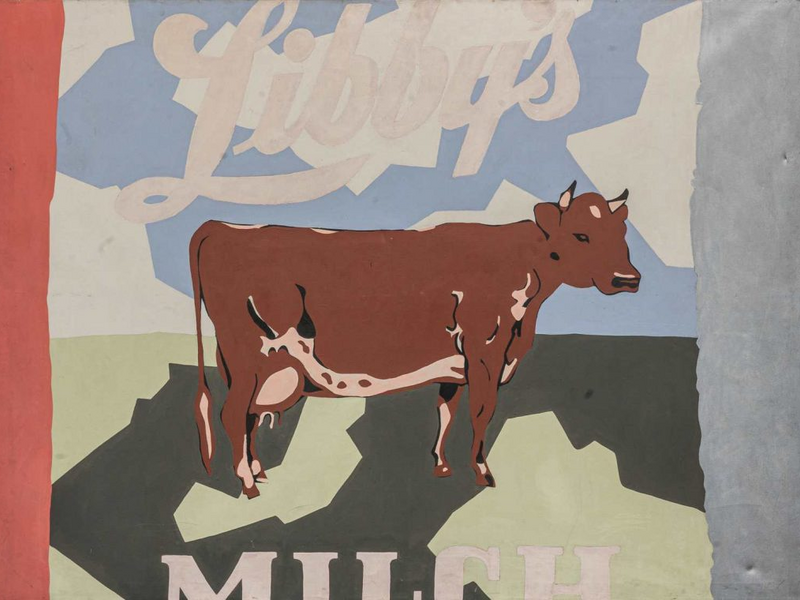
Mike Steiner’s creative output continually invites a crucial question: What happens to contemporary art when one dares to dissolve boundaries between painting, performance, and the moving image? Mike Steiner—whose oeuvre stretches from abstract compositions to genre-shifting video art—transformed the Berlin art world and played a vital role in shaping the global avant-garde. As a central figure in both Contemporary Arts Berlin and the international scene, Steiner advanced art’s definitions with youthful courage and mature reflection.
Discover contemporary art by Mike Steiner now – explore his legacy online
Atmosphere and experimentation are the heartbeats of Steiner's art. His early work—emerging in the post-war Berlin of the 1950s and 60s—caught critics' eyes with a distinct combination of abstract painting and experimental sensibility. With the “Stillleben mit Krug” (1958), first exhibited at the Große Berliner Kunstausstellung, Steiner’s painterly voice found early public resonance. His formative years, bolstered by studies at the State University of Fine Arts in Berlin and extended sojourns in New York, exposed him to the thriving worlds of Pop Art and Fluxus, allowing him to absorb influences from luminaries like Allan Kaprow, Robert Motherwell, and Lil Picard. These encounters would forever alter his relationship to both painting and the conceptual possibilities of art.
What sets Mike Steiner apart within contemporary art is not solely mastery of academic disciplines, but a restless desire for reinvention. Steiner’s Hotel Steiner, founded in 1970 close to Berlin’s Kurfürstendamm, became both a home and pilgrimage site for international artists. Much like the Chelsea Hotel in New York, it drew figures from Germany’s Joseph Beuys to American experimentalists, blurring boundaries between life, art, and social experiment. Lil Picard famously likened the hotel’s atmosphere to a modern-day Café Voltaire—intellectual, bohemian, and permanently in motion.
It was through these close encounters and exchanges that Steiner’s artistic direction shifted toward the possibilities of multimedia. Inspired by the avant-garde film and video scenes in both New York and Berlin, Steiner made his first ground-breaking forays into video art in the early 1970s—often collaborating with Fluxus pioneer Al Hansen. A pivotal episode came in 1974, when, working in Florence’s Studio Art/Tapes/22, he created his first independent video works and, upon returning to Berlin, established the Studiogalerie Mike Steiner: a crucible for video, performance, and interdisciplinary art at the heart of Berlin’s creative resurgence.
Indeed, the Studiogalerie quickly became legendary—for both the artists it hosted and the artistic energy it channeled. It was here that performances from Marina Abramovi? (“Freeing the Body,” 1976), Valie Export, Jochen Gerz, Carolee Schneemann and others met video’s recording eye. Steiner, both facilitator and documentarian, recorded and curated these actions, anchoring them for posterity. His work in the 1970s anticipated—and arguably defined—the Berlin school of video art, setting him alongside contemporaries such as Nam June Paik, Valie Export, and Bill Viola in both influence and innovation.
The infamous 1976 collaboration with Ulay, featuring the performative ‘theft’ of Spitzweg’s “Der arme Poet” from the Neue Nationalgalerie, still echoes as a historic provocation. This act—meticulously documented for video—exposed the boundaries of legality, authorship, and artistic autonomy, challenging how contemporary art interacts with public institutions and social narratives. Curators at Hamburger Bahnhof and prestigious festivals such as the International Forum of New Cinema (Berlinale) recognized the lasting shockwave of these interventions, placing Steiner at the forefront of performance documentation.
The gravity of Mike Steiner's legacy took center stage at his landmark exhibition “COLOR WORKS” (1999) at Hamburger Bahnhof – Museum für Gegenwart, the National Gallery of Contemporary Art in Berlin. Here, both his painted and video-based oeuvres conversed: vibrant, abstract ‘color fields’ standing in gaudy, tactile contrast with the flickering poetry of his video and “Painted Tapes.” These cross-genre explorations, especially from the late 1970s onward—“Painted Tapes,” for instance, blend brushwork with video, expanding abstraction into the moving image and challenging conventions both modern and post-modern.
Like Gerhard Richter, who navigated realism and abstraction, or Joseph Beuys, who radicalized the performative space, Steiner remains unclassifiable yet undeniably central. His work, compared with minimalist contemporaries such as Nadja Vilenne, and the monumental video pieces of Bill Viola or Gary Hill, occupies its own singular crossroads of technical ingenuity and poetic risk.
Steiner also built a monumental video art archive—beginning with the acquisition of Reiner Ruthenbeck’s “Objekt zur teilweisen Verdeckung einer Videoszene” (1974)—which would later become the keystone for Berlin Video and, ultimately, a vital part of the collection at Hamburger Bahnhof. His video collection, spanning works from Ulay and Abramovi? to Maciunas, Kaprow, and Nam June Paik, situates Steiner as an invaluable chronicler and connector in the networks of contemporary art.
Yet after he disbanded the Studiogalerie in 1981, Steiner’s creative focus shifted again: he committed himself to mediating art, organizing symposia, lecturing, and expanding his experimentation into photography, collage, Copy Art, and installations. The late 1980s and 90s saw a flourishing of his “Painted Tapes” and collage-based abstractions. Even after suffering a stroke in 2006, Steiner remained committed to his practice, turning increasingly toward large-scale abstract painting and textile works in his Berlin studio.
Today, the resonance of Mike Steiner’s creative journey is everywhere—in the Hamburger Bahnhof archives, in the evolution of Berlin’s contemporary arts culture, and in the deep connections forged between performance, moving image, and abstract painting. His monographic exhibitions from Berlin to San Francisco, and frequent shows at DNA Galerie and others, testify to a restless mind always in dialogue with the present. A glance at the official site (More on Mike Steiner and his contemporary art legacy – official artist page ?) offers a trove of further insights, images, and historical context.
What can we ultimately distil from Mike Steiner’s boundary-shattering career? His experimental courage, his readiness to question media, and his tireless advocacy for performance and video make him a cornerstone in the history of contemporary art. To engage with his archive, or to experience his canvases and installations up close, is to confront the living pulse of the avant-garde—and to recognize, in his risk-taking, something of the irrepressible energy that keeps art moving forward.


