Gold’s Reserve Dominance Hits 27%, But Oil-Driven Rate Fears Keep Price on the Defensive
03.06.2026 - 16:53:42 | boerse-global.de
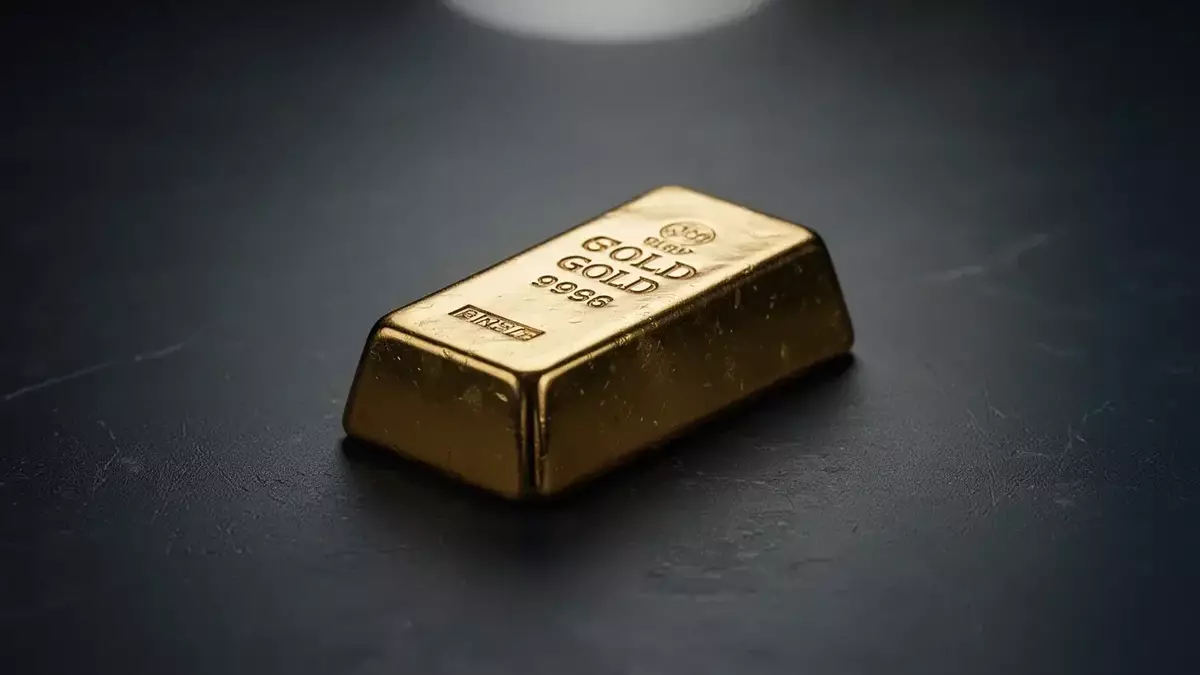
Gold now accounts for 27% of global official reserve assets, according to a European Central Bank report — a record share that vaults it past US Treasuries (22%) and the euro (15%). The surge is largely a valuation effect: the precious metal rallied nearly 60% in 2025 and roughly 30% the year before. Yet the spot price on Wednesday stood at $4,476.50, down 0.2% on the day, more than 20% below its 52-week high of $5,627. The gap between institutional demand and market price has rarely been wider.
Central banks remain committed buyers. In April they added a net 17 tonnes to their holdings, recovering from a rare net-sale in March. Over the first quarter of 2026, net purchases reached 244 tonnes. China, Poland, Turkey, and India have been steadily expanding their gold reserves, seeking shelter from geopolitical risk and market volatility. At the same time, global mine supply is stagnating: new large deposits are increasingly rare, and existing mines are becoming harder to access. The jewelry sector is losing ground to investment demand in bars and coins, deepening the structural supply squeeze.
The macro backdrop also supports gold. The International Monetary Fund now treats its “adverse scenario” of slower growth with higher inflation as the new reality. Gold has historically hedged against currency erosion, especially when real interest rates are negative or low. The Iran conflict has reinforced that case: oil prices climbed more than 1% in early trading after Iranian missile attacks on Bahrain and Kuwait, despite US and local forces intercepting most projectiles.
Should investors sell immediately? Or is it worth buying Gold?
But higher energy prices are a double-edged sword. The same geopolitical tensions that usually trigger a safe-haven bid into gold are now feeding inflation expectations. That pushes up bond yields and strengthens the dollar — both headwinds for bullion, which offers no yield. As traders price in a prolonged period of elevated interest rates, gold’s crisis reflex is being overwhelmed by interest-rate anxiety. US gold futures for August delivery slipped 0.3% to $4,504.40 an ounce.
Diplomatic channels remain blocked. US Secretary of State Marco Rubio ruled out sanctions relief for Iran in exchange for reopening the Strait of Hormuz, tying any concessions to progress on the nuclear program. Every escalation in the Strait immediately reverberates through oil and gas prices, reinforcing the inflation-rate linkage that is currently capping gold.
Technically, gold must reclaim its 50-day moving average of $4,641 to signal a shift in sentiment. Until it does, the disconnect between fundamental strength — central bank buying, supply constraints, and macro uncertainty — and chart weakness will persist. For now, rising oil prices and the Federal Reserve’s cautious stance are drowning out the sirens in the Gulf.
Ad
Gold Stock: New Analysis - 3 June
Fresh Gold information released. What's the impact for investors? Our latest independent report examines recent figures and market trends.