Gold Slips Below $4,500 as Oil’s Inflation Signal Overwhelms Middle East Crisis Premium
03.06.2026 - 15:22:36 | boerse-global.de
The classic safe-haven trade has been turned on its head. Iranian ballistic missiles and drones struck at targets in Bahrain and Kuwait overnight, triggering air-raid sirens and US defensive responses — yet gold did what it rarely does in a geopolitical storm: it fell.
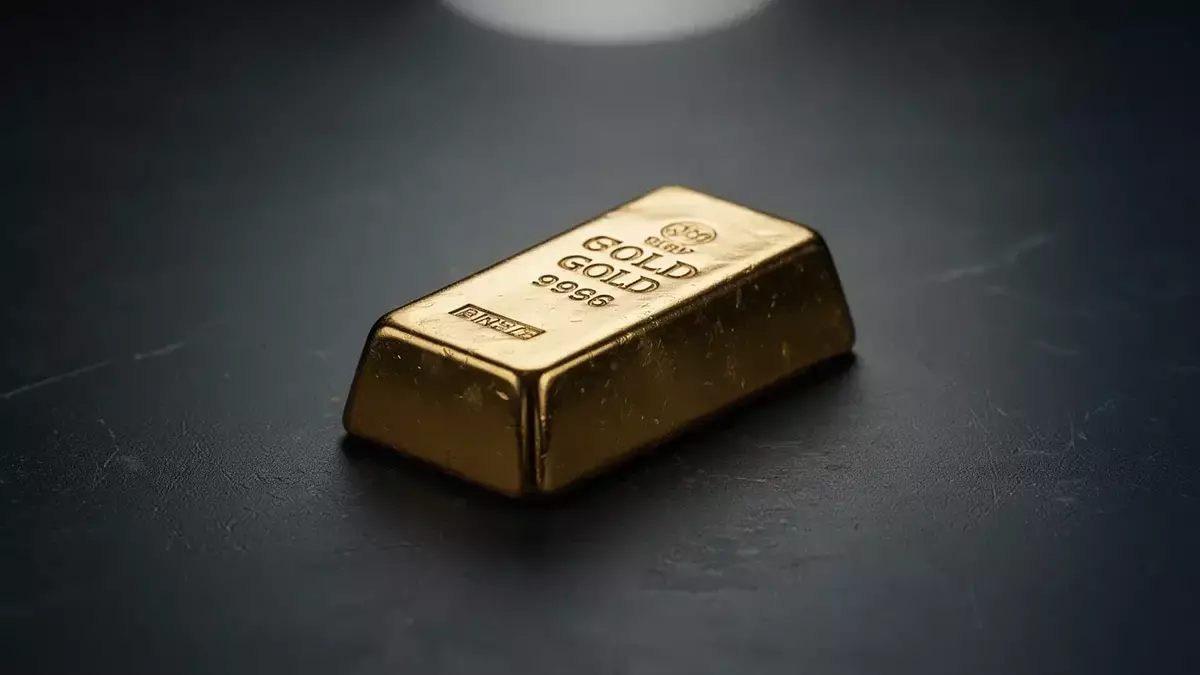
Spot gold slid 0.2% to $4,476.50 an ounce, while US gold futures for August delivery lost 0.3% to $4,504.40. Other benchmarks showed the metal declining 0.65% to $4,488.60, decisively below the $4,500 mark. The reason lies not in the Gulf, but in the numbers coming out of the US economy and the oil market.
Tuesday’s JOLTS report revealed open positions at their highest in nearly two years alongside falling layoffs — a combination that already had traders reassessing Federal Reserve policy. Then the Strait of Hormuz crisis pushed Brent futures up 2.23% to $98 a barrel, marking a third straight daily gain. Crude’s rally quickly rewired the market’s calculus: higher energy prices stoke inflation, and inflation keeps the Fed on a tightening path. Gold, which yields nothing, becomes less attractive when rates rise.
The dollar firmed on the same logic, adding another layer of pressure on dollar-denominated bullion for international buyers.
Should investors sell immediately? Or is it worth buying Gold?
Diplomacy stalls as military tensions simmer
US Secretary of State Marco Rubio ruled out any sanctions relief in exchange for reopening the Strait of Hormuz, conditioning concessions instead on progress in the nuclear talks. Iran’s state media cast doubt on the negotiations’ momentum even as President Trump insisted the channels remain open. US retaliatory strikes on Qeshm Island followed the missile attacks, keeping the geopolitical risk premium alive in oil but failing to trigger a bid for gold.
For now, the market is classifying the crisis as an inflation event rather than a safety event. Until the Fed signals a willingness to cut rates — which appears unlikely given the labor data — gold’s crisis reflex will remain suppressed.
Chart levels and institutional targets under review
The $4,550 support level on a closing basis remains the critical line in the sand for technicians. The 50-day moving average at $4,641 already sits well above the current spot price, a bearish signal for short-term traders. The 200-day moving average is still rising, offering a longer-term floor in the $4,300–$4,400 zone.
Medium-term forecasts remain optimistic. Goldman Sachs is sticking with its year-end target of $5,400, while J.P. Morgan sees $6,000–$6,300. The consensus among professional forecasters stands around $5,500 over the next twelve months. But these projections depend on the rate narrative shifting — and that narrative will be tested Friday with the release of nonfarm payrolls.
Gold at a turning point? This analysis reveals what investors need to know now.
A strong employment print would cement the rate-hike expectation and likely push gold lower. A miss could provide a brief reprieve, though the structural deficit story for silver and central-bank demand for gold offer a longer-term cushion.
For now, the yellow metal is caught between sirens in Bahrain and spreadsheets in Washington. The sirens are losing.
Ad
Gold Stock: New Analysis - 3 June
Fresh Gold information released. What's the impact for investors? Our latest independent report examines recent figures and market trends.