Gorillaz from virtual band to global phenomenon
14.05.2026 - 00:47:53 | ad-hoc-news.de
The word Gorillaz still feels slightly unreal, which is fitting for a project that turned a fictional cartoon band into one of the most inventive forces in 21st century pop and rock. Across six studio albums, multiple EPs, and an ever-mutating live show, Damon Albarn and Jamie Hewlett have steered their animated misfits from left-field experiment to arena-filling institution without losing the sense of mischief that made them special in the first place.
Gorillaz and the art of reinventing the modern band
From the start, Gorillaz were designed as a provocation: if a cartoon group could release singles and tour like a flesh-and-blood band, what even counts as a rock outfit anymore. The concept crystallized in the late 1990s when Blur frontman Damon Albarn and comic artist Jamie Hewlett imagined four fictional members — 2-D, Murdoc Niccals, Noodle, and Russel Hobbs — as avatars for Albarn's genre-hopping songwriting and a rotating cast of collaborators.
Instead of treating the animated conceit as a gimmick, the duo built a coherent universe, using Hewlett's visual world and music videos as connective tissue for Albarn's hybrid of alternative rock, hip hop, dub, electronica, and global pop. According to the Guardian and Rolling Stone, that decision helped Gorillaz sidestep the usual band-brand limitations, freeing them to collaborate with rappers, soul icons, and underground producers without confusing audiences about who the band really was.
Crucially, Gorillaz embraced digital culture before social media reshaped everything. The early official website functioned as an explorable cartoon mansion, while music videos and DVD releases deepened the lore. That interactive, multi-platform approach foreshadowed how modern acts now treat visual identity, gaming tie-ins, and social feeds as extensions of their sound.
How Gorillaz emerged from Britpop's shadow
The origin story of Gorillaz is intertwined with the rise and fatigue of Britpop. By the late 1990s, Albarn had already experienced massive success with Blur, from the swaggering Britpop of Parklife to the grungier edge of Blur. Yet, as British press cycles and chart rivalries wore thin, he began gravitating toward electronic textures, hip hop rhythms, and non-Western influences.
Albarn and Hewlett shared a London flat during this period, absorbing a constant stream of music videos and channel-surf chaos. The idea of a virtual band emerged as a satirical response to what they saw as manufactured pop culture, but Albarn also recognized it as a chance to step outside his own image. By writing through animated characters, he could avoid being cast as a traditional frontman and instead act as curator, songwriter, and producer.
Gorillaz's self-titled debut studio album, Gorillaz, arrived in 2001 on Parlophone and Virgin, blending Albarn's melodic instincts with production from Dan the Automator. Singles like Clint Eastwood and 19-2000 introduced the world to the project's eerie hooks and cartoon noir aesthetic. According to the Official UK Charts Company and Billboard, Clint Eastwood became a worldwide hit, reaching the UK top 5 and entering multiple international charts, transforming what could have been a novelty into a genuine pop event.
The follow-up, Demon Days (2005), produced primarily with Danger Mouse, cemented the band as more than a one-off. Featuring tracks such as Feel Good Inc., DARE, and Dirty Harry, the album fused alternative rock energy with dystopian funk and politically tinged mood pieces. Feel Good Inc. in particular, featuring De La Soul, became a defining single of the mid-2000s. Billboard data show that it entered the top 20 of the Hot 100 and dominated rock and alternative radio formats, while the Recording Industry Association of America (RIAA) later certified it multi-platinum in the United States.
Unlike many concept projects, Gorillaz survived the initial hype cycle by continually expanding their world. Albarn leaned into the eclecticism of his record collection, from dub and dancehall to Latin rhythms and art-pop, while Hewlett treated each era as a new visual season, altering character designs and narrative settings to reflect shifting musical moods.
The sound of Gorillaz: collisions, hooks, and key records
At their core, Gorillaz operate like a pop laboratory. Albarn's melodic sensibility — honed in the Britpop era — remains the glue, but every release experiments with new collaborators and genre combinations. The result is a catalog that feels coherent yet restless.
On Gorillaz, the band sketched their template: lo-fi beats, dub basslines, woozy synths, and Albarn's melancholic vocals, often contrasted with rap verses. Del the Funky Homosapien's performances as the ghostly rapper in Clint Eastwood set a precedent for subsequent guest roles, where collaborators appear as characters within the Gorillaz universe rather than as mere features.
Demon Days sharpened the formula and brought sharper political edges. According to contemporary reviews from NME and Pitchfork, the album's blend of anxiety and euphoria made it feel like a post-Iraq-war, post-9/11 document wrapped in danceable grooves. Tracks like Dirty Harry and Kids with Guns touched on militarism and youth culture, while DARE offered a gleeful, hedonistic release with Shaun Ryder's unmistakable voice cutting through Albarn's synth funk.
By 2010, Plastic Beach pushed Gorillaz even further into concept-album territory. Set on a fictional trash island built from humanity's waste, the record wove environmental concerns into lush, synthesized orchestration and hip hop collaborations. Snoop Dogg, Mos Def, Bobby Womack, and members of the Clash all appeared, but critics noted that Albarn remained the narrative anchor. The album's glossy yet haunted soundscapes, as highlighted by the Guardian and the New York Times, have since been cited as a key influence on later genre-blending pop and rap records.
Later projects such as The Fall, recorded largely on an iPad during tour downtime, showcased Albarn's curiosity about new production methods, while 2017's Humanz and 2018's The Now Now reflected the turbulence of the late 2010s. Humanz in particular assembled an expansive guest list — including Vince Staples, Pusha T, Grace Jones, and Kelela — and played like a frenetic club night on the verge of collapse.
Meanwhile, Song Machine, Season One: Strange Timez (2020) introduced a serialized release format, dropping one track and video at a time as an ongoing web series before compiling them into an album. Contributors ranged from Robert Smith of the Cure and St. Vincent to JPEGMAFIA and Elton John, underlining how Gorillaz function as a crossroads between classic rock lineage and next-generation experimental pop.
Most recently, Cracker Island (2023) found Albarn teaming with producer Greg Kurstin on a tighter, synth-forward set featuring Thundercat, Stevie Nicks, Bad Bunny, and Tame Impala. Reviews from outlets like Variety and Rolling Stone praised its sleek songwriting and introspective mood, noting how the album updated the Gorillaz palette for an era of streaming playlists without sacrificing the project's identity.
Gorillaz on stage: from projections to full-band immersion
Translating Gorillaz to the stage has always been a technical and artistic puzzle. Early tours leaned heavily on projections and screens, with the animated band members performing on giant backdrops while Albarn and his musicians played behind them, sometimes partially obscured to maintain the illusion that 2-D and company were the real stars.
Over time, the live show has evolved into a more hybrid experience. Concerts now often feature Albarn front and center with a large ensemble of instrumentalists, backing vocalists, and featured guests, while Hewlett's visuals animate massive LED walls around them. The balance allows fans to feel the energy of a flesh-and-blood performance without losing the virtual band's surreal charm.
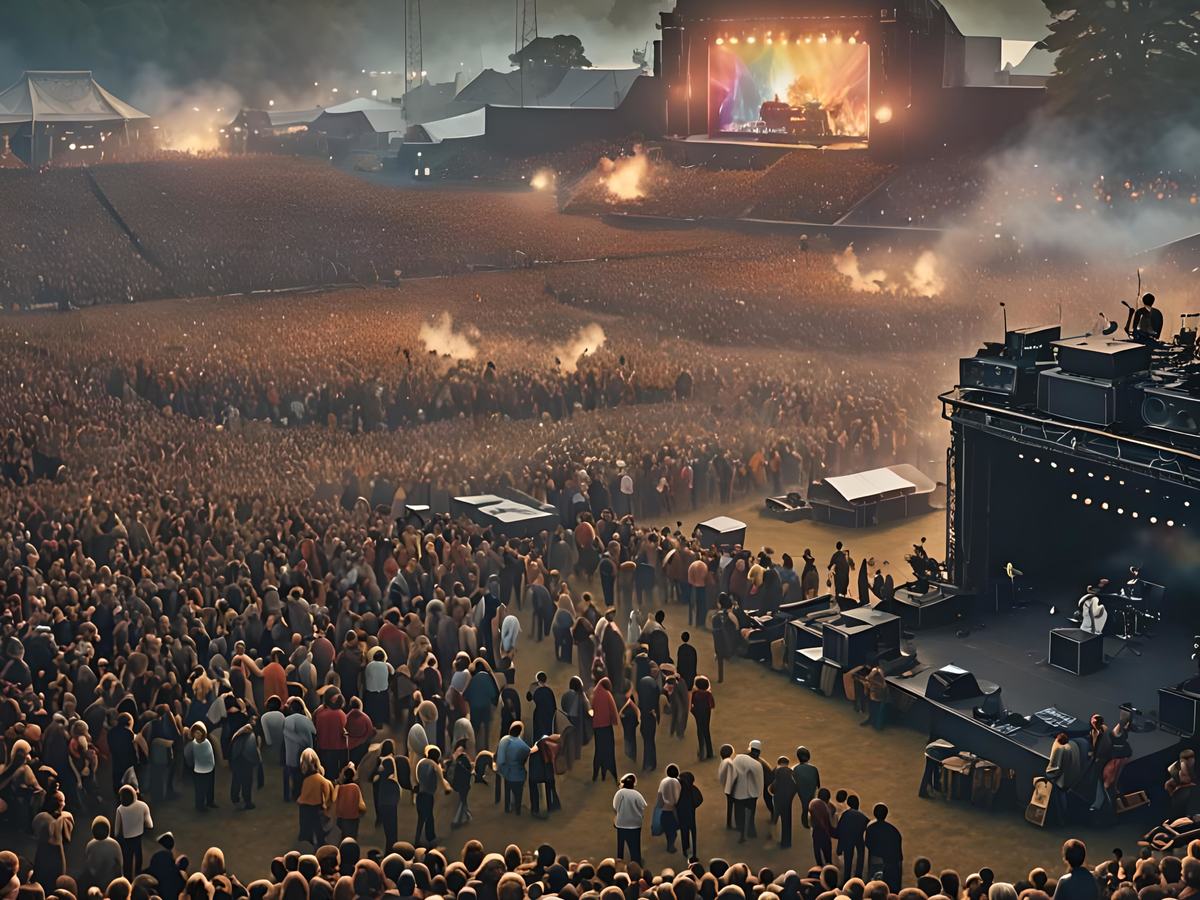
Major festival sets at Coachella, Glastonbury, Primavera Sound, and Roskilde have underscored Gorillaz's reach beyond traditional rock and pop demographics. Attendees might experience a hip hop cipher, a rave-inflected jam, and a wistful piano ballad within the same show, all stitched together by Albarn's piano and Hewlett's dystopian cityscapes. Critics frequently highlight tracks like Feel Good Inc., On Melancholy Hill, and Clint Eastwood as cathartic high points, with crowds chanting and rapping along despite the project having no conventional frontman persona.
Latest developments in the world of Gorillaz
While no brand-new album has landed in the immediate days leading up to the current date, Gorillaz remain active as a touring and recording entity, and their recent cycle around Cracker Island continues to shape their narrative. Reports from the band's official channels and coverage in outlets like NME and Billboard in 2023 and 2024 documented extensive tour legs across Europe, North America, and Latin America, where the group presented their latest material alongside classic hits.
In recent years, Gorillaz have leaned into cross-media storytelling even more aggressively, using music videos, short-form clips, and social posts to advance the ongoing saga of their four animated members. These rollouts often coincide with single campaigns, reinforcing how the band operate less like a standard album cycle act and more like an episodic series that happens to be built on songs.
Although concrete details about future full-length releases remain fluid and subject to official confirmation, Albarn has repeatedly signaled in interviews that Gorillaz is an open-ended project rather than a closed chapter. That stance, combined with the collaborative nature of the project, makes it likely that fans will continue to encounter new songs, one-off singles, and experiments in the coming years, even if they arrive outside traditional album formats.
For listeners trying to understand the arc of Gorillaz so far, several releases stand as landmarks in the catalog. The following albums are widely regarded by critics and fans as essential entry points:
- Gorillaz (2001) — the debut that introduced the animated concept and lo-fi hybrid sound.
- Demon Days (2005) — a darker, more cohesive statement that solidified the project's global stature.
- Plastic Beach (2010) — an expansive, environmentally themed suite with a staggering guest list.
- Humanz (2017) — a hectic, club-inspired response to political upheaval.
- Song Machine, Season One: Strange Timez (2020) — the serialized experiment that reflected the streaming era.
- Cracker Island (2023) — a sleek, synth-driven chapter with reflective undertones.
Each of these records not only marks a creative phase for Albarn and Hewlett but also mirrors shifts in the broader music industry, from the age of CDs and DVDs to the reign of playlists and algorithmic discovery.
Cultural impact, awards, and influence of Gorillaz
As a virtual band with real-world chart power, Gorillaz helped reframe what collaboration, authorship, and fandom mean in the digital age. According to the RIAA and the British Phonographic Industry (BPI), several of the project's singles and albums have achieved gold and multi-platinum certifications, while the group has earned Grammy Awards, BRIT nominations, and widespread critical acclaim.
Demon Days in particular is frequently cited as a classic of 2000s pop and alternative music. Major publications such as Rolling Stone, Spin, and Pitchfork have ranked it among the decade's landmark albums, praising its balance of experimental production and anthemic songwriting. The success of Feel Good Inc. — which won a Grammy for Best Pop Collaboration with Vocals — solidified the idea that an animated band could compete directly with mainstream acts on both artistic and commercial fronts.
Visually, Jamie Hewlett's work has influenced not just music videos but also graphic design, fashion collaborations, and merchandising. The stylized character designs of 2-D, Murdoc, Noodle, and Russel appear on everything from posters and vinyl packaging to streetwear capsules, underscoring how Gorillaz function as a multimedia brand as much as a band.
Musically, the project's open-door policy toward collaborators has inspired younger producers and artists to treat genre boundaries as porous. The chain of features linking legends like Bobby Womack, Lou Reed, and Grace Jones to newer voices such as Little Simz and Kali Uchis demonstrates how Gorillaz build intergenerational bridges. Critics often note that the project anticipated the playlist-driven reality where hip hop, electronic, and rock coexist seamlessly.
Beyond the studio, Gorillaz have left their mark on festival culture. Their headline sets showcase how large-scale live production can merge animation, narrative, and performance without sacrificing spontaneity. In doing so, they paved the way for other acts that rely on strong visual identities — from electronic producers with elaborate stage personas to K-pop ensembles with serialized storylines.
Gorillaz online: fandom, socials, and streaming power
In the streaming age, Gorillaz have found renewed relevance as listeners discover their catalog through algorithmic recommendations and social snippets. Viral clips of fans rapping along to Clint Eastwood or dancing to DARE circulate regularly on short-form video platforms, while deep cuts from Plastic Beach and The Now Now resurface through fan-made edits and animation tributes.
The band maintain an active presence on social media, using character-driven posts, story updates, and behind-the-scenes glimpses of studio sessions and rehearsals. These channels extend the narrative introduced in music videos and live visuals, turning each album cycle into a shared universe that fans help interpret and remix.
{ARTIST_NAME} – Reactions, fan conversation, and streams across the web:
Frequently asked questions about Gorillaz
Who are Gorillaz and how did the project begin
Gorillaz are a virtual band created by musician Damon Albarn and artist Jamie Hewlett in the late 1990s as a response to the manufactured feel of mainstream pop culture. The fictional group consists of four animated members — 2-D, Murdoc Niccals, Noodle, and Russel Hobbs — who serve as avatars for Albarn's songwriting and a rotating cast of collaborators. The project officially launched with the 2001 debut album Gorillaz, which introduced their blend of alternative rock, hip hop, dub, and electronic music through hit singles like Clint Eastwood.
What are the most essential Gorillaz albums to hear first
Listeners new to Gorillaz often start with Demon Days, widely regarded as their creative and commercial breakthrough thanks to tracks such as Feel Good Inc. and DARE. The self-titled debut Gorillaz offers a rawer, more experimental snapshot of the original concept, while Plastic Beach showcases the project's maximalist, guest-heavy side. More recent releases like Humanz, Song Machine, Season One: Strange Timez, and Cracker Island demonstrate how Gorillaz continue to evolve within the streaming and social media era.
How does the Gorillaz live show work if the band is virtual
Gorillaz concerts blend live musicians with extensive animation and visual design. Damon Albarn typically leads a large ensemble of instrumentalists, backing vocalists, and guest performers on stage, while Jamie Hewlett's artwork and narrative sequences appear on massive LED screens behind and around the band. Earlier tours hid the live musicians in silhouette to preserve the illusion of the animated band as the main performers, but more recent shows strike a balance, giving audiences a full-band experience without abandoning the virtual characters.
Why is Gorillaz often described as genre-blending
The sound of Gorillaz pulls from alternative rock, hip hop, electronica, dub, dancehall, R&B, and global pop, often within a single album or song. Albarn uses the virtual band format to collaborate with rappers, soul legends, indie singers, and experimental producers, so the music can shift from laid-back, bass-heavy grooves to euphoric synth pop or reflective piano ballads. Critics from outlets like Billboard and the New York Times frequently highlight this openness to cross-genre collaboration as a defining feature of Gorillaz and a key reason the project continues to feel contemporary.
What makes Gorillaz important to modern pop and rock music
Gorillaz matter because they turned an improbable idea — a cartoon band with rotating guests — into a sustainable, influential model for 21st century music-making. By merging strong visual storytelling with adventurous production and carefully curated features, the project anticipated how today's artists use multimedia worlds, serialized releases, and genre-fluid collaborations to connect with fans. The enduring popularity of albums such as Demon Days and Plastic Beach, along with ongoing touring and streaming success, ensures that Gorillaz remain a touchstone for musicians and listeners exploring the spaces between rock, pop, hip hop, and electronic music.
More Gorillaz coverage on AD HOC NEWS
As Gorillaz continue to evolve, the story of the band spans more than any single article can cover, from rare B-sides and visual deep cuts to guest appearances and side projects. For readers who want to follow tour updates, new collaborations, or retrospective anniversaries, additional coverage helps place each new chapter in context.
More coverage of {ARTIST_NAME} on AD HOC NEWS:
Read more about Gorillaz on AD HOC NEWS ->Browse all stories about {ARTIST_NAME} on AD HOC NEWS ->
Whether encountered through a grainy early-2000s video clip, a festival headline set, or an algorithmically served playlist, Gorillaz embody the idea that bands can be as flexible and imaginative as the worlds they create. In doing so, they have expanded the possibilities of what rock and pop can look and sound like in a digital, hyper-connected era.
So schätzen die Börsenprofis Aktien ein!

Für. Immer. Kostenlos.