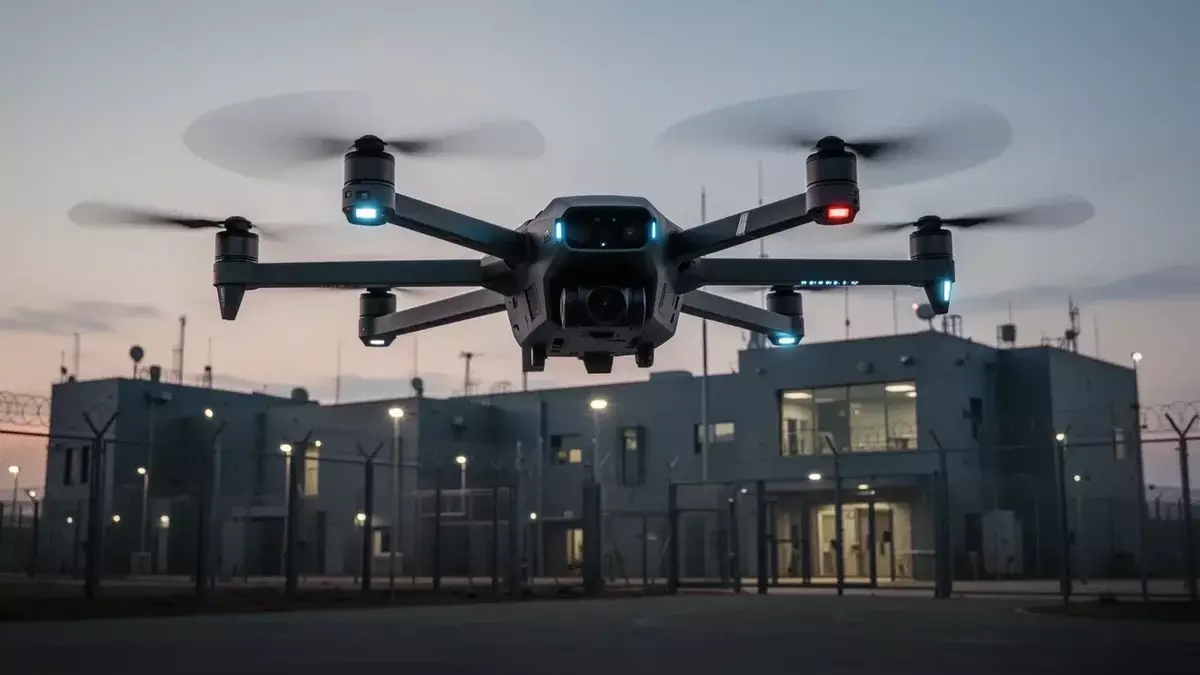
Mixed Signals: DroneShield's Record Orders and Software Pivot Overshadowed by Insider Investigation
13.06.2026 - 16:33:03 | boerse-global.de
A curious disconnect is playing out at DroneShield. The Australian counter-drone specialist is posting some of its strongest operating metrics in years — customer payments surging 360%, a fat order book, and zero debt — yet the stock has been cut nearly in half from its October high. The culprit is an insider trading investigation that has driven away three heavyweight institutional investors and triggered a shareholder revolt.
The Australian Securities and Investments Commission (ASIC) is examining company disclosures and trading activity dating back to November 2025. Between 6 and 12 November, former CEO Oleg Vornik, chairman Peter James and director Jethro Marks sold substantial share parcels. On 10 November, DroneShield announced a A$7.6 million order as new business — only to withdraw the announcement hours later. It was not a fresh deal but an administrative reissuance of existing orders. DroneShield says it is fully cooperating with the regulator.
That sequence has weighed heavily on investor sentiment. JPMorgan notified its exit on 7 May, Citigroup followed on 12 May, and BlackRock on 19 May. A second Citi filing in early June confirmed the complete withdrawal of all affiliated entities. Technically, some of these departures reflected the termination of securities lending arrangements rather than outright sell decisions, but the market read the pattern as a clear signal. At the annual general meeting in late May, nearly half of shareholders voted against the remuneration report.
Beneath the governance cloud, however, the business is undergoing a structural transformation that the market has largely ignored. DroneShield is pivoting from a pure hardware seller to a software subscription model. Recurring revenue, currently about 7% of sales, is targeted to reach 30% as the company chases a long-term revenue goal of A$1 billion. The April software update — which uses artificial intelligence to automatically classify drones as friendly or hostile — is central to that shift. It turns a one-time equipment sale into an ongoing subscription relationship.
Should investors sell immediately? Or is it worth buying DroneShield?
The broader industry backdrop provides powerful validation. On 1 June, Motorola Solutions announced the acquisition of D-Fend Solutions, a counter-drone specialist, for US$1.5 billion. D-Fend posted revenue growth exceeding 50% annually for the past three years and expects 2026 sales of US$185 million. The deal, which is set to close in the fourth quarter, underscores the strategic value of the sector DroneShield operates in. It has not, however, stemmed the stock's slide.
Operationally, the company looks robust. As of 20 April 2026, DroneShield reported committed revenue of A$155 million for the current year, up from A$140 million at the end of March. It is pursuing 13 large projects, each with an individual value exceeding A$20 million. The largest, a potential A$730 million programme, is expected to be decided in the second half. Cash stands at A$223 million, and there is no debt. Customer payments jumped to A$74.1 million in total revenue at the start of the year. Even the symbolic deals are building: DroneShield is securing the airspace over Kansas City during the 2026 FIFA World Cup — a financially modest contract but one that demonstrates how counter-drone technology is moving from military tool to civilian standard.
New CEO Angus Bean took over on 8 April, succeeding Vornik and James. Bean was the company's sixth-ever employee and most recently served as chief product officer. Hamish McLennan joined the board as chairman-elect on 1 May. The leadership change adds another layer of uncertainty — Bean has yet to deliver a quarterly report — but also offers a clean break from the governance issues of the past.
DroneShield at a turning point? This analysis reveals what investors need to know now.
The market is pricing all this risk at A$1.78 per share, down roughly 51% from the October peak of A$3.65. Over the past 30 days, the stock has lost about 13%. The relative strength index of 41.3 points to ongoing selling pressure without technically oversold conditions. The 200-day moving average of A$2.07 remains out of reach.
The first real test for Bean comes on 26 August 2026, when half-year results are due. That will show whether the order book is converting into revenue and whether the governance discount is starting to narrow. A decision on the A$730 million programme later this year could be the catalyst that finally shifts the narrative from investigation to execution.
Ad
DroneShield Stock: New Analysis - 13 June
Fresh DroneShield information released. What's the impact for investors? Our latest independent report examines recent figures and market trends.