
Fall Out Boy - From Chicago Clubs to Global Rock Stages
Published on 07/26/2026 at 15:41 | Editorial responsibility: Rafael Müller, Editor-in-Chief AD HOC NEWS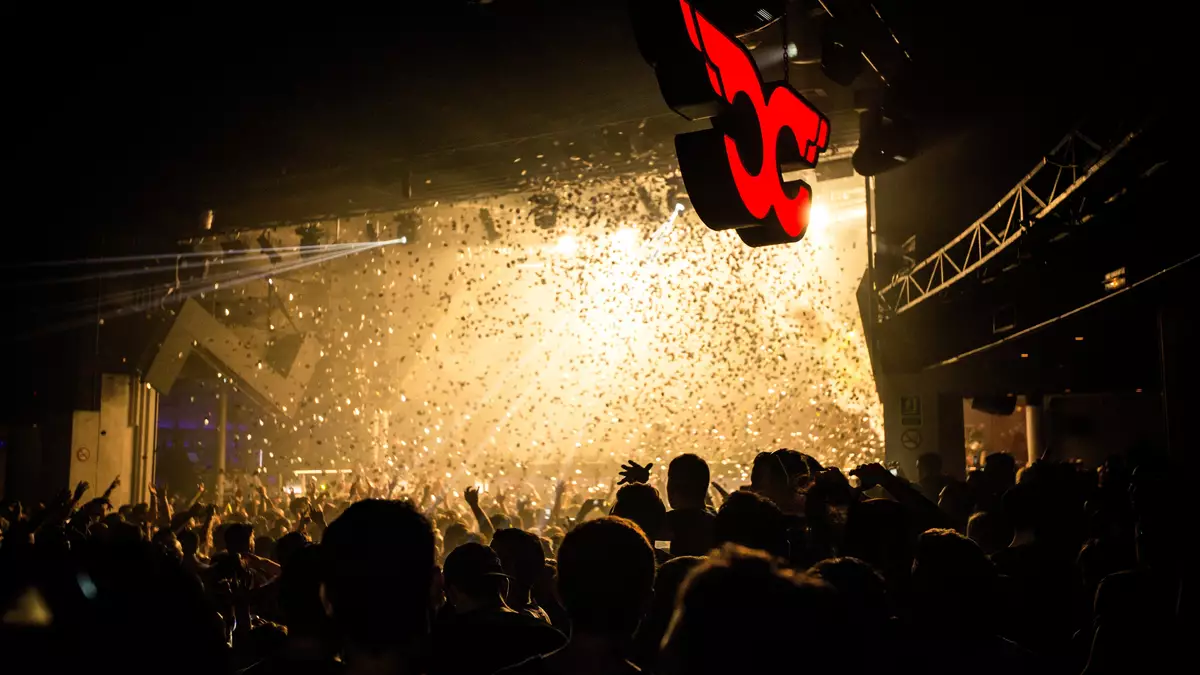
Fall Out Boy emerged from the Chicago suburbs as one of the key bands that pushed pop-punk and emo from cramped clubs into mainstream rock radio. The group’s rise from local shows to global stages traces a broader shift in how guitar-driven music reached young listeners in the 2000s.
Early years in the Chicago scene
Fall Out Boy formed in Wilmette, Illinois, a northern suburb of Chicago, in the early 2000s. The core lineup solidified around Patrick Stump on vocals and rhythm guitar, Pete Wentz on bass, Joe Trohman on lead guitar and Andy Hurley on drums.
From the beginning, the band gravitated toward the pop-punk and hardcore communities clustered around Chicago’s all-ages venues. Small rooms, DIY ethics and local zines provided the infrastructure for their first shows and early fan base.
The independent debut and first momentum
Before major-label attention, Fall Out Boy released early material through independent labels. Their first full-length album, Take This to Your Grave, appeared in 2003 and laid down the template for their sound: sharp hooks, dense lyrics and a tight rhythm section.
The record’s songs circulated widely in the scene, supported by relentless touring across the Midwest and the wider United States. Over time, these shows transformed the band from a local act into a national touring unit, with fans trading burned CDs and message-board recommendations.
From Under the Cork Tree and mainstream breakthrough
From Under the Cork Tree, released in 2005, marked Fall Out Boy’s mainstream breakthrough and is often regarded as their defining early work. The album sharpened their songwriting and moved the band from clubs into larger theaters and arenas.
Several singles from the album became staples of mid-2000s rock radio and music television. Their blend of pop melody, heavier guitar work and emotionally charged lyrics helped bridge the gap between underground emo scenes and a broader audience.
Infinity on High and sustaining success
With Infinity on High, Fall Out Boy aimed to sustain and expand their success. The record showed a willingness to experiment while keeping the high-energy core of their sound intact, combining big choruses with more polished production.
The release cemented the band’s presence on major festival bills and international tours. At this point, Fall Out Boy had clearly stepped beyond their local origins and were operating as a globally recognized rock group.
Folie à Deux and stylistic stretching
Folie à Deux pushed Fall Out Boy further into stylistic experimentation. The album folded in more pop and alternative influences, giving their guitar work and rhythm section new textures while retaining the emotional intensity of earlier releases.
Responses to the record were divided among some fans but it stands as an important document of the band’s willingness to evolve and test the boundaries of their sound. Over time, its songs have become part of a wider understanding of late-2000s alternative rock.
Hiatus, side projects and return
After years of constant touring and recording, Fall Out Boy entered a hiatus period as the members explored side projects and took time away from the band format. This pause reflected both personal needs and shifting trends in rock and pop music.
When the band reconvened, they returned not as a nostalgia act but as a group aiming to engage with new sounds and a changed industry. Their comeback signaled that guitar-driven pop-rock could find renewed relevance even amid streaming-era genre fragmentation.
Save Rock and Roll and a renewed identity
Save Rock and Roll functioned as both a statement of intent and a creative reset. The album title itself positioned Fall Out Boy in a conversation about the state of rock music, while the songs drew on broader pop and electronic elements.
Collaborations and polished production helped the record reach beyond their early-2000s fan base. The album underscored the band’s role as a bridge between older structures of rock stardom and newer, more digitally driven forms of popularity.
American Beauty/American Psycho and pop maximalism
With American Beauty/American Psycho, Fall Out Boy leaned into pop maximalism. The record fused aggressive guitars with sample-heavy, big-chorus arrangements that sat comfortably alongside mainstream pop while still carrying the band’s rock identity.
This phase highlighted how Fall Out Boy could fold evolving production trends into their work without abandoning the emotionally charged songwriting that characterized their earlier releases. The album further widened their reach across festival stages and radio playlists.
Mania and the edges of their sound
Mania pushed the band’s interest in electronic and alternative textures even further. Synth-driven arrangements and rhythmic shifts showed that Fall Out Boy were less interested in repeating a fixed template than in exploring new sonic possibilities.
Reactions to this direction varied, but it reinforced the band’s long-standing tendency to avoid strict genre boundaries. Over time, their catalog has come to represent a continuum from pop-punk roots to hybrid pop-rock forms.
How the band’s songs resonate live
On stage, Fall Out Boy’s songs tend to gain additional weight through their structural dynamics. Fast, tightly arranged verses often break into expansive, communal choruses that invite audience participation and underline the band’s emphasis on shared emotion.
The interplay between Patrick Stump’s vocals and Pete Wentz’s stage presence gives their performances a dual focus. Vocals carry melodic and lyrical nuance while the band’s movement across the stage shapes the visual energy of each show.
Germany’s relationship with Fall Out Boy
Over the years, Fall Out Boy have built a steady audience in Germany, where rock and alternative music retain strong fan communities. Major cities such as Berlin, Hamburg and Köln have often served as anchor points for tours by international guitar bands.
For English-speaking listeners based in Germany, Fall Out Boy’s catalog offers a mapped journey through the evolution of 2000s and 2010s rock and pop. Their albums sit alongside broader shifts in German festival lineups, where international acts frequently share stages with local rock and pop performers.
Fall Out Boy’s lyrics and narrative style
The band’s lyrics are known for dense imagery, rapid-fire phrasing and layered references. Patrick Stump’s vocal delivery often compresses long lines into tight rhythmic spaces, while Pete Wentz’s writing leans toward metaphor and emotional contrast.
This approach places Fall Out Boy’s songs within a lineage of emo and pop-punk storytelling that foregrounds personal tension, shifting identity and the drama of everyday experiences. Their narratives are less linear than impressionistic, inviting listeners to revisit songs for new angles.
Visual aesthetics and stage imagery
Visually, Fall Out Boy have shifted from early, scene-oriented imagery to larger-scale, theatrical stage designs. Early shows often emphasized a straightforward band-onstage dynamic, while later tours introduced more elaborate lighting, projections and thematic motifs.
Album art and promotional photography trace similar changes. From the more stripped-down visual language of their early records to the bold, saturated imagery of later releases, the band has used visuals to signal each phase of their career.
Influence on pop-punk and emo generations
Fall Out Boy’s rise coincided with a wave of bands that brought pop-punk and emo to a wider youth audience. Their success helped normalize emotionally direct, lyrically dense songwriting on mainstream platforms, influencing both peers and younger acts.
For many listeners who came of age in the mid-2000s, Fall Out Boy’s early records functioned as entry points into broader scenes. Through tours, festival appearances and media coverage, the band provided one of several paths into alternative and punk-derived music.
Shifts in the music industry during their career
Across Fall Out Boy’s active years, the wider music industry shifted from physical media toward digital downloads and then streaming. Each phase affected how their albums circulated and how fans discovered new songs.
While early releases gained momentum through CD sales and music television rotation, later records navigated playlist culture and on-demand listening. The band’s adaptability to these changes reflects a broader pattern among long-running acts that began in the pre-streaming era.
Fall Out Boy and collaborations
Collaboration has been a recurring element in Fall Out Boy’s later work. Featured vocalists, guest musicians and cross-genre linkups illustrate the band’s interest in stepping beyond a strictly four-piece framework when studio ideas call for it.
These partnerships deepen the band’s ties to wider pop and rock networks, enabling songs to travel into audiences that might not otherwise engage with alternative or pop-punk-rooted acts. At the same time, the band’s core identity remains centered on its longstanding lineup.
Rhythm section and guitar work
The musical foundation of Fall Out Boy lies in its rhythm section and guitar interplay. Tight drumming and bass lines provide the driving force behind many of their songs, with guitars adding both melodic hooks and harmonic density.
Over the catalog, guitar tones range from sharp, punk-inflected distortion to smoother, more pop-friendly textures. This flexibility allows the band to shift between aggressive and accessible modes while keeping songs structurally cohesive.
Vocal range and melodic construction
Patrick Stump’s vocal range gives Fall Out Boy a broad palette for constructing melodies. His ability to move between more restrained phrasing and full-throttle choruses underpins the band’s dynamic contrasts within songs.
Melodic lines often weave around rhythmically intricate backing parts, creating a sense of forward motion that aligns with the emotive content of the lyrics. In many tracks, this combination anchors songs that balance introspection with immediacy.
Identity, image and public perception
Public perception of Fall Out Boy has shifted alongside their musical phases. Early coverage frequently framed them within the pop-punk and emo explosion, while later commentary recognized their role in blending rock with mainstream pop production.
The band’s members have also developed individual public identities through interviews, side projects and social media engagement. These separate yet connected profiles feed into how fans understand Fall Out Boy as both a collective and a sum of distinct personalities.
Live culture and fan communities
Live shows play a central role in how Fall Out Boy’s music is experienced. Fans often travel between cities for tours, forming communities that extend beyond single concerts and into online spaces where setlists and memories are shared.
This culture mirrors wider rock and pop touring dynamics, in which repeated attendance and personal connections deepen the relationship between acts and audiences. Fall Out Boy’s long touring history means many listeners link specific songs to particular venues and cities.
Legacy of mid-2000s alternative rock
Fall Out Boy’s work sits within a broader legacy of mid-2000s alternative rock that includes pop-punk, emo and crossover acts. Their albums from that period contribute to a sonic archive that continues to shape new bands and nostalgic revisits.
Reappraisals of the era often point to the emotional directness and melodic strength of its key records. In this context, Fall Out Boy’s early catalog is frequently cited as emblematic of how alternative sounds reached mainstream youth culture.
The streaming era and catalog listening
In the streaming era, Fall Out Boy’s catalog is accessible as a continuous body of work, allowing listeners to move freely between early and recent releases. This mode of listening can highlight long-term thematic patterns that were less visible in single-album cycles.
For new listeners discovering the band via playlists, songs from different eras often sit side by side. The resulting impression emphasizes the band’s consistent focus on hook-driven, emotionally resonant songwriting, even as production styles evolve.
Genre classifications and flexibility
Fall Out Boy are variously described as pop-punk, emo, pop-rock or alternative rock, depending on the era and specific release. These classifications point to key elements of their sound but none fully capture the range of their catalog.
Across albums, the band moves through heavier guitar-led material, polished pop hybrids and electronically textured experiments. This flexibility reflects both personal artistic curiosity and the changing landscape of popular music during their active years.
Impact on individual listeners
For many listeners, Fall Out Boy’s songs have functioned as personal soundtracks to specific life stages. Lyrics addressing identity, relationships and self-doubt often resonate with those navigating adolescence and early adulthood.
As the band’s audience has grown older, some fans return to earlier records with different perspectives, hearing past songs through the lens of later experience. This re-engagement underscores the enduring emotional connection that long-running acts can maintain.
Band history as a case study
Fall Out Boy’s history can be read as a case study in how a band from a local scene navigates multiple industry transformations. Starting from small shows and independent releases, they moved through major-label success, hiatus and reinvention.
Along the way, they adapted to shifts in technology, distribution and audience expectations while maintaining a recognizable core identity. This trajectory offers a reference point for understanding how guitar bands survive and evolve across decades.
Where the act stands today
Fall Out Boy remain an active presence in rock and pop culture, with a catalog that continues to draw new listeners and long-time fans. They currently have no announced live date at present.
Fall Out Boy at a glance
- Act: Fall Out Boy
- Genre: Pop-punk, pop-rock, alternative rock
- Origin: Wilmette, Illinois, United States
- Active since: Early 2000s
- Lineup: Patrick Stump (vocals, guitar), Pete Wentz (bass), Joe Trohman (guitar), Andy Hurley (drums)
- Label: Associated over time with major and independent rock labels
- Key works: Take This to Your Grave (2003), From Under the Cork Tree (2005), Infinity on High (2007), Save Rock and Roll (2013)
- Current album/single: The band’s later albums, including American Beauty/American Psycho and Mania, demonstrate their more recent directions
- Charts / certifications: Their mid-2000s releases achieved notable mainstream success in several countries, including Germany, the United States and the United Kingdom
- Next live date: no announced live date at present
Frequently asked questions about Fall Out Boy
When did Fall Out Boy form?
Fall Out Boy took shape in the early 2000s in Wilmette, Illinois, as members from the Chicago hardcore and pop-punk scenes began writing songs together and playing local shows.
Which Fall Out Boy album is often seen as their breakthrough?
From Under the Cork Tree, released in 2005, is widely regarded as their breakthrough album, bringing them from the underground into mainstream rock radio and larger venues.
What musical style is Fall Out Boy best known for?
Fall Out Boy are best known for a blend of pop-punk, emo and pop-rock, characterized by hook-heavy songwriting, emotionally charged lyrics and energetic guitar-based arrangements.
This article provides an editorial overview of Fall Out Boy’s musical history and catalog for informational and cultural purposes.


