
Abisko nationalpark: Arctic mountains, birch forests and Kungsleden
Published on 08/18/2026 at 14:39 | Editorial responsibility: Rafael Müller, Editor-in-Chief AD HOC NEWS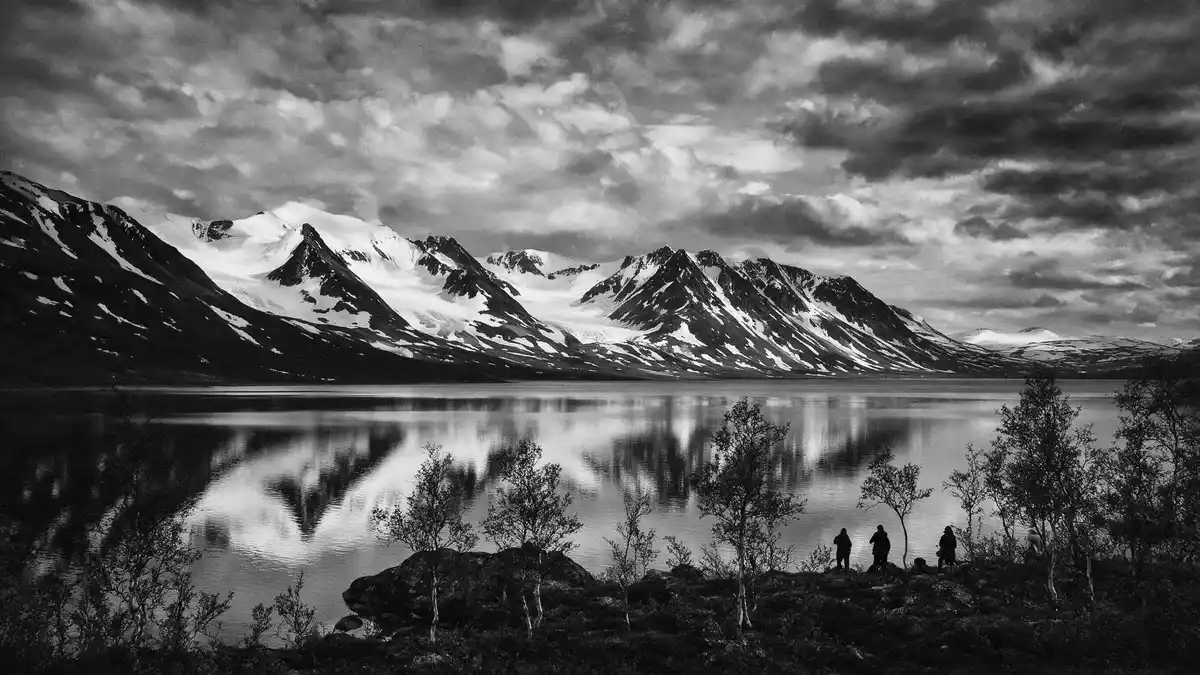
Abisko nationalpark in northern Sweden frames a wide mountain valley where birch forest, alpine meadows and bare Arctic slopes meet in a compact landscape south of Torneträsk. Established on 24 May 1909 as part of Sweden’s first generation of national parks, it preserves a high?northern mountain environment in Lapland that remains characteristic of the Scandinavian Arctic.
An Arctic valley shaped by mountains and lake
Abisko nationalpark lies in Norrbotten County within Kiruna Municipality, stretching from the southern shore of the large lake Torneträsk into the surrounding mountains. The protected area covers about 7,700 hectares of land and water, forming a band of terrain that reaches from lakeside birch woods into higher alpine ground where vegetation thins and rock dominates.Area and setting The Abiskodalen valley, which runs through much of the park, is described as a shallow depression framed by substantial mountain massifs to the south and west and by Torneträsk to the north?east.Abiskodalen description
Walking from the lake into the valley, the ground moves from deciduous woodland dominated by mountain birch into open meadows and heaths, before rising towards fell terrain where only low vegetation and patches of snow break up the rock. The national park’s official description highlights deciduous forest, open meadow, open heath and alpine terrain as the main natural types, giving the area a clear vertical sequence that visitors can experience on foot.Nature types in Abisko
From early protection to a classic Lapland park
Abisko nationalpark belongs to the first group of Swedish national parks created in the early twentieth century, at a time when the country began to protect representative natural landscapes on a national scale. The formal decision to establish the park was taken on 24 May 1909, and Abisko is one of the early Swedish examples of a high?latitude mountain landscape preserved specifically for its natural character.Establishment decision 1909 The Swedish Environmental Protection Agency is listed as landowner, with the County Administrative Board of Norrbotten acting as manager, underscoring the park’s role within Sweden’s system of protected areas.Landowner and manager
The management plan describes Abisko nationalpark as intended to preserve a high?northern mountain landscape in its natural state, with particular emphasis on conserving the characteristic fell environment of northern Lapland.Purpose of the park Later protection frameworks have reinforced this status: Abisko is included in Sweden’s Natura 2000 network, a European Union conservation scheme that identifies valuable habitats and species for long?term safeguarding.Natura 2000 designation
Trails, canyon and the Kungsleden route
Abisko nationalpark is closely associated with the Kungsleden, the long?distance King’s Trail that traverses some of the most distinctive mountain scenery in northern Sweden. The trail passes through the national park, following the course of Abiskojåkka, a river that runs through the Abisko canyon before spreading into a delta at Torneträsk.Kungsleden and Abiskojåkka Within the valley the path system connects birch forest, river corridors and open slopes, and several marked nature trails lead visitors towards viewpoints and characteristic habitats.
The park description highlights Mount Njullá, an accessible mountain within the protected area noted for its rich alpine flora and views over the Abisko valley and Torneträsk.Njullá and Abisko Valley Rapids in Abiskojåkka, the narrow rocky walls of the canyon and the broad surface of Torneträsk together give Abisko nationalpark a combination of flowing water, constricted gorge and open lake that is characteristic of this part of Swedish Lapland.
Visiting Abisko nationalpark: what travellers from Western Europe should know
- Abisko nationalpark lies south of Torneträsk in northern Sweden’s Norrbotten County, within Kiruna Municipality, close to the settlement of Abisko and near the border with Norway.
- The terrain includes a valley bottom with established paths, slopes leading towards higher fells and a river canyon, so walking routes range from gentle forest tracks to steeper mountain trails.
- European route E10 and the railway line through northern Sweden both cross Abisko nationalpark, with Abisko Turiststation serving as a key station close to trailheads and visitor facilities.
- The park is in Sweden, where the official language is Swedish and the currency is the Swedish krona.
Searching for Abisko nationalpark on social platforms
These links open searches for Abisko nationalpark on each platform.
Frequently asked questions about Abisko nationalpark
Where is Abisko nationalpark located?
Abisko nationalpark is in northern Sweden’s Norrbotten County, within Kiruna Municipality, south of the lake Torneträsk and close to the settlement of Abisko.
What can visitors expect on a visit to Abisko nationalpark?
Visitors encounter a mountain valley with birch forest, meadows, heaths and fell terrain, together with a river canyon, marked trails and views towards Torneträsk and surrounding peaks.
What makes Abisko nationalpark distinctive among Swedish parks?
Its combination of early twentieth?century protection, Arctic mountain setting in Lapland, inclusion in the Natura 2000 network and the passage of the Kungsleden trail through the Abisko valley gives it a clearly defined character.


