
Abu Simbel and the temples carved into the mountain
Published on 09/24/2026 at 12:35 | Editorial responsibility: Rafael Müller, Editor-in-Chief AD HOC NEWS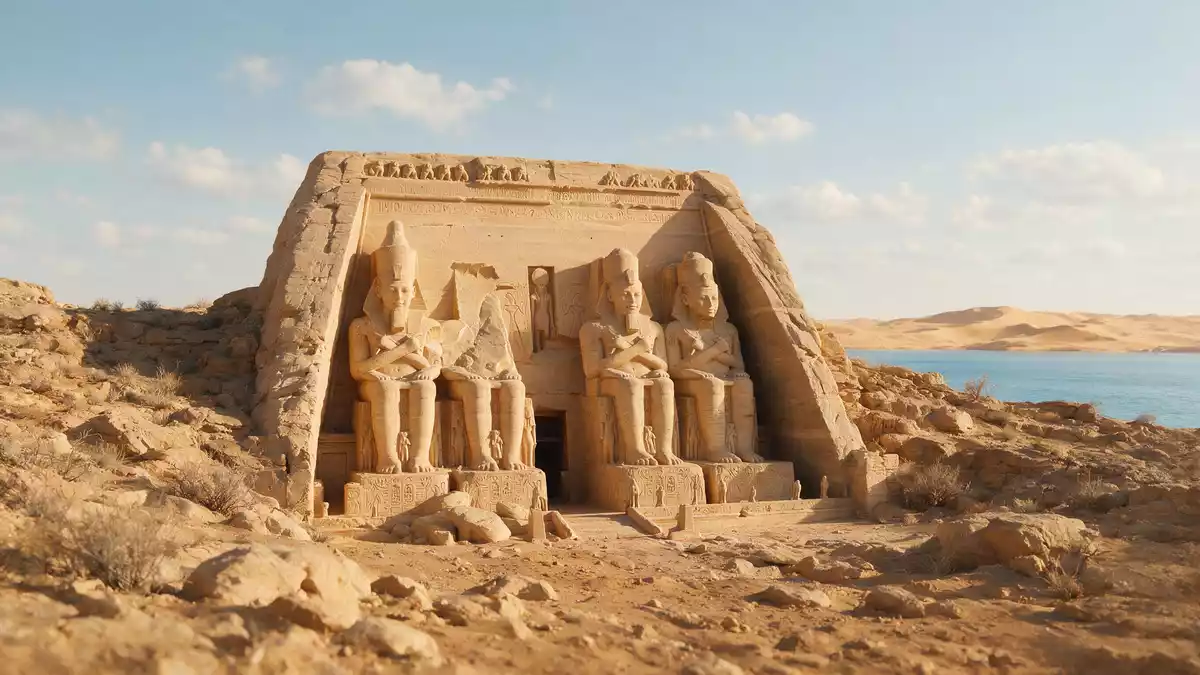
Abu Simbel is a pair of rock-cut temples in southern Egypt, carved into sandstone during the reign of Ramesses II. Their façades present colossal royal figures, while the interiors extend into the mountain behind them. The visible cliff is therefore both architecture and landscape, a combination that defines the site.
Abu Simbel: façades cut from sandstone
The Great Temple is dedicated to Ra-Horakhty, Ptah, Amun and the deified Ramesses II. Four seated figures of Ramesses II dominate its entrance, each rising to about 20 metres (66 ft). Smaller figures of members of the royal family stand near the colossal statues.
The entrance leads into halls and chambers cut back into the rock. Pillars carry royal forms, and wall reliefs show ceremonies, deities and military scenes. Among the historical subjects is the Battle of Kadesh, fought during Ramesses II’s reign. The temple’s scale depends on the direct relationship between the carved façade and the deep interior.
Ramesses II and Nefertari in the thirteenth century BC
Construction belongs to the New Kingdom and the Nineteenth Dynasty. Abu Simbel is traditionally dated to the thirteenth century BC, during the long reign of Ramesses II.
The smaller temple stands near the Great Temple and is dedicated to Hathor and Queen Nefertari. Its façade includes statues of Ramesses II and Nefertari, with the queen represented at a scale close to that of the king. This arrangement gives the second sanctuary a distinct royal identity within the pair.
The two temples belong to the religious and political landscape of ancient Nubia. Their inscriptions and reliefs connect royal representation with the worship of Egyptian deities. Names, images and sacred spaces occupy the same carved surface, making the monuments readable as architecture and historical record.
The twentieth-century rescue above Lake Nasser
Abu Simbel was relocated during the 1960s before the rising waters of the Aswan High Dam reservoir could submerge the temples. The rescue formed part of the international campaign that protected Nubian monuments from the new lake.
Workers dismantled the temples into numbered blocks and reconstructed them on higher ground. A rock-covered concrete structure surrounds the rebuilt sanctuaries, reproducing the appearance of a mountain behind the ancient façades. The result preserves the carved surfaces while placing them within a twentieth-century landscape intervention.
The relocation is part of Abu Simbel’s physical identity. Ancient sandstone, modern concrete and reconstructed rock exist together at the site. In 1979, Abu Simbel joined the Nubian Monuments World Heritage site, which includes monuments extending from Abu Simbel to Philae.
Visiting Abu Simbel: what travellers from Western Europe should know
- Abu Simbel lies in southern Egypt, near the modern border with Sudan and beside Lake Nasser. Air travel reaches Abu Simbel Airport, while road journeys connect the settlement with Aswan.
- The temples are cut into sandstone, and the visit includes outdoor ground, broad approaches and interior chambers. The Great Temple continues into the rock beyond its monumental façade.
- The official language is Arabic and the currency is the Egyptian pound.
- Entry requirements depend on your nationality; UK travellers can check the FCDO travel advice at gov.uk/foreign-travel-advice, Irish travellers the Department of Foreign Affairs at ireland.ie.
Searching for Abu Simbel on social platforms
These links open searches for Abu Simbel on each platform.
Frequently asked questions about Abu Simbel
Where is Abu Simbel?
Abu Simbel is in southern Egypt, near the border with Sudan and on the western shore of Lake Nasser. The temples stand within the historic Nubian region.
What can visitors see at Abu Simbel?
Visitors see the Great Temple of Ramesses II and the smaller temple dedicated to Hathor and Nefertari. Both include carved façades, interior chambers, reliefs and inscriptions.
What makes Abu Simbel distinctive?
Its sanctuaries combine architecture cut into sandstone with colossal royal sculpture. Their twentieth-century relocation also forms part of the site’s visible history.


