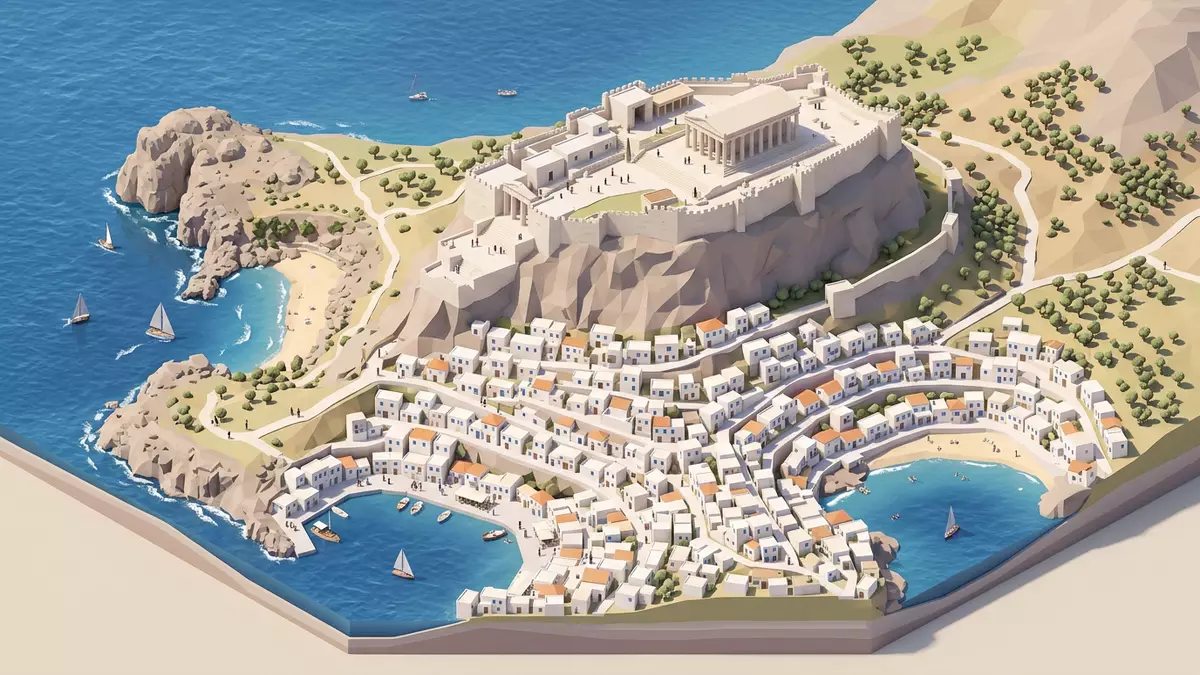
Akropoli Lindou and the stone terraces above Lindos
Published on 08/07/2026 at 15:00 | Editorial responsibility: Rafael Müller, Editor-in-Chief AD HOC NEWS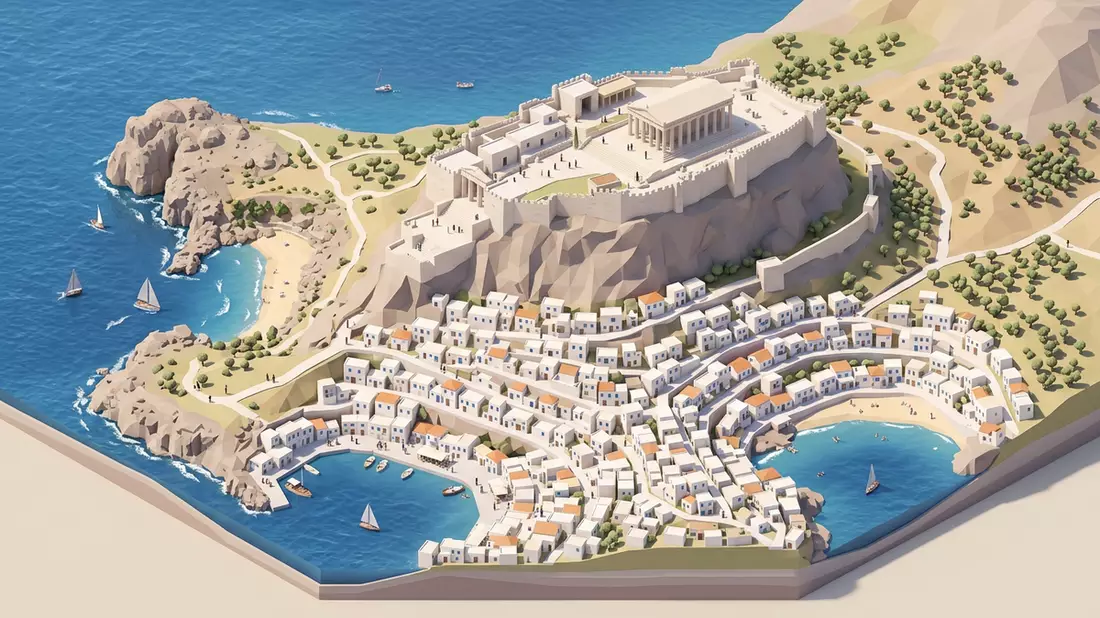
Akropoli Lindou rises above Lindos as a layered stone complex rather than a single monument. Its terraces, retaining walls and scattered ruins show how the acropolis has been used across Greek, Hellenistic, Roman, Byzantine, Crusader and Ottoman periods.
Stone terraces above the bay
The site sits on a steep hill above Lindos and the sea, with paths, steps and open platforms cut into the rock. The setting gives Akropoli Lindou a strong outline from below, while the climb reveals masonry in different styles and periods.
Among the visible remains are defensive walls, temple foundations and later fortifications. The acropolis keeps the sense of a working hilltop settlement, not just a ceremonial summit.
Greek, Hellenistic and medieval layers
Lindos was an important city on Rhodes in antiquity, and the acropolis was associated with Athena Lindia. The ancient sanctuary became part of a longer sequence of building that included Hellenistic and Roman work, followed by medieval additions.
The Knights of St John left their mark on the fortifications, and later phases added further military fabric. That mixture of sacred, civic and defensive architecture makes the site easier to read as a historical sequence than as a single ruin.
What survives on the hill
Visitors encounter fragments rather than complete buildings: walls, columns, steps, courts and gateways. The Temple of Athena Lindia is one of the key ancient remains, while the medieval walls frame parts of the summit.
From some points, the view takes in the harbour and the settlement below. The combination of masonry and exposed rock gives the place a stark, open character.
Visiting Akropoli Lindou: what travellers from Western Europe should know
- The site is reached from Lindos on foot, with a steep ascent over stone paths and steps.
- Admission arrangements and opening hours are set by the site's operator and change with the season; the official website is the only binding source.
- Late spring and early autumn are often the easiest times for a hillside visit, when walking conditions are less demanding.
- The route involves uneven ground, exposed rock and a substantial climb, so sturdy footwear helps.
- Facilities in Lindos cover the practical needs for food, water and language, and payment is handled locally in euros.
- Entry requirements depend on your nationality. UK travellers should check the FCDO travel advice at gov.uk/foreign-travel-advice; Irish travellers the Department of Foreign Affairs at ireland.ie; EU and EEA citizens their own national foreign ministry.
Searching for Akropoli Lindou on social platforms
These links open searches for Akropoli Lindou on each platform.
Frequently asked questions about Akropoli Lindou
Where is Akropoli Lindou?
It stands above Lindos on Rhodes in Greece, on a hill that overlooks the harbour and the surrounding settlement.
What should a visit feel like?
Expect a steep walk, stone surfaces and ruins spread across terraces and courts. The site works best as a hilltop walk through layers of masonry.
What makes it distinctive?
The mix of ancient sanctuary remains and medieval fortifications gives Akropoli Lindou its character. The setting above the sea adds a clear geographic frame to the ruins.