
Amboseli National Park and the Kilimanjaro backdrop
Published on 09/09/2026 at 22:36 | Editorial responsibility: Rafael Müller, Editor-in-Chief AD HOC NEWS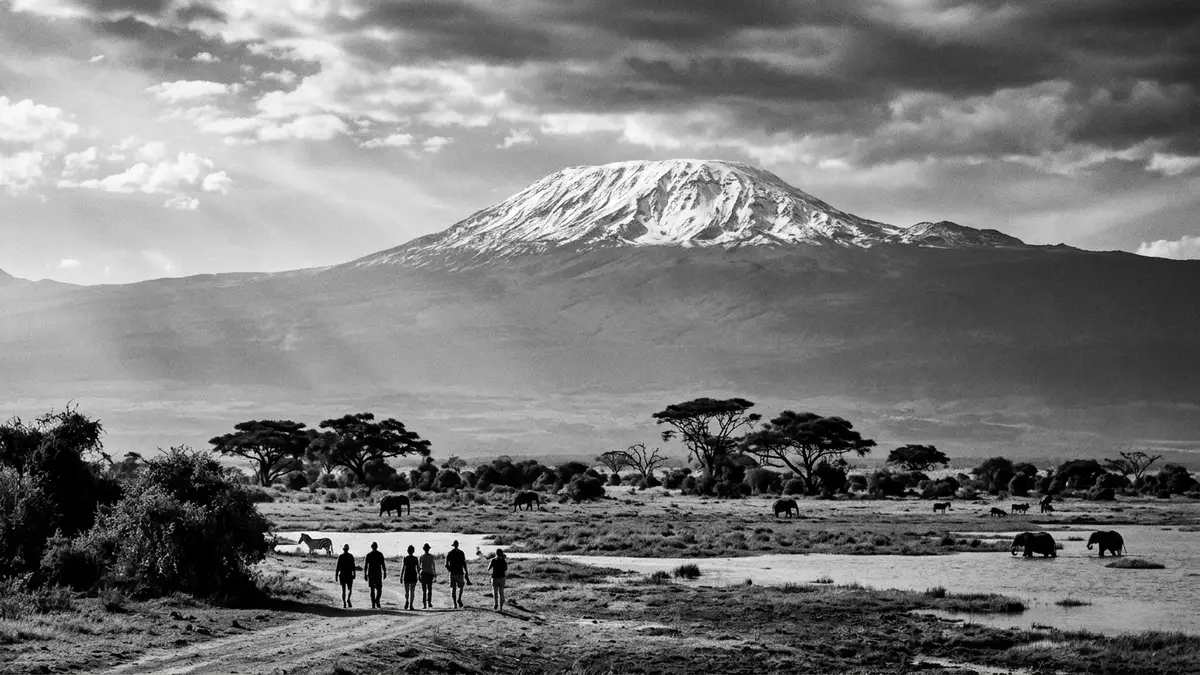
Amboseli National Park in southern Kenya combines open plains, wetlands and woodland beneath Mount Kilimanjaro. The park is a national park in Kajiado County and was gazetted in 1974, with roots in earlier reserve status.
Plains, swamps and a dry lake bed
The most striking feature at Amboseli is the contrast between pale basin ground and wetter patches fed by springs. The park contains a dried-up Pleistocene lake bed, saline soils and permanent swamps in the southern part of the basinPleistocene lake bed.
That mix of habitats gives the place a layered look. Open short grass, thornbush, acacia woodland and marshland sit within the same broad landscape, with Kilimanjaro forming the distant high backdropbroad landscape.
The park and the Maasai landscape
Amboseli sits within a wider ecosystem that extends across the Kenya-Tanzania border. The Maasai are closely associated with the landscape, and the park is linked to long-standing pastoral use in the regionwider ecosystem.
The park is also known for its elephant population. Large mammals share space with birdlife, including water birds and birds of prey, and the setting brings animals into view against open ground rather than dense forestelephant population.
Amboseli as a protected landscape
Amboseli was first set aside in 1906, became a game reserve in 1948 and was declared a national park in 1974. Those dates place the park within a longer pattern of protection in a landscape shaped by wildlife, water and grazingdeclared a national park.
The park’s formal designation is natural rather than architectural, and its importance lies in what can be seen on the ground: lake bed, swamp, woodland and a broad basin under Africa’s highest peak. The UNESCO tentative listing records it as a natural property in Kajiado Countynatural property.
Visiting Amboseli National Park: what travellers from Western Europe should know
- The park lies in Kajiado County, near the Kenya-Tanzania border. Road access is through gates such as Iremito, Kimana and Meshanani, and a light-aircraft airstrip serves the park.
- The basin is flat in many places but includes swamp edges, dry lake ground and open plains. Observation Hill and other raised points add short climbs to an otherwise level landscape.
- English is widely used in Kenya, and the currency is the Kenyan shilling.
- Entry requirements depend on your nationality; UK travellers can check the FCDO travel advice at gov.uk/foreign-travel-advice, Irish travellers the Department of Foreign Affairs at ireland.ie.
Searching for Amboseli National Park on social platforms
These links open searches for Amboseli National Park on each platform.
Frequently asked questions about Amboseli National Park
Where is Amboseli National Park?
Amboseli National Park is in Kajiado County in southern Kenya, close to the Tanzania border. Its basin lies beneath Mount Kilimanjaro.
What does a visit involve?
The landscape is open, with plains, swamp edges and dry lake ground rather than thick forest. That makes the park easy to read visually, especially around the raised viewpoints and wetland margins.
What makes Amboseli distinctive?
The combination of elephants, marshes, a dried-up lake bed and Kilimanjaro in the background defines the place. Its protected status and the long connection with the Maasai give it a strong regional identity.


