
Amboseli National Park, where elephants meet Kilimanjaro
Published on 09/14/2026 at 12:43 | Editorial responsibility: Rafael Müller, Editor-in-Chief AD HOC NEWS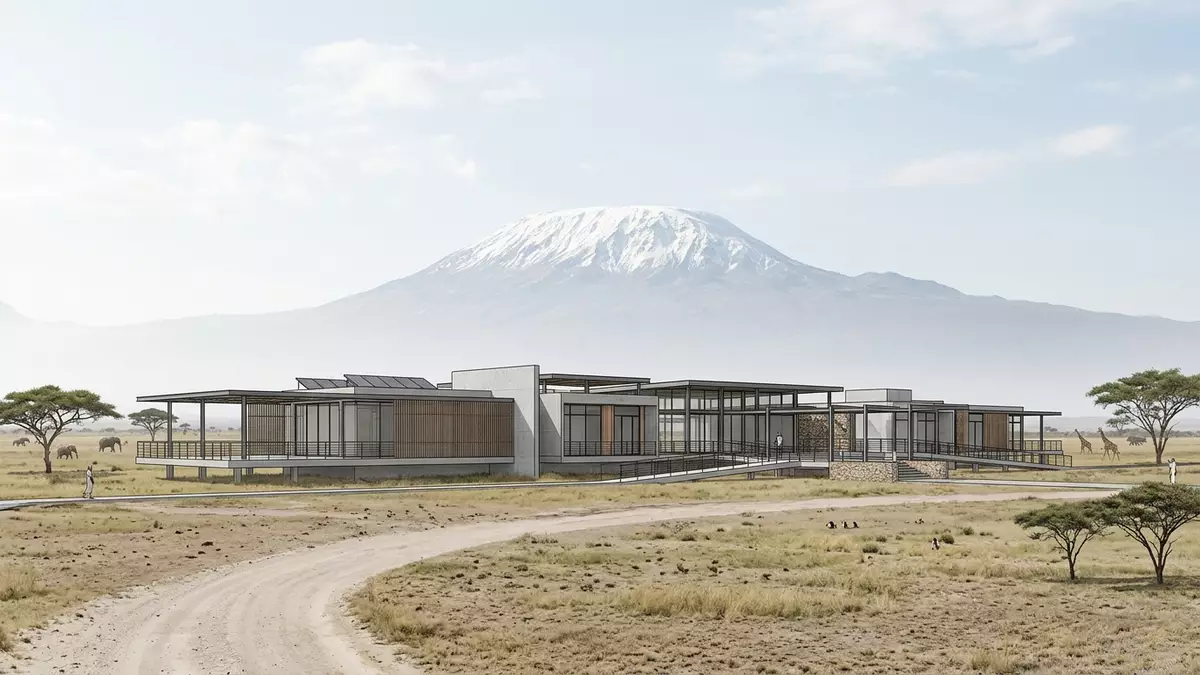
Amboseli National Park in southern Kenya is a protected savanna and wetland landscape where open plains, permanent swamps and Maasai pastoral lands sit beneath the northern foot of Mount Kilimanjaro. Centred on the dried basin of Lake Amboseli and covering around 390 km² (151 sq mi), it has become closely associated with free-ranging elephants and wide views to Africa’s highest peak.protected savanna and wetland landscape
Elephants, swamps and a semi-arid plain
Amboseli’s defining scene is the contrast between its semi-arid plains and the permanent wetlands that cross them. The park includes the dried-up bed of Lake Amboseli, open savanna, acacia-dotted woodland and swamp fed by groundwater from Kilimanjaro, creating a mosaic of dust, grass and open water within a relatively compact area.dried-up bed of Lake Amboseli The alkaline soils of the lake bed form pale, flat expanses, while the swamps support tall reeds and rich grazing for herbivores.
Large elephant herds move visibly between these habitats, and Amboseli has become known as an elephant stronghold in East Africa.elephant stronghold Buffalo, zebra and wildebeest share the open plains, and predators such as lions use the cover of woodland and bush country. Birdlife is concentrated around the wetlands, where waterbirds gather in significant numbers. The varied terrain means that within one game drive a visitor can pass from dusty lake surface to green swamp edge and into drier bush.
Kilimanjaro on the horizon
Geographically, Amboseli National Park lies in Kajiado County in southern Kenya, close to the border with Tanzania and directly north-west of Mount Kilimanjaro’s massif.Kajiado County in southern Kenya On clear days the snow-capped summit and broad slopes of Kilimanjaro form a distant backdrop behind the flat savanna, placing wildlife viewing within one of East Africa’s most recognisable mountain silhouettes.near the border with Tanzania
The park sits at elevations in the range of roughly 1,100 m above sea level, giving it a relatively mild climate compared with coastal Kenya.altitude 1,124–1,169 m Kilimanjaro’s underground water feeds the permanent swamps, so the visual link between mountain and marsh is also a hydrological one. From open areas near the lake bed, Kilimanjaro can appear to rise directly beyond lines of acacia trees, providing perspectives in which elephant herds, flat plains and high mountain all fall within a single frame.
From early reserves to a national park
Amboseli’s protection history reaches back to the period of British colonial administration in East Africa. An extensive Southern Game Reserve covering about 27,700 km² was designated in 1906, including the Amboseli basin as part of a wider conservation landscape.Southern Game Reserve covering about 27,700 km² In 1948 the territory gained more formal status as a national reserve, reflecting its recognised wildlife value within Kenya’s emerging protected-area system.established as a game reserve in 1948
A presidential decree in 1971 set aside around 390 km² exclusively for wildlife conservation and tourism, and Amboseli National Park was officially established in October 1973 within this area.officially established in October 1973 A further milestone came in 1991, when UNESCO recognised Amboseli as a biosphere reserve, linking its plains, swamps and surrounding Maasai grazing lands within a broader concept of human–environment interaction.UNESCO biosphere reserve in 1991 The park is managed by Kenya Wildlife Service, which oversees conservation, tourism and research activities within its boundaries.managed by Kenya Wildlife Service
Visiting Amboseli National Park: what travellers from Western Europe should know
- Amboseli National Park lies in Kajiado County in southern Kenya, near the Kenya–Tanzania border, and is commonly reached on overland safari routes from Nairobi.
- The terrain combines flat, dusty lakebed, soft ground in swamp margins and firm tracks across savanna, so vehicles move between dry and wet surfaces on a single outing.
- Mount Kilimanjaro is visible from many parts of the park when clouds are absent, with viewpoints on open plains offering wide horizons rather than steep climbs.
- The official language is English and the national language is Swahili; the currency is the Kenyan shilling.
- Entry requirements depend on your nationality; UK travellers can check the FCDO travel advice at gov.uk/foreign-travel-advice, Irish travellers the Department of Foreign Affairs at ireland.ie.
Searching for Amboseli National Park on social platforms
These links open searches for Amboseli National Park on each platform.Frequently asked questions about Amboseli National Park
Where is Amboseli National Park located?
Amboseli National Park is in Kajiado County in southern Kenya, near the border with Tanzania and at the northern foot of Mount Kilimanjaro.
What should visitors expect on a visit to Amboseli?
Visitors encounter open savanna, wetlands, the dried basin of Lake Amboseli and regular wildlife viewing, especially of elephants, with distant views of Kilimanjaro on clear days.
What makes Amboseli National Park distinctive?
Amboseli is distinctive for its combination of semi-arid plains, permanent swamps, long-term elephant research and the visual presence of Mount Kilimanjaro beyond its flat horizons.


