
Ananda Pahto, Bagan’s cruciform temple of four Buddhas
Published on 09/12/2026 at 13:35 | Editorial responsibility: Rafael Müller, Editor-in-Chief AD HOC NEWS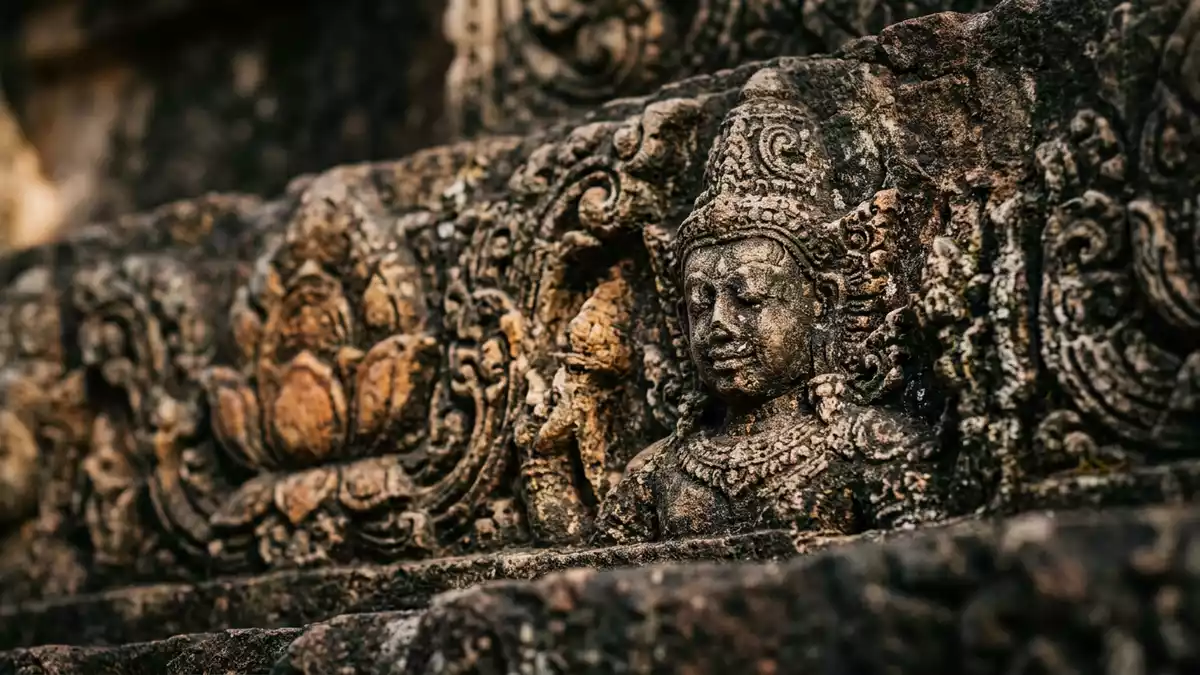
Ananda Pahto in Bagan is a Buddhist temple from the Pagan Dynasty, laid out on a cruciform plan and centred on four standing Buddha images that form the heart of its interior.Bagan’s cruciform temple of four Buddhas Completed in 1105 AD under King Kyanzittha, it stands just outside the old city walls of Bagan in central Myanmar and remains one of the finest monuments of the early twelfth century.Ananda Temple located in Bagan
A Pagan Dynasty temple shaped as a cross
Ananda Pahto belongs to the great temple-building phase of the Pagan Dynasty, a period in which Bagan’s rulers commissioned hundreds of brick sanctuaries along the Irrawaddy River plain.Temple based Indian style structure King Kyanzittha, who reigned from 1084 to the early twelfth century, ordered the construction of Ananda Pahto and saw it completed in 1105, giving the complex a clear royal origin and date in the city’s architectural history.Built by King Kyanzittha around 1090-1105
The temple’s plan is a square broken on each side by large projecting vestibules, producing the distinctive cross-shaped layout that defines the building.Square plan converted into a Greek cross Each arm of this cross holds a devotional hall aligned to one of the cardinal directions, while the central core rises as a solid mass of brickwork supporting a single tower and terraces above. This cruciform arrangement places the main shrines deep within the body of the temple yet keeps the outer walls legible as a balanced, coherent composition.
Four standing Buddhas at the core
Inside Ananda Pahto, four tall Buddha statues stand back to back around the central cube, each facing one of the cardinal points and each occupying its own vaulted hall.Four Buddhas of the present world age The Buddhas represent Kakusandha, Konagamana, Kassapa and Gautama, a sequence that connects the interior programme to long-standing Buddhist conceptions of past and present world ages.Four large standing Buddha statues
The north- and south-facing images preserve early Bagan craftsmanship, while the east and west Buddhas follow a later Mandalay style after the originals were replaced.North and south Buddhas are originals Visitors move through corridors that circle the central block, encountering the four images in sequence as they turn around the core of the temple. The sense of repetition and variation between the statues mirrors the regularity of the plan, reinforcing the way architecture and iconography work together here.
Brick, stucco and distant influences
Ananda Pahto is built primarily of brick masonry coated in white stucco on its exterior surfaces, a material palette shared with many major Bagan temples.Brick masonry with lime mortar and stucco The temple stands as a single-storey mass whose upper terraces step upwards beneath a prominent tower, a profile that blends influences from Mon architecture and North Indian Nagara spires within the context of Burmese religious building.End of Early Bagan period with Mon architecture
Along the outer and inner walls, terracotta tiles and stucco reliefs recount Jataka tales associated with the Buddha’s previous lives, extending in panels that line the corridors and upper levels.Terracotta tiles recounting the last ten Jataka These narrative elements make Ananda Pahto not only a place of worship but also a structured environment in which stories, images and movement are interwoven in a carefully organised sequence under the brick vaults.
Visiting Ananda Pahto: what travellers from Western Europe should know
- Ananda Pahto stands just outside the old city walls of Bagan, southeast of Tharabar Gate within the Bagan Archaeological Zone in Myanmar’s Mandalay Region. It is reached by local road connections across the archaeological plain.
- The temple interior is organised around corridors and stairways that lead visitors along enclosed passageways and up through terraces, with uneven stone floors and steps that require steady footing.
- The surrounding area forms part of a wider concentration of temples on the Bagan plain, with other major brick structures and smaller shrines visible across the landscape.
- The official language is Burmese and the currency is the Myanmar kyat.
- Entry requirements depend on your nationality; UK travellers can check the FCDO travel advice at gov.uk/foreign-travel-advice, Irish travellers the Department of Foreign Affairs at ireland.ie.
Searching for Ananda Pahto on social platforms
These links open searches for Ananda Pahto on each platform.Frequently asked questions about Ananda Pahto
Where is Ananda Pahto located within Bagan?
Ananda Pahto stands just outside the walls of Old Bagan, southeast of Tharabar Gate, within the Bagan Archaeological Zone in central Myanmar.
What can visitors expect inside the temple?
Visitors encounter four large standing Buddha statues arranged around a central core, surrounded by corridors lined with narrative tiles and stucco reliefs.
What makes Ananda Pahto distinctive among Bagan’s temples?
Its cruciform ground plan, combination of Mon and Indian influences and the central group of four directional Buddhas give Ananda Pahto a particularly clear and memorable architectural character.


