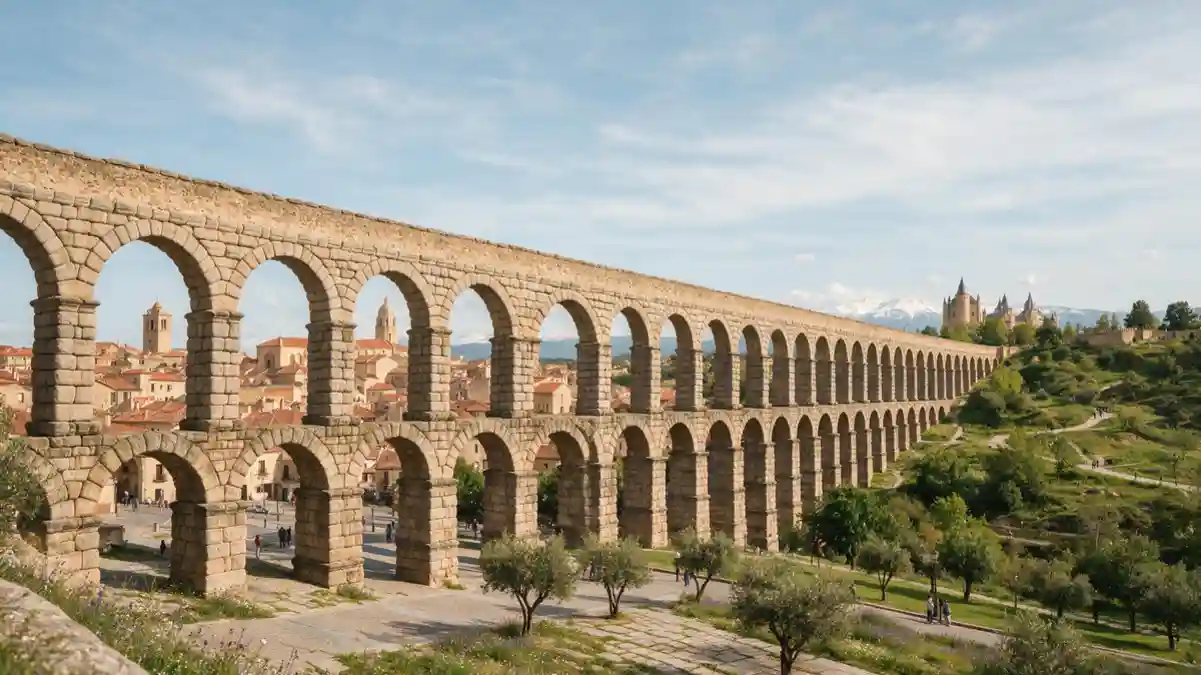
Aqueduct of Segovia hosts Aqueduct Day on 17 November
Published on 11/14/2026 at 18:45 | Editorial responsibility: Rafael Müller, Editor-in-Chief AD HOC NEWSGuided visits and Roman engineering
- Turismo de Segovia organises Aqueduct Day on 17 November 2026.
- The programme includes the San Gabriel sand trap and the Azud.
- The Roman structure has 167 granite arches and dates from the second century AD.
- UNESCO added Segovia and its aqueduct to the World Heritage List in 1985.
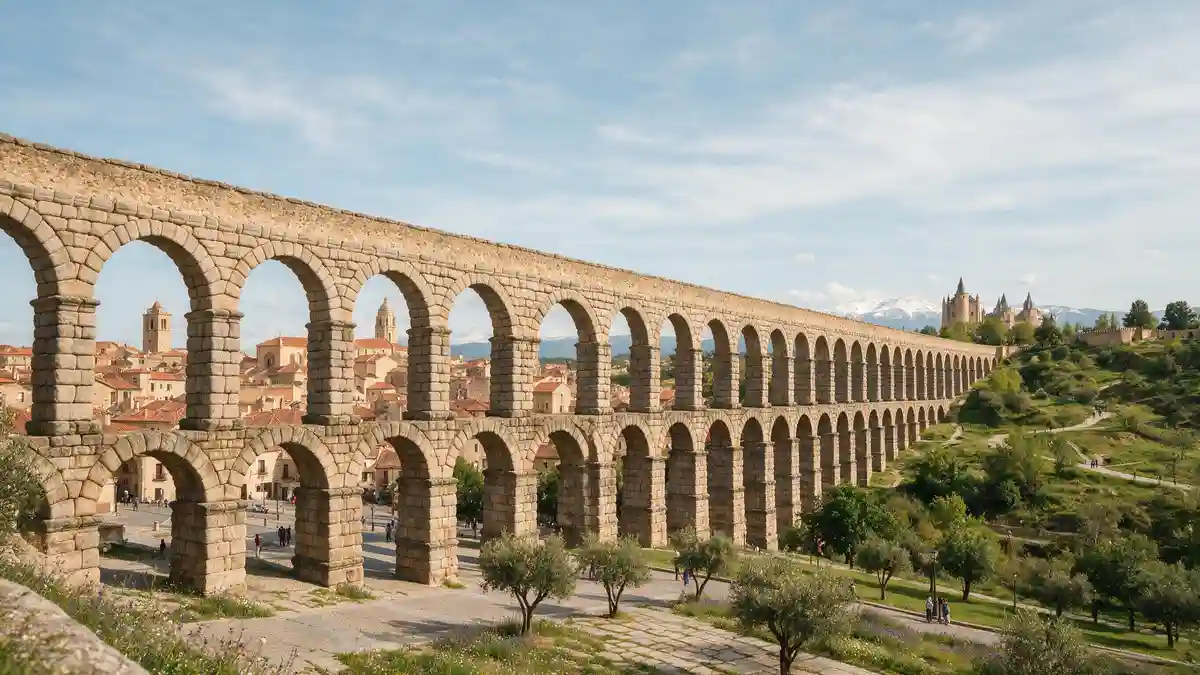
Aqueduct of Segovia (Acueducto de Segovia) in Segovia hosts Aqueduct Day on 17 November 2026, with guided visits to the San Gabriel sand trap and the Azud. The programme is organised by Turismo de Segovia and gives visitors access to parts of the water system beyond the main arcade.
Aqueduct Day brings guided visits on 17 November
Turismo de Segovia lists Aqueduct Day for 17 November and links it to guided visits at the San Gabriel sand trap and the Azud. The official tourism office places the announcement in its current news listing for the monument and identifies the two sites as the focus of the programme.
The event concerns the infrastructure itself rather than a separate city celebration. The sand trap and the weir represent different stages in the historic water route, so the programme connects the visible arches with less familiar elements of the system. The Aqueduct Day announcement is published by the tourism office of Segovia.
Roman arches frame the programme in Segovia
The monument was built in the second century AD and consists of 167 granite arches. Its blocks were set without mortar, using the balance of the stonework to carry the elevated channel across the city.
The main urban section reaches its highest point at Plaza del Azoguejo, where the arches form the best-known view of the structure. The aqueduct carried water to Segovia for almost 2,000 years, while the wider route included collection, conveyance and settling stages before water reached the city.
This history gives the 17 November programme a precise connection to the building. Visitors are not only viewing the arcade from the square; the guided visits relate directly to the sand trap and the weir that helped manage the water before it travelled through the urban section. Segovia and its aqueduct were declared a UNESCO World Heritage Site in 1985, as the Spanish tourism board explains.
From the Azud to the city water channel
The Azud is the weir associated with the water intake, while the San Gabriel sand trap illustrates the settling process used in the aqueduct system. Together, they extend the visitor story beyond the two tiers of arches visible in central Segovia.
The monument is built from granite and follows a route that continues beneath parts of the city towards the Alcázar. Its open-air arcade remains the principal public landmark, but the Aqueduct Day programme directs attention towards functional structures that are normally less prominent in the city view.
Visiting Aqueduct of Segovia: what travellers from Western Europe should know
- Aqueduct Day takes place on 17 November 2026 at sites connected with the Segovia water system, including the San Gabriel sand trap and the Azud.
- The scheduled activity is a set of guided visits, so the programme concerns access to those named structures rather than a change to the open-air arcade.
- The main urban view is at Plaza del Azoguejo in Segovia, where the aqueduct reaches its greatest height.
- The route includes granite arches, an elevated channel and water-management structures; visitors should expect historic masonry and uneven outdoor settings.
- Spain uses Spanish as its official national language, and the currency is the euro.
Searching for Aqueduct of Segovia on social platforms
These links open searches for Aqueduct of Segovia on each platform.
Frequently asked questions about Aqueduct of Segovia
When does Aqueduct Day take place at Aqueduct of Segovia?
Aqueduct Day takes place on 17 November 2026 and includes guided visits to the San Gabriel sand trap and the Azud.
What is Aqueduct of Segovia?
It is a Roman water system built in the second century AD with 167 granite arches and a channel made from unmortared granite blocks.
Where is Aqueduct of Segovia and how do you get there?
The main urban section is in Segovia, with its highest point at Plaza del Azoguejo. The city is in Spain.