
Ashinoko and the volcanic lake at Hakone’s centre
Published on 09/23/2026 at 01:40 | Editorial responsibility: Rafael Müller, Editor-in-Chief AD HOC NEWS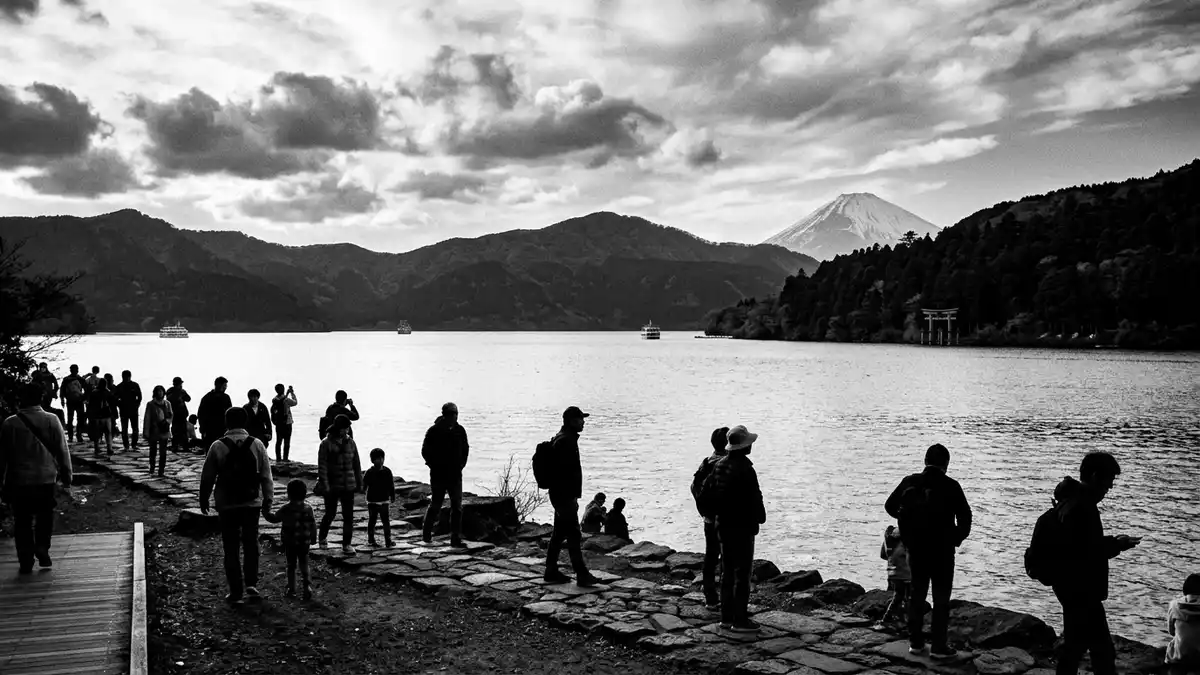
Ashinoko is a lake within the caldera of Mount Hakone, in Kanagawa Prefecture, Japan. Its broad water surface occupies a volcanic basin shaped by lava, rock debris, rainfall and groundwater, while forested slopes rise around the shore.
The lake is not simply a sheet of water in a mountain landscape. Its shoreline carries Hakone Shrine, the old Tokaido route and the remains of a historic checkpoint, bringing geology, religion and travel history into the same view.
Ashinoko’s volcanic basin
Ashinoko formed about 3,000 years ago after an eruption involving Mount Kami, a central peak of the Hakone volcano. Lava and volcanic rock blocked the Haya River, leaving water within the caldera basin. The lake reaches up to 43.5 m (143 ft) in depth and has a shoreline measuring about 19 km (12 miles). Lake Ashinoko’s volcanic formation is recorded in a multilingual guide to the area.
The lake lies at about 723 m (2,372 ft) above sea level. Mount Kurakakeyama rises to the south, while the outer crater rim and central volcanic peaks form the wider setting. Mount Fuji appears beyond the surrounding mountains on clear days, creating a layered view of water, forest and volcanic relief.
Hakone Shrine beside the water
Hakone Shrine gives Ashinoko its most recognisable cultural landmark. The shrine’s history reaches back to 757 CE, when the Buddhist priest Mangan became associated with its foundation. Its religious presence connects the lake with mountain worship and pilgrimage in Hakone.
A red torii stands in the water near the shrine. The gate is linked with the legend of Mangan and the dragon Kuzuryu, a local story in which a threatening lake spirit becomes a protector. The legend belongs to the cultural landscape of Ashinoko, alongside the shrine buildings and wooded approach.
Ancient cedar trunks known as sakasasugi also belong to the lake’s visual and geological story. Landslides carried trees into the water while they remained upright, leaving submerged trunks associated with the formation and later history of the basin. The lake’s submerged cedars are described alongside its plants, fish and aquatic life.
Water, cedar and the old Tokaido
Ashinoko’s shores combine open water with beech, dogwood and stewartia in the surrounding woodland. Reeds and aquatic plants occupy shallower areas, while fog can form around the lake and obscure the volcanic ridges. These details give the basin a changing surface without altering its permanent character.
The old Tokaido road passed through Hakone between Edo and Kyoto. The Hakone Checkpoint marked this important route during the Edo period under the Tokugawa shogunate, and cedar-lined sections of the historic road remain associated with the lakeside landscape.
Water also provides a moving viewpoint across the basin. Sightseeing vessels cross Ashinoko between lakeside districts, while the shore offers views towards Hakone Shrine, forested ridges and the wider caldera. The lake can therefore be encountered as a geological formation, a sacred setting and a historic transport landscape.
Visiting Ashinoko: what travellers from Western Europe should know
- Ashinoko lies in Hakone, south-west of Tokyo, with lakeside access at Motohakone, Hakone-machi and Togendai. Hakone Tozan Bus services connect these areas with Hakone-Yumoto Station.
- The lake is an elevated volcanic landscape at about 723 m (2,372 ft). Shore routes include slopes and uneven ground, while the historic cedar avenue follows sections of the old Tokaido.
- Hakone Tozan Railway, the Hakone Cable Car and Hakone Ropeway form a transport route towards Togendai. The railway begins at Hakone-Yumoto and links with the mountain network.
- The official language is Japanese and the currency is the Japanese yen.
Searching for Ashinoko on social platforms
These links open searches for Ashinoko on each platform.
Frequently asked questions about Ashinoko
Where is Ashinoko?
Ashinoko is in Hakone, Kanagawa Prefecture, on Japan’s main island of Honshu. The lake occupies part of Mount Hakone’s volcanic caldera.
What can visitors expect around the lake?
The lakeside landscape includes Hakone Shrine, the red torii in the water, historic Tokaido route sections and forested volcanic slopes. Sightseeing vessels provide a view across the lake.
What makes Ashinoko distinctive?
Ashinoko brings together a caldera lake formed about 3,000 years ago, a shrine associated with 757 CE and submerged cedar trees linked with landslides.


