
Axum Stelae: monumental towers of the Aksumite kingdom
Published on 09/05/2026 at 06:08 | Editorial responsibility: Rafael Müller, Editor-in-Chief AD HOC NEWS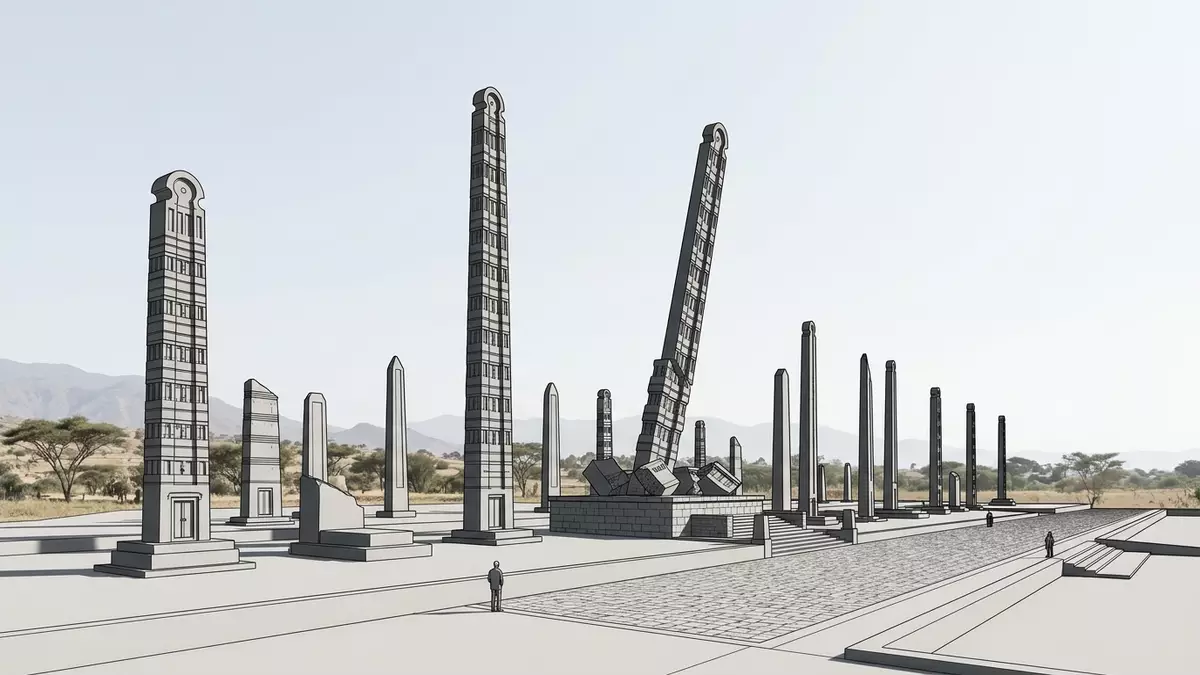
Axum Stelae are monumental stone towers standing over an ancient burial landscape on the northern side of Aksum in northern Ethiopia. Here tall carved monoliths, some fallen, some still upright, mark the graves of rulers from the Kingdom of Aksum in the third and fourth centuries AD and form one of the most distinctive ensembles of late antique architecture in East Africa.
Granite towers over royal tombs
The main concentration of Axum Stelae lies in the Northern Stelae Park, an archaeological field on Aksum’s northern edge where more than one hundred stone markers rise from the ground.Northern Stelae Park The stelae here are carved from single blocks of weather?resistant rock similar in appearance to granite, quarried from outcrops to the west of the town and hauled to the cemetery field before being dressed and decorated.solid blocks of nepheline syenite
Below the larger Axum Stelae lie constructed burial chambers, built in masonry and cut into the earth, which once held the bodies and grave goods of Aksumite nobles and kings.built chambers beneath the markers Some bases carry stone altars with channels cut into their surface, evidence of ritual acts carried out beside the graves. In plan the field reads as a dense cluster of tall markers among lower blocks and rougher stones, with the largest monuments concentrated towards one side of the park.
Carved to resemble multi?storey palaces
The taller Axum Stelae are not simple pillars but elaborately carved monuments that imitate the fronts of Aksumite buildings. Along their length bands of recessed panels suggest storeys stacked above a main doorway, while rows of false windows and decorative patterns create the impression of multi?storey palaces rendered in stone.buildings of up to 13 storeys Smaller stelae are simpler, sometimes little more than dressed slabs, yet they still carry the characteristic vertical emphasis of Aksumite design.
Most of the great Axum Stelae date to the third and fourth centuries AD, in the later phase of the Kingdom of Aksum when the city held a central role in regional trade and political power.stelae dating between the 3rd and 4th centuries AD The group of seven tallest monuments in the Northern Stelae Park appears to have been raised in the late fourth century, around the same time that the Aksumite court adopted Christianity and the city’s religious landscape changed.late fourth?century group of stelae
The Great Stele, Ezana’s Stele and the Obelisk of Axum
Among the Axum Stelae three monuments have become particularly well known. The Great Stele is the largest of them, measuring about 33 m (108 ft) in length and lying broken across the ground where it fell.33?metre?long Great Stele It was carved as a soaring multi?storey façade, yet its mass and the difficulty of raising it meant that it never stood as intended and instead dominates the field as a fallen giant.
Nearby stands King Ezana’s Stele, around 24 m (79 ft) high, which survives upright and intact and is notable for its clean lines and carefully balanced proportions.24 m King Ezana’s Stele The third major monument is the Obelisk of Axum, a 4th?century stele about 24 m (79 ft) tall, carved in the same architectural style with tiered storeys and false windows and weighing around 160 tonnes.Obelisk of Axum Together these three towers and the surrounding field show the range of ambition in Aksumite monument building, from intact upright markers to colossal projects that never reached their planned standing form.
Visiting Axum Stelae: what travellers from Western Europe should know
- Axum Stelae stand in the Northern Stelae Park on the northern side of Aksum in Ethiopia’s Tigray region, reached along the road network that links the town with other centres in northern Ethiopia.
- The archaeological field contains uneven ground, stone platforms and approaches over earth paths, and visiting the larger stelae areas involves walking across the site rather than viewing from a single paved terrace.
- The Axum Stelae form part of the wider historic landscape of Aksum, with church compounds, palace remains and additional stelae fields lying within and around the town.
- The official language is Amharic and the currency is the Ethiopian birr.
- Entry requirements depend on your nationality; UK travellers can check the FCDO travel advice at gov.uk/foreign-travel-advice, Irish travellers the Department of Foreign Affairs at ireland.ie.
Searching for Axum Stelae on social platforms
These links open searches for Axum Stelae on each platform.
Frequently asked questions about Axum Stelae
Where are Axum Stelae located?
Axum Stelae stand in and around the town of Aksum in Ethiopia’s Tigray region, with the principal concentration in the Northern Stelae Park on the town’s northern side.
What should visitors expect when exploring the site?
Visitors walk among tall carved stone towers, fallen monoliths and visible tomb structures in an open archaeological field where the terrain combines earth paths, stone platforms and uneven surfaces.
What makes Axum Stelae distinctive among ancient monuments?
Axum Stelae are distinctive because they are carved as multi?storey palace façades in single blocks of stone, raised above royal tombs from the Aksumite kingdom in the third and fourth centuries AD.


