
Bagan’s brick temples across a sacred river plain
Published on 09/24/2026 at 07:23 | Editorial responsibility: Rafael Müller, Editor-in-Chief AD HOC NEWS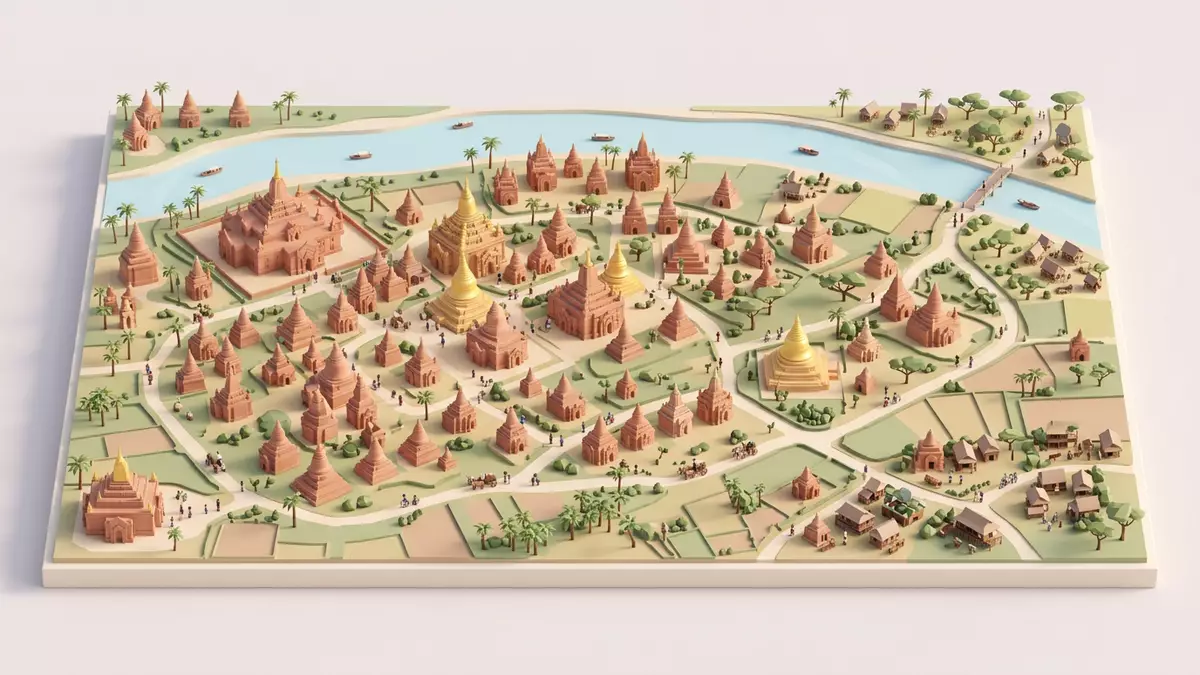
Bagan is a vast archaeological landscape beside the Ayeyarwady River in central Myanmar. Its brick temples, stupas and monasteries extend across a dry plain, linking Buddhist architecture with the history of the Bagan Period.
Bagan’s sacred landscape beside the Ayeyarwady
The site lies on a bend of the Ayeyarwady, with most of its protected components on one bank and another component across the river. The setting combines monuments, archaeological remains, inscriptions, murals, sculptures, farming areas and living communities.
Bagan’s sacred landscape forms part of Myanmar’s central dry zone. The visible buildings range from compact stupas to large temple complexes, with brickwork providing the dominant material across the plain.
From the Bagan Period to World Heritage
Bagan flourished between the eleventh and thirteenth centuries, when the city served as the capital of a regional Buddhist empire. The period is associated with Theravada Buddhist traditions of merit making, expressed through the construction and use of religious monuments.
Construction reached a peak in the thirteenth century. Bagan’s surviving buildings record different scales, designs and decorative traditions, while inscriptions, murals and sculptures preserve further evidence of religious life and artistic practice. The site entered the World Heritage List in 2019.
Bagan’s World Heritage inscription recognises the landscape under cultural criteria connected with Buddhist tradition, monumental architecture and continuing religious practice.
Brick architecture, stupas and temple interiors
Bagan’s architecture is defined by fired brick, layered terraces, vaulted interiors and rising superstructures. Stupas provide solid monuments for Buddhist devotion, while temples contain corridors, shrines and painted or sculpted elements.
The ensemble includes 3,595 recorded monuments, covering stupas, temples and other structures for Buddhist spiritual practice. Their variety is visible in differences of scale, plan, ornament and preservation, while the wider landscape keeps the monuments connected as a cultural setting.
The religious buildings are not isolated museum objects. Buddhist worship, merit-making activities, farming and community life remain part of the cultural landscape. This combination of archaeological evidence and continuing practice gives Bagan a character distinct from a collection of abandoned ruins.
Visiting Bagan: what travellers from Western Europe should know
- Bagan lies in central Myanmar beside the Ayeyarwady River. It is reached through Nyaung-U, which has road, river and air connections with other parts of the country.
- The archaeological landscape is spread across a broad, dry plain. Visits involve walking between separate monuments, with uneven ground around many brick structures.
- The main architectural elements are brick temples, stupas, monasteries, murals, sculptures and inscriptions. Shoes are removed when entering Buddhist religious buildings.
- The official language is Burmese and the currency is the Myanmar kyat.
- Entry requirements depend on your nationality; UK travellers can check the FCDO travel advice at gov.uk/foreign-travel-advice, Irish travellers the Department of Foreign Affairs at ireland.ie.
Searching for Bagan on social platforms
These links open searches for Bagan on each platform.
Frequently asked questions about Bagan
Where is Bagan?
Bagan is in central Myanmar, beside a bend of the Ayeyarwady River. The archaeological landscape lies within the country’s dry zone.
What can visitors expect in Bagan?
Visitors encounter brick temples, stupas, monasteries, murals, sculptures and inscriptions spread across a broad archaeological landscape. Buddhist religious buildings remain connected with living cultural practices.
What makes Bagan distinctive?
Bagan combines an exceptionally large recorded group of Buddhist monuments with a continuing sacred landscape. Its strongest historical association is with the Bagan Period between the eleventh and thirteenth centuries.


