Bagh-e Fin: water, shade and stone in a Persian desert garden
Published on 08/12/2026 at 13:19 | Editorial responsibility: Rafael Müller, Editor-in-Chief AD HOC NEWS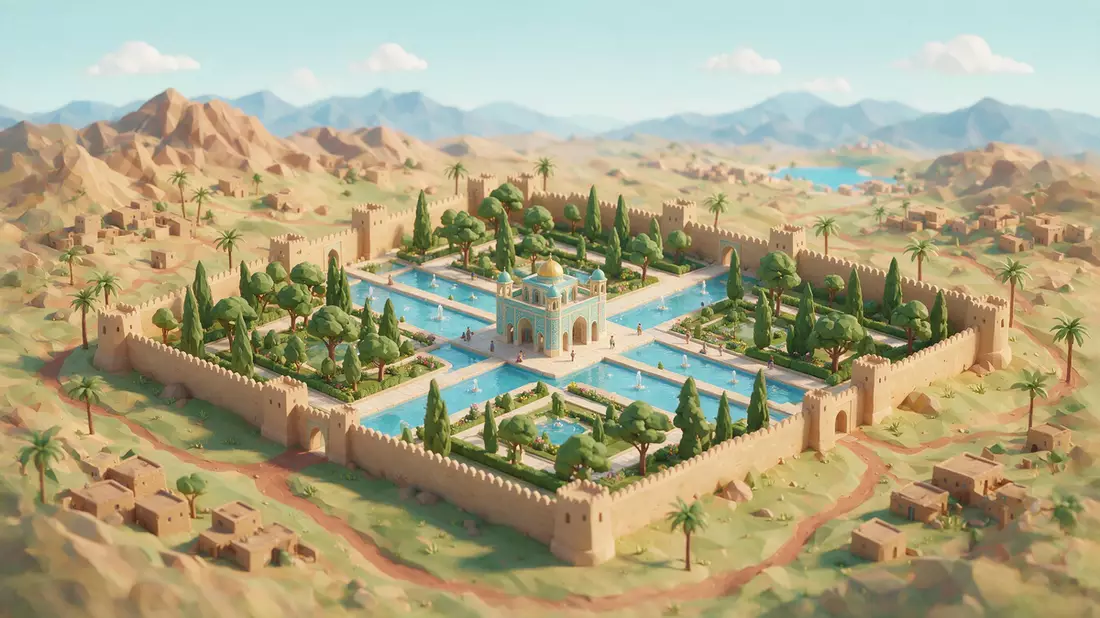
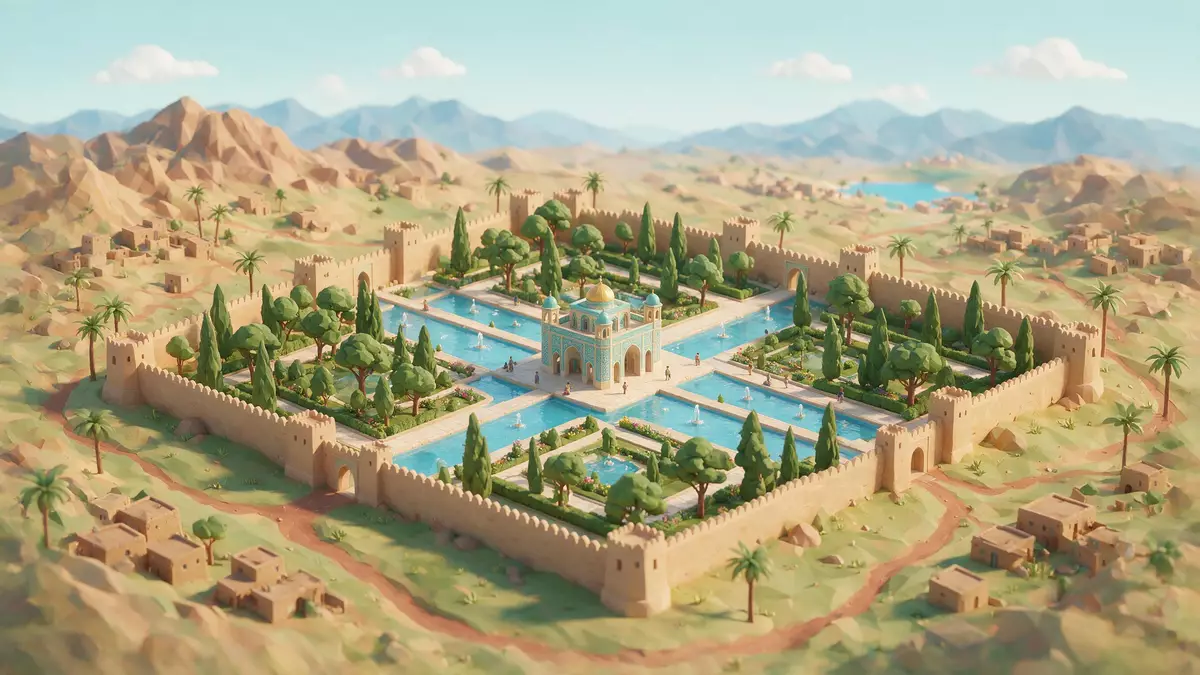
Bagh-e Fin near Kaschan in central Iran is a historic Persian garden where flowing spring water, cypress avenues and pale stone pavilions together form an ordered oasis on the edge of the desert. Originating in the Safavid period under Shah Abbas I in the late sixteenth century, and later refined in the Qajar era, the garden sets architecture and planting around a constant water source that has fed Kaschan for generations.
Water drawn into geometry
The defining element of Bagh-e Fin is water. The garden captures the Suleymaniyeh spring on the slopes above Kaschan and carries it into a regular pattern of channels and basins laid out across several hectares of enclosed ground. Within the outer walls, water runs in straight lines between planted plots and paved walkways, crossing beneath stone paths and emerging again in shallow features where it spreads into wider surfaces.
The layout follows the principles of classical Persian garden design, often described as a charbagh, with rectilinear divisions arranged around a central axis. In Bagh-e Fin, this geometry is visible in the clear lines of the watercourses, the alignment of trees alongside them and the position of the principal pavilion where channels converge. The controlled routes of the spring water contrast with the surrounding desert margins, making the garden feel like an organised micro-landscape shaped by the flow.
Safavid walls and Qajar pavilions
Bagh-e Fin was developed as a royal garden during the reign of Shah Abbas I, who ruled in the Safavid dynasty from 1588 to 1629, and many of its defining structures belong to that period. The perimeter walls, the monumental entrance gateway and the main central pavilion are Safavid works, built in pale stone and brick with painted interiors and elevated platforms looking onto the water channels. Their proportions and decoration link the garden to other courtly complexes of the era.
Later, under the Qajar dynasty in the nineteenth century, the ensemble gained further buildings, including a larger bathhouse and a library set among the trees. The smaller historic bath, known as Fin Bathhouse, sits within the garden and is associated with the assassination of Amir Kabir, the reformist prime minister under Naser al-Din Shah, in 1852. These layers of construction make Bagh-e Fin a record of changing dynasties, with Safavid, Zand and Qajar elements sharing the same enclosure while water provides continuity between them.
Trees, shade and enclosed space
Within its enclosing walls Bagh-e Fin combines architecture with dense planting. Rows of cypress and other long-lived trees follow the watercourses, their trunks marking the garden’s axes and their canopies casting shade over the paths and channels. Between the main routes, smaller plots support shrubs and seasonal plants, forming a pattern of green compartments framed by stone edges and low kerbs.
The enclosing walls set the garden apart from the surrounding terrain and emphasise the sense of interior space. Visitors move between open courts, narrower passages and covered structures such as pavilions and baths, each with a different relationship to the water. In some areas channels run in the open between trunks and paving; elsewhere the flow disappears beneath floors and re-emerges in quiet features beside built structures. Seen together, the trees, water and masonry give Bagh-e Fin a layered character in which planted and built elements are closely intertwined.
Visiting Bagh-e Fin: what travellers from Western Europe should know
- Bagh-e Fin lies a short distance south-west of Kaschan in central Iran, reached by road from the city along routes that connect Kaschan with Tehran and Isfahan.
- The garden interior combines paved paths, steps and uneven stone surfaces around water features, and visiting involves walking between pavilions and bathhouses within the walled enclosure.
- The surrounding region has a continental desert climate, and in the hotter months the shaded avenues and flowing water inside Bagh-e Fin form a marked contrast with the drier terrain beyond the walls.
- The official language is Persian and the currency is the Iranian rial.
- Entry requirements depend on your nationality; UK travellers can check the FCDO travel advice at gov.uk/foreign-travel-advice, Irish travellers the Department of Foreign Affairs at ireland.ie.
Searching for Bagh-e Fin on social platforms
These links open searches for Bagh-e Fin on each platform.
Frequently asked questions about Bagh-e Fin
Where is Bagh-e Fin and what kind of place is it?
Bagh-e Fin is a walled Persian garden near Kaschan in central Iran, combining planted avenues, flowing spring water and historic pavilions within a single enclosed site.
What can visitors expect inside the garden?
Visitors encounter straight water channels, trees aligned along paths, Safavid and Qajar buildings including pavilions and bathhouses, and a sequence of paved courts and shaded walks.
What makes Bagh-e Fin distinctive among Persian gardens?
Its use of the Suleymaniyeh spring, Safavid origins under Shah Abbas I, later Qajar additions and association with Amir Kabir’s death together give Bagh-e Fin a layered historical character.