
Balboa Park’s arcades, gardens and museums in San Diego
Published on 08/23/2026 at 13:44 | Editorial responsibility: Rafael Müller, Editor-in-Chief AD HOC NEWS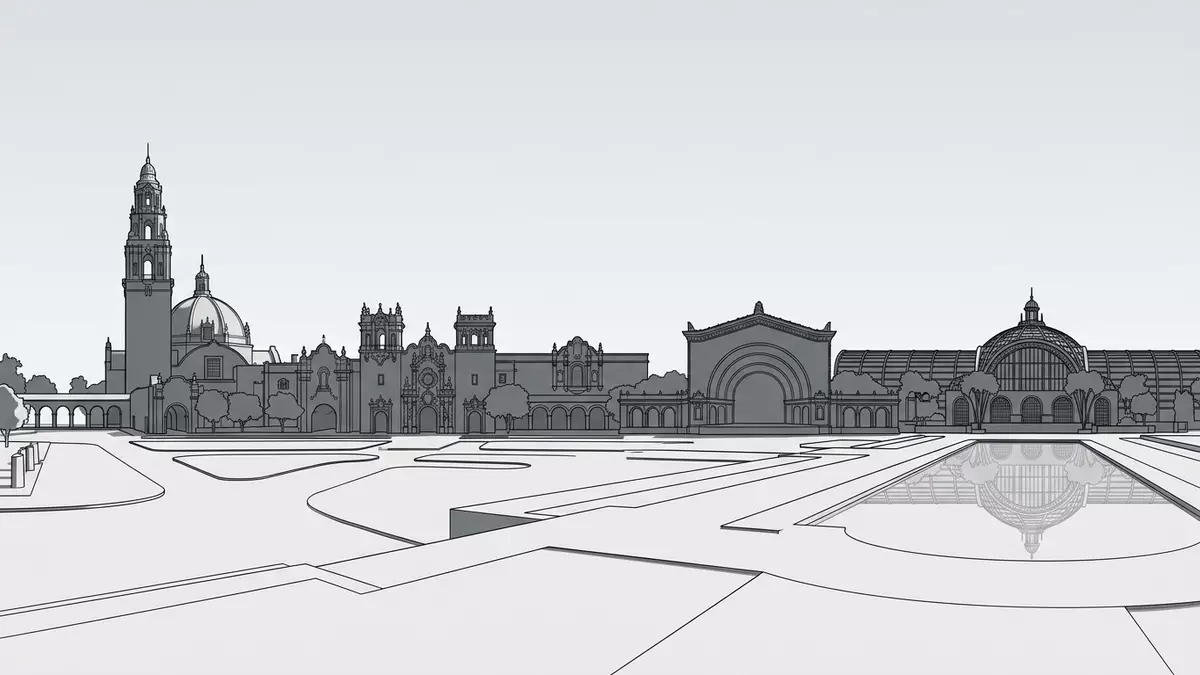
Balboa Park spreads across a high mesa above central San Diego, bringing gardens, museums and performance spaces together in one of California’s largest urban parks. In 1868 the city set aside a wide tract of land as public parkland, the starting point for what later became Balboa Park and its cultural district.A 1,400-acre parcel was reserved for park use that year
From City Park to Balboa Park’s exposition boulevard
The park began life under the plain name City Park, a large open reserve overlooking what grew into downtown San Diego.Civic leaders designated the land in 1868 and the area remained largely undeveloped for decades. In 1910 the city renamed it Balboa Park, honouring explorer Vasco Núñez de Balboa as preparations gathered pace for an international exposition linked to new canal routes.
The Panama–California Exposition opened on 1 January 1915 and reshaped the central mesa with exhibition courts, long promenades and pavilions in Spanish Colonial Revival and Mission Revival styles.Balboa Park took on its present name during the run-up to this fair Many of the structures built as ostensibly temporary exposition halls gained new lives as museums and cultural institutions once the fair closed.
Arcades, towers and the El Prado spine
The heart of Balboa Park is El Prado, an east–west boulevard lined with pavilions, arcades and courtyards that grew out of the 1915 exposition plan.Many of the main structures along this axis date from 1915–16 Stucco facades, sculpted ornament and tiled roofs give the central complex a consciously historic character that contrasts with the street grid of San Diego beyond the park’s canyons. The California Tower rises beside the former exposition church, now part of the Museum of Us, and provides one of the park’s most recognisable vertical landmarks.The California Tower stands near the San Diego Museum of Us on El Prado
Crossing one of the park’s deep canyons, the Cabrillo Bridge carries El Prado westwards towards the Uptown districts.The bridge was built for the Panama–California Exposition of 1915 Its sequence of arches lifts traffic and pedestrians high above the landscape and announces the transition from city streets to the cultural core. Approaching from this side, visitors meet rows of museums and gardens almost at once, framed by colonnades that link building to building.
Gardens, museums and the San Diego Zoo
Behind the facades, Balboa Park concentrates an array of collections that would fill a small city centre on their own. The park is home to around fifteen museums covering subjects from aviation and automobiles to art, natural history and regional heritage.Institutions here include the San Diego Museum of Art, the San Diego Natural History Museum and the San Diego Air & Space Museum Halls that began as exposition pavilions now display paintings, aircraft, geological specimens and model railways.
Landscape architecture is as present as gallery architecture. Formal gardens such as the Alcazar Garden sit near the arcades, while themed plantings like the Desert Garden and Rose Garden spread out towards the park’s edges.Balboa Park combines cultural buildings with extensive planted areas Within the wider reserve lies the San Diego Zoo, founded in the early twentieth century and occupying a substantial tract of canyons and slopes inside the park boundary.The zoo covers more than 40 hectares within Balboa Park
Visiting Balboa Park: what travellers from Western Europe should know
- Balboa Park lies north-east of downtown San Diego on a high mesa between canyons, with main entrances from streets such as Park Boulevard and Sixth Avenue.
- The central museum district around El Prado is largely level, but many paths drop into canyons with notably steep gradients and flights of steps.
- Several named gardens, including the Rose Garden and Desert Garden, sit a short walk from the El Prado axis and involve exposed paths with little shade.
- The official language is English and the currency is the United States dollar. Entry requirements depend on your nationality; UK travellers can check the FCDO travel advice at gov.uk/foreign-travel-advice, Irish travellers the Department of Foreign Affairs at ireland.ie.
Searching for Balboa Park on social platforms
These links open searches for Balboa Park on each platform.
Frequently asked questions about Balboa Park
Where is Balboa Park located?
Balboa Park occupies a large mesa immediately north-east of downtown San Diego in southern California, between canyons that separate it from surrounding neighbourhoods.
What can visitors expect to find in Balboa Park?
Visitors encounter gardens, museums, performance spaces and the San Diego Zoo, many housed in early twentieth-century pavilions along the El Prado promenade.
What makes Balboa Park distinctive among city parks?
Balboa Park combines Spanish Revival exposition architecture, a dense concentration of museums and a major zoo within a single municipal park landscape.


