
Bale Mountains National Park’s high-altitude worlds above Dinsho
Published on 08/23/2026 at 13:30 | Editorial responsibility: Rafael Müller, Editor-in-Chief AD HOC NEWS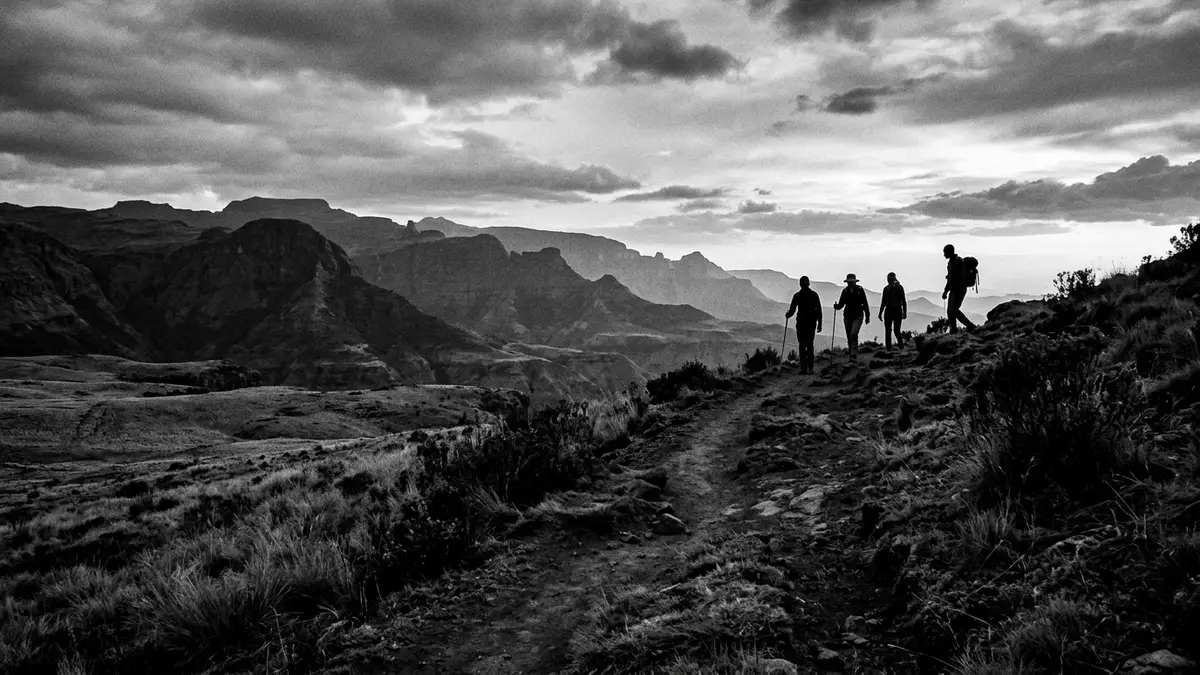
Bale Mountains National Park in Ethiopia rises above Dinsho in a sweep of highland plateaux, deep valleys and forested slopes that compress several African landscapes into one protected area. Created in the late 1960s and inscribed as a UNESCO World Heritage Site in 2023, it brings together afroalpine moorland, montane forest and grassland habitats across a single mountain massif.
High plateaux and deep forests in the Bale highlands
Bale Mountains National Park lies in the Oromia Region of south-eastern Ethiopia, part of the Bale–Arsi massif of the Ethiopian Highlands. The protected area spans well over 2,000 square kilometres of mountains, valleys and forest, covering elevations from mid-altitude hills to peaks that rise above 4,000 m (13,123 ft). The park boundary encloses a core section of the Bale Mountains themselves, and Dinsho serves as the administrative headquarters at the northern edge of the highlands.Bale Mountains National Park In 1969 the area was formally established as a national park, giving legal protection to what has become recognised as the largest continuous expanse of afroalpine habitat in Africa.largest continuous afroalpine landscape
The terrain of Bale Mountains National Park is strikingly varied. In the north, rolling grasslands and open shrubland lead towards higher ground, where the Sanetti Plateau forms an undulating high-altitude tableland dotted with shallow depressions, lakes and wetlands. To the south, the mountains drop into the Harenna Forest, a band of montane and cloud forest that clings to the slopes and extends beyond the park boundary.largest expanse of Afroalpine habitat The combination of plateau, escarpment and forest gives visitors a sequence of distinct landscapes within a single journey.
The Sanetti Plateau and Harenna Forest: two contrasting highland realms
The Sanetti Plateau is the central high-altitude feature of Bale Mountains National Park, occupying the highest portion of the range. Much of it lies above 3,800 m (12,467 ft), with the highest summits of the massif reaching around 4,377 m (14,360 ft).highest portion of the plateau Across this elevation band, afroalpine vegetation dominates, with tussock grasses, shrublands and scattered giant lobelias adapted to the thin air and cool temperatures of the Ethiopian highlands.Bale Mountains high plateau
On the southern slopes below the plateau, the Harenna Forest forms a dense green counterpart to the open moorland above. The forest is a montane tropical evergreen belt that includes stands of bamboo and cloud forest dominated by native tree species.Harenna Forest In its upper reaches, trees share space with mosses and epiphytes, while lower zones harbour a rich mix of plants and wildlife. The southern portion of Bale Mountains National Park protects a significant part of this forest, linking the afroalpine plateau to the forested slopes in a single protected gradient.
Endemic wildlife in a UNESCO-listed highland refuge
Bale Mountains National Park is notable for the concentration of endemic mammals and birds that inhabit its high-altitude ecosystems. Among the best known is the Ethiopian wolf, a highland canid restricted to a handful of afroalpine areas in Ethiopia. The Sanetti Plateau supports what has been identified as the largest population of this endangered species, where the animals patrol the open grasslands in search of rodents such as the giant mole-rat.Ethiopian wolf populations The park is also a stronghold for the mountain nyala, an antelope that occurs naturally in the Ethiopian Highlands and finds suitable habitat in the grasslands and forest margins of Bale.mountain nyala and Ethiopian wolf
Other mammals associated with Bale Mountains National Park include Menelik’s bushbuck, various reedbuck and duiker species, warthog and a range of smaller endemic rodents. Primates add further variety, with the Bale monkey linked particularly to the forest areas of the park.endemic mammals in the park Birdlife is equally rich, and the park has been recognised as one of Africa’s important bird areas, with highland cranes, raptors and vultures using the thermals and wetlands of the highlands.birding hotspot The ecological significance of these combined habitats underpinned the decision in 2023 to place Bale Mountains National Park on the World Heritage List as part of Ethiopia’s portfolio of protected highland sites.
Visiting Bale Mountains National Park: what travellers from Western Europe should know
- Bale Mountains National Park lies in south-eastern Ethiopia’s Oromia Region, with Dinsho as the park headquarters and main access point on the northern side of the highlands.
- The terrain ranges from mid-altitude grasslands near Dinsho to the high Sanetti Plateau above 3,800 m (12,467 ft), so visitors encounter thinner air and cooler temperatures at higher elevations.
- The Harenna Forest covers the southern slopes of the Bale Mountains within and beyond the park, and reaching this area from the plateau involves travelling across steep and winding mountain roads.
- The official language is Amharic and the currency is the Ethiopian birr.
- Entry requirements depend on your nationality; UK travellers can check the FCDO travel advice at gov.uk/foreign-travel-advice, Irish travellers the Department of Foreign Affairs at ireland.ie.
Searching for Bale Mountains National Park on social platforms
These links open searches for Bale Mountains National Park on each platform.
Frequently asked questions about Bale Mountains National Park
Where is Bale Mountains National Park located?
Bale Mountains National Park lies in the Oromia Region of south-eastern Ethiopia, within the Bale–Arsi massif of the Ethiopian Highlands and close to the town of Dinsho.
What can visitors expect during a visit?
Visitors encounter a sequence of landscapes, from grasslands near Dinsho through the high Sanetti Plateau to the montane Harenna Forest, with opportunities to see endemic highland wildlife.
What makes Bale Mountains National Park distinctive?
The park combines Africa’s largest continuous afroalpine habitat with montane forest and supports major populations of endemic species such as the Ethiopian wolf and mountain nyala.


