
Bale Mountains National Park’s high plateau and deep forest
Published on 08/20/2026 at 08:32 | Editorial responsibility: Rafael Müller, Editor-in-Chief AD HOC NEWS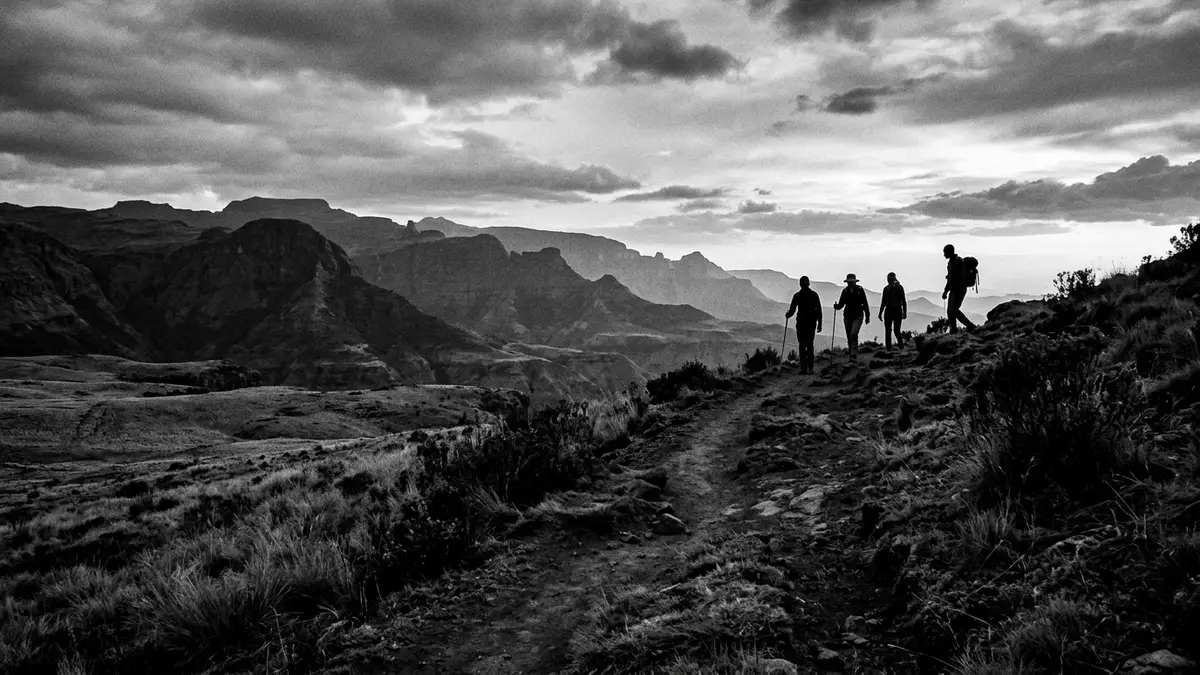
Bale Mountains National Park in Ethiopia’s Oromia Region forms a highland reserve where an Afro?alpine plateau and a deep montane forest share one protected landscape. At its centre, the Sanetti Plateau rises above 4,000 m (13,123 ft), while to the south the Harenna Forest descends into cloud?wrapped valleys, placing strikingly different habitats within a day’s travel of Dinsho, the park headquarters.
Highland plateau above the Ethiopian plains
Bale Mountains National Park lies in the Bale Zone of southeastern Ethiopia, within the Bale?Arsi massif of the Ethiopian Highlands in Oromia Regional State.Bale?Arsi massif in Oromia The protected area covers more than 2,100 km² of high plateaux, moorlands and slopes in the Bale Mountains, forming part of a larger mountain system that stands south?east of Addis Ababa.area of the park
The Sanetti Plateau is the highest part of the Bale Mountains and sits wholly inside Bale Mountains National Park, forming an extensive Afro?alpine grassland and shrubland around volcanic cones and boulder?strewn moor.Sanetti Plateau inside the park Elevations on the plateau climb well above 3,000 m (9,843 ft) and reach around 4,377 m (14,360 ft) at Tullu Dimtu, one of Ethiopia’s highest peaks.Tullu Dimtu elevation In contrast, the southern slopes drop into the Harenna Forest, one of Ethiopia’s largest remaining tracts of moist montane woodland.
Afro?alpine moorland and cloud forest in one park
Bale Mountains National Park is structured around distinct ecological zones, each associated with altitude. On the northern side, grasslands and woodlands surround Dinsho and the park headquarters, with juniper stands on the slopes between Dodola and the town.juniper woodlands around Dinsho Higher up, the central Sanetti Plateau forms an Afro?alpine landscape of moorland, heath and rocky outcrops, characterised by giant lobelia plants and heather?like groundcover.
Beyond the plateau’s southern edge, the terrain falls into the Harenna Forest, a cloud forest whose upper reaches contain bamboo groves and Hagenia?dominated woodland.Harenna Forest slopes This forest zone carries moist montane vegetation and supports a wide range of mammals, amphibians and birds, including several Ethiopian endemics.three main ecoregions The combination of Afro?alpine plateau and montane forest within one protected area gives the park a compressed cross?section of highland ecology.
Endemic wildlife on the plateau and in the forest
Wildlife in Bale Mountains National Park reflects this varied terrain. The Sanetti Plateau’s Afro?alpine grasslands support the largest known population of the endangered Ethiopian wolf, a canid specialised in hunting rodents on open ground.largest Ethiopian wolf population Estimates suggest that roughly half of the global Ethiopian wolf population lives within the park’s boundaries, and a significant proportion of that total is concentrated on the plateau.Ethiopian wolf numbers
Other mammals in the highlands include mountain nyala and Bale monkey, both endemic to Ethiopia, alongside larger predators such as lion, leopard, hyena and African golden wolf in suitable habitats.predator species list The Harenna Forest is recognised as the only known habitat of the bamboo?eating Bale monkey and carries extensive birdlife and amphibians linked to its moist montane conditions.Bale monkey habitat This concentration of endemic species and high?altitude ecosystems has led to Bale Mountains National Park’s recognition as a site of international conservation importance and to its nomination in 2009 for UNESCO’s World Heritage Tentative List.UNESCO tentative listing in 2009
Visiting Bale Mountains National Park: what travellers from Western Europe should know
- Bale Mountains National Park lies roughly south?east of Addis Ababa in Ethiopia, with park headquarters near Dinsho along the road linking Robe and Goba.
- The highland terrain demands adjustment to altitude, with roads and tracks crossing the Sanetti Plateau above 3,000 m (9,843 ft) and descending into steep forested slopes.
- An all?weather road runs from Dinsho through Robe and Goba, continues over the Sanetti Plateau and then drops into the Harenna Forest, giving vehicle access to both plateau and forest zones.road from Dinsho via Robe and Goba
- The official language is Amharic and the currency is the Ethiopian birr.
- Entry requirements depend on your nationality; UK travellers can check the FCDO travel advice at gov.uk/foreign-travel-advice, Irish travellers the Department of Foreign Affairs at ireland.ie.
Searching for Bale Mountains National Park on social platforms
These links open searches for Bale Mountains National Park on each platform.
Frequently asked questions about Bale Mountains National Park
Where is Bale Mountains National Park located?
Bale Mountains National Park is in the Bale Zone of the Oromia Region in southeastern Ethiopia, within the Bale?Arsi massif and near the town of Dinsho.
What should visitors expect during a visit?
Visitors encounter high?altitude Afro?alpine moorland on the Sanetti Plateau and a steep descent into the Harenna Forest, with mountain roads linking plateau and forest.
What makes Bale Mountains National Park distinctive?
The park is distinctive for combining the largest known population of Ethiopian wolves with endemic species such as mountain nyala and Bale monkey in a single highland landscape.


