
Basilica di San Marco and Venice’s marble façade
Published on 09/24/2026 at 06:34 | Editorial responsibility: Rafael Müller, Editor-in-Chief AD HOC NEWS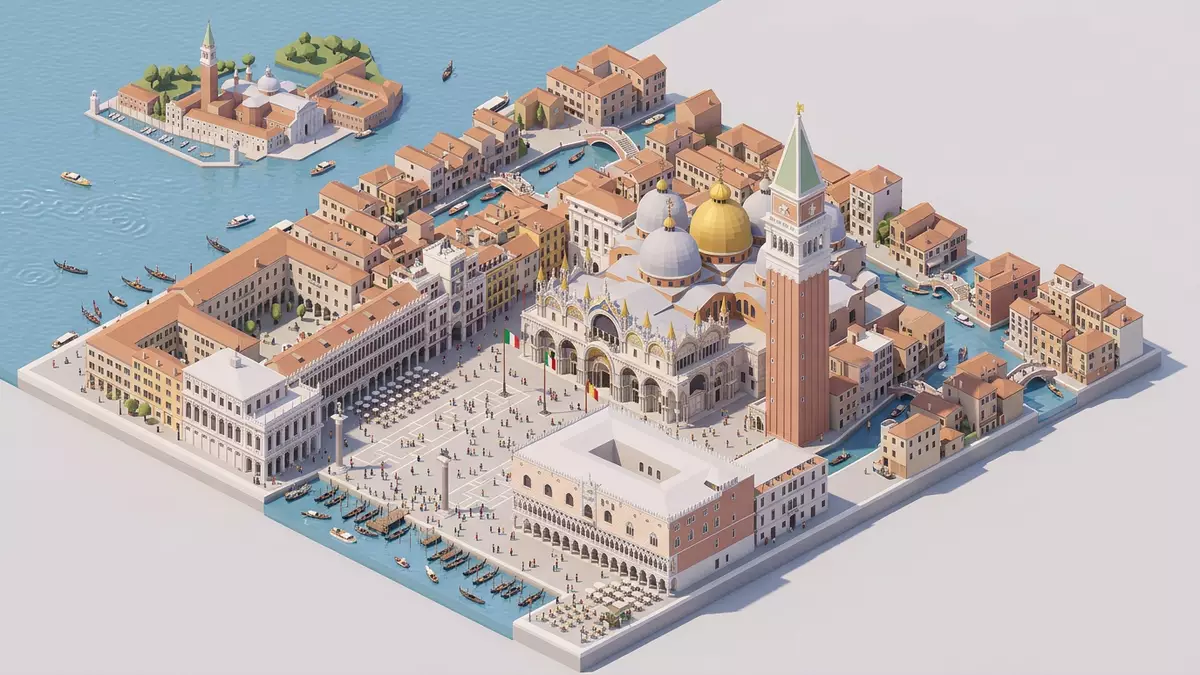
Basilica di San Marco rises beside the Doge’s Palace in Venice with domes above a façade of marble, sculpture and mosaic. Its visible character comes from the meeting of Byzantine forms, Gothic decoration and objects connected with the history of Venice.
Five domes and a Byzantine plan
The present church began in 1063 under Doge Domenico Contarini. Its central plan follows a Greek cross, with the main spaces gathered beneath five large domes. The building was consecrated in 1094, after decades of reconstruction and decoration.
The basilica is dedicated to Saint Mark the Evangelist. His relics reached Venice from Alexandria in 829 under Doge Giustiniano Partecipazio. The first church was consecrated in 832, while the present building belongs to the medieval rebuilding that followed a fire in 976.
Inside, gold-ground mosaics cover the vaults, domes and walls. Their subjects include episodes from the life of Christ, the history of Saint Mark’s relics and scenes from Christian scripture. Mosaic work began in the eleventh century and continued through later phases of the building’s history.
Marble, sculpture and the western façade
The three principal façades are clad in marble, columns, capitals and reliefs. Much of this material reached Venice after the conquest of Constantinople in 1204. Byzantine elements stand beside Venetian sculpture and later Gothic additions.
The western façade faces Piazza San Marco. Its lower level contains four large portals, while the upper decoration includes arches, aedicules, statues and the replica of the bronze horse quadriga. The original horses are preserved inside the Museo di San Marco.
The façade’s sculpture includes saints, prophets, virtues, the months of the year, zodiac signs and scenes from Venetian crafts. Reliefs around the central portal combine animals, foliage, biblical figures and allegorical subjects. Carrara marble appears among the materials used in the sculptural programme.
The southern façade faces the lagoon and contains the porphyry group known as the Tetrarchs. Two columns called the Pillars of Acre also came from Constantinople. The northern façade overlooks Piazzetta dei Leoncini and includes the Porta dei Fiori, with a Nativity sculpture above it.
From ducal chapel to cathedral
Basilica di San Marco served as the doge’s chapel and the church of state for centuries. Its position beside the Doge’s Palace connected religious ceremony with the political life of the Venetian Republic.
Venice became part of the Kingdom of Italy in 1866. The basilica became the cathedral church of Venice in 1807, when it became the seat of the Patriarch of Venice. Its historic role remains visible in the relationship between the church, the palace and Piazza San Marco.
The building also records the changing artistic language of Venice. Byzantine planning and mosaics form the medieval core. Gothic cusps, pinnacles and sculptural details were added during the fourteenth and fifteenth centuries. Renaissance interventions appear in later chapels and furnishings.
The four bronze horses on the façade belong to the basilica’s most recognisable objects. They arrived in Venice after the conquest of Constantinople in 1204 and were placed on the façade during the thirteenth century. Their gilded surfaces and ancient origins connect the building with the wider Mediterranean world.
Visiting Basilica di San Marco: what travellers from Western Europe should know
- Basilica di San Marco stands on Piazza San Marco in central Venice, beside the Doge’s Palace and close to the lagoon-facing Piazzetta.
- The approach crosses Venice’s pedestrian streets and bridges. The square and surrounding routes contain paving, steps and narrow passages.
- The building includes the basilica interior, the atrium, the Museo di San Marco and upper viewing areas reached by stairs.
- The official language is Italian and the currency is the euro.
Searching for Basilica di San Marco on social platforms
These links open searches for Basilica di San Marco on each platform.
Frequently asked questions about Basilica di San Marco
Where is Basilica di San Marco?
It stands on Piazza San Marco in Venice, beside the Doge’s Palace and near the lagoon. The basilica forms part of the city’s historic civic and religious centre.
What can visitors expect inside?
The interior contains domes, gold-ground mosaics, marble surfaces, chapels, sculpted furnishings and the Museo di San Marco. Stairs connect the basilica with upper areas.
What makes the basilica distinctive?
Its Greek-cross plan, five domes, Byzantine mosaics, marble façades and Gothic sculpture form a layered Venetian ensemble. The building also preserves objects connected with Constantinople and Saint Mark.


