
Basilica di San Pietro and the great stone canopy of Vatican City
Published on 08/20/2026 at 10:37 | Editorial responsibility: Rafael Müller, Editor-in-Chief AD HOC NEWS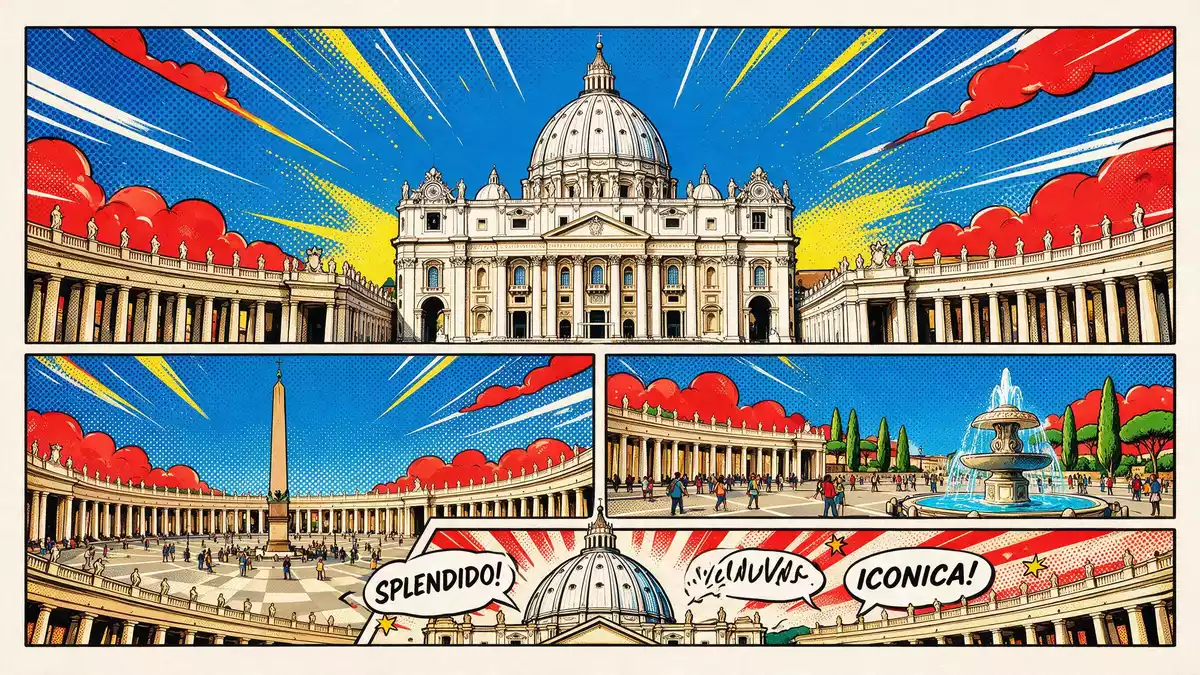
Basilica di San Pietro, known in English as St Peter’s Basilica, dominates the skyline of Vatikanstadt with its vast nave and commanding dome rising over St Peter’s Square. Completed in the seventeenth century as a Renaissance and Baroque church, it stands on the site associated with the Apostle Peter and serves as the principal basilica of Vatican City.
A basilica of Renaissance ambition and Baroque finish
The present Basilica di San Pietro belongs to the great wave of Renaissance rebuilding in Rome, begun under Pope Julius II in the early sixteenth century. Construction of the new basilica began in 1506, replacing the Constantinian church that had stood on the Vatican hill since the fourth century.The history of New St Peter’s began in 1506 A succession of architects followed, including Donato Bramante, Antonio da Sangallo the Younger and Raphael, each leaving traces in the evolving plans.
Michelangelo Buonarroti took charge of the project in 1546 at the age of over seventy, reshaping the design around a central Greek-cross plan and creating the powerful drum and profile of the dome that defines the basilica’s silhouette.Michelangelo’s appointment in 1546 and his role in shaping the dome In the early seventeenth century Carlo Maderno extended the nave into the longitudinal form seen today, and Gian Lorenzo Bernini completed the ensemble with his great colonnades embracing the square.
Stone, space and the dimensions of the nave
From the piazza, the sheer scale of Basilica di San Pietro is already apparent in its travertine-faced façade and the sweep of steps leading to the entrance. Inside, the nave stretches beneath a coffered barrel vault, lined with colossal pilasters and framed chapels that recede into side aisles. The interior length is over 180 m (around 600 ft), while the full outer length of the basilica reaches about 218 m (715 ft), placing it among the longest churches in the world.The outside length of 218 m and interior length of about 186 m
The nave’s height at the apex of the vault rises to more than 45 m (149 ft), creating a vertical volume that dwarfs visitors and gives the side chapels the scale of small churches in their own right.Measurements of the nave’s height and internal length The floor is marked with inlaid lines comparing the lengths of other major churches, a quiet reminder that this interior is designed on an extraordinary scale. Marble of various colours, gilded stucco and sculpted reliefs cover the structural skeleton, so that measurements that could belong to an engineering drawing become part of a richly decorated sacred space.
The dome and Bernini’s great bronze canopy
Above the crossing, the great masonry dome conceived by Michelangelo anchors the whole composition. The inner diameter at its base measures over 40 m (131 ft), and the overall height from the basilica floor to the top of the cross reaches about 133 m (436 ft), giving the structure a presence visible far beyond the walls of Vatican City.The dome’s diameter and the basilica’s total height The dome rests on four massive piers, each deeply recessed with niches, and is encircled by a Latin inscription in gold letters that runs around the base of the vault.
Directly beneath the dome, Gian Lorenzo Bernini’s bronze baldachin rises over the papal altar and the space associated with the tomb of Saint Peter. The baldachin takes the form of a monumental canopy supported on twisted columns and stands as a Baroque counterpart to the heavy masonry above.Bernini’s bronze Baldacchino and its completion in the seventeenth century Together the dome and the canopy link the vertical axis of the building from the floor level of the confession to the lantern high above, giving Basilica di San Pietro one of its most recognisable interior vistas.
Visiting Basilica di San Pietro: what travellers from Western Europe should know
- Basilica di San Pietro stands within Vatikanstadt, an enclave inside the city of Rome, and faces the broad expanse of Piazza San Pietro with its 17th-century colonnades.
- The approach from the square involves crossing an open stone-paved space and ascending a flight of steps to reach the main entrance doors.
- The interior covers a large area, and exploring it on foot involves walking long aisles and some uneven stone surfaces, especially near the crypt areas below the main floor.
- Italian is the official language of Vatikanstadt and the surrounding city, and the currency is the euro.
- Entry requirements depend on your nationality; UK travellers can check the FCDO travel advice at gov.uk/foreign-travel-advice, Irish travellers the Department of Foreign Affairs at ireland.ie.
Searching for Basilica di San Pietro on social platforms
These links open searches for Basilica di San Pietro on each platform.
Frequently asked questions about Basilica di San Pietro
Where is Basilica di San Pietro located?
Basilica di San Pietro stands in Vatikanstadt, an independent city state enclaved within Rome, facing Piazza San Pietro on the western bank of the Tiber.
What should visitors expect inside the basilica?
Visitors encounter a vast stone interior with a high vaulted nave, richly decorated chapels, monumental sculptures and the central space under Michelangelo’s dome above the papal altar.
What makes Basilica di San Pietro distinctive among churches?
Its combination of Renaissance planning, Michelangelo’s great masonry dome and Bernini’s bronze baldachin over the papal altar gives Basilica di San Pietro a distinctive spatial focus and profile.


