
Bob Marley Museum, Kingston’s house of reggae history
Published on 08/22/2026 at 06:41 | Editorial responsibility: Rafael Müller, Editor-in-Chief AD HOC NEWS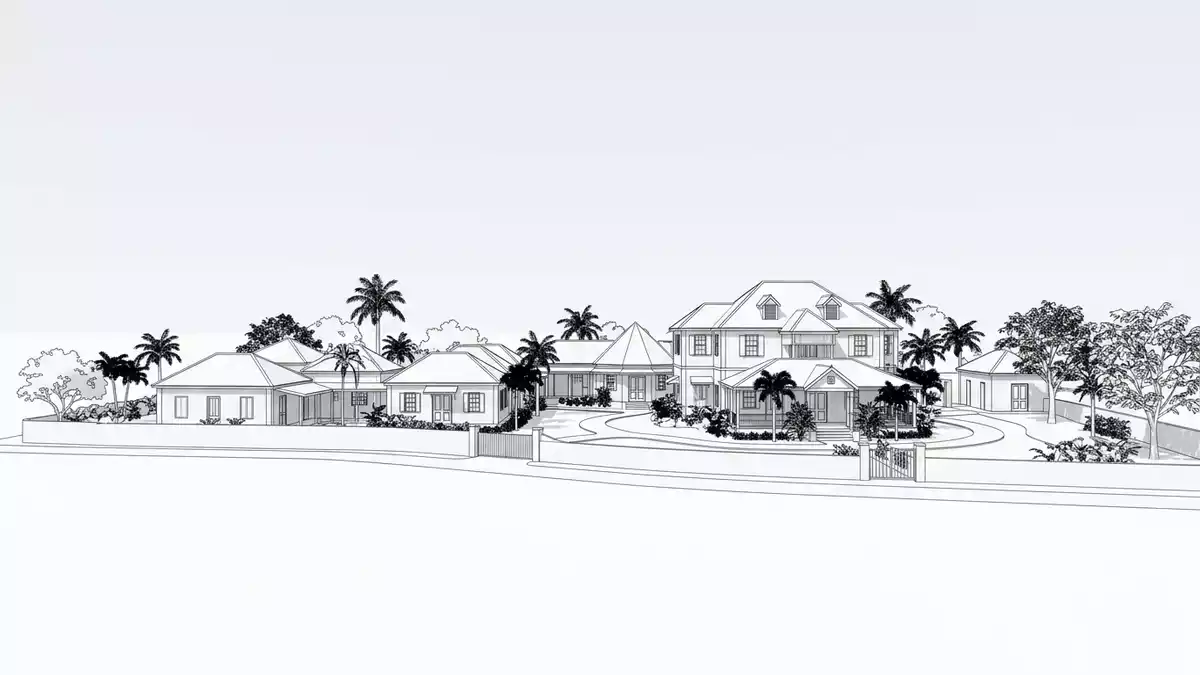
In Kingston’s uptown Hope Road district, Bob Marley Museum occupies the former home of Robert Nesta Marley, turning a once private address into a compact monument to reggae history and the daily life of Jamaica’s most widely recognised musician. The house dates from the nineteenth century and became Bob Marley’s residence in 1975, linking its timber and masonry architecture with the story of Jamaican music in the late twentieth century.
From nineteenth-century townhouse to reggae landmark
Bob Marley Museum stands at 56 Hope Road in Kingston, within the wider Kingston and Saint Andrew area, in a neighbourhood that developed as a residential district for the city’s expanding middle class.56 Hope Road in Kingston The building itself is a late nineteenth-century house whose proportions, verandas and mixed timber-and-masonry construction reflect domestic architecture of that period in Jamaica.house featuring nineteenth-century architecture Its street frontage and compact yard place it within the dense grid of Kingston rather than in a secluded rural estate.
Bob Marley purchased the property in 1975 and lived there until his death in 1981, making the address closely associated with his Kingston years and with the peak of his international touring.purchased in 1975 and lived here until 1981 In 1986 the house opened as Bob Marley Museum, a historic house and music museum dedicated to his life and work, overseen by his wife Rita Marley.established in May 1986 That change of function preserved the everyday spaces of the home while formalising them as exhibition rooms within an institution.
Inside Bob Marley’s former home
The main museum rooms follow the plan of the original house, allowing visitors to move through spaces that once served as living rooms, bedrooms and work areas. Walls carry photographs, posters and framed documents, and display cases hold smaller personal items associated with Bob Marley’s career. Among the objects on show are instruments, stage clothing and recording artefacts, giving the domestic interior the character of a curated archive rather than a reconstructed set.
The museum complex includes an indoor theatre with seating for film presentations, a photographic gallery and spaces used for retail, including a record shop and a gift shop stocked with Marley-themed memorabilia.theatre, photographic gallery, record shop and gift shop The yard around the house retains its compact scale, with paths and small outdoor areas that connect the main building to auxiliary structures. Together, the preserved rooms and additions form a site that combines historic domestic architecture with the layout of a small cultural institution.
Bob Marley Museum in Kingston’s cultural landscape
Bob Marley Museum lies in Kingston, the capital of Jamaica, on a stretch of Hope Road that has seen the growth of recording studios, offices and residences linked to the island’s music industry.museum in Kingston, Jamaica As a historic house and music museum, it forms part of a wider cluster of cultural sites in the city, which includes venues, parks and former estates associated with nineteenth- and twentieth-century Jamaican history.historic house and music museum The Hope Road address places the museum within reach of other Kingston landmarks that visitors may combine with a visit.
Inside, interpretation focuses on Bob Marley as a major figure in twentieth-century music and on reggae as a genre that developed out of earlier Jamaican styles. Displays and guided tours connect the material on show with Kingston’s role as the centre of Jamaica’s recording industry, highlighting how a private home became a site woven into the story of global popular music. The combination of preserved domestic spaces and curated exhibits gives the museum a dual character as both former residence and public institution.
Visiting Bob Marley Museum: what travellers from Western Europe should know
- Bob Marley Museum stands at 56 Hope Road in Kingston 6, within the Kingston and Saint Andrew area in Jamaica’s capital. It is reached along Hope Road by road transport from other parts of Kingston.
- The main museum occupies a historic two-storey house with internal staircases and relatively compact rooms, with additional facilities such as a small theatre and retail spaces around the yard.
- The official language is English and the currency is the Jamaican dollar.
- Entry requirements depend on your nationality; UK travellers can check the FCDO travel advice at gov.uk/foreign-travel-advice, Irish travellers the Department of Foreign Affairs at ireland.ie.
Searching for Bob Marley Museum on social platforms
These links open searches for Bob Marley Museum on each platform.
Frequently asked questions about Bob Marley Museum
Where is Bob Marley Museum located?
Bob Marley Museum is in Kingston, Jamaica, at 56 Hope Road in the Kingston 6 district within the Kingston and Saint Andrew area.
What can visitors expect inside the museum?
Visitors move through Bob Marley’s former home, seeing rooms with photographs, artefacts and memorabilia, alongside facilities such as a small theatre, photographic gallery and retail spaces.
What makes Bob Marley Museum distinctive among music sites?
The museum combines a preserved nineteenth-century townhouse with its role as a historic house and music museum focused on Bob Marley’s life and reggae’s development in Kingston.


