
Bosque de Chapultepec, Mexiko-Stadt’s historic urban forest
Published on 09/10/2026 at 15:24 | Editorial responsibility: Rafael Müller, Editor-in-Chief AD HOC NEWS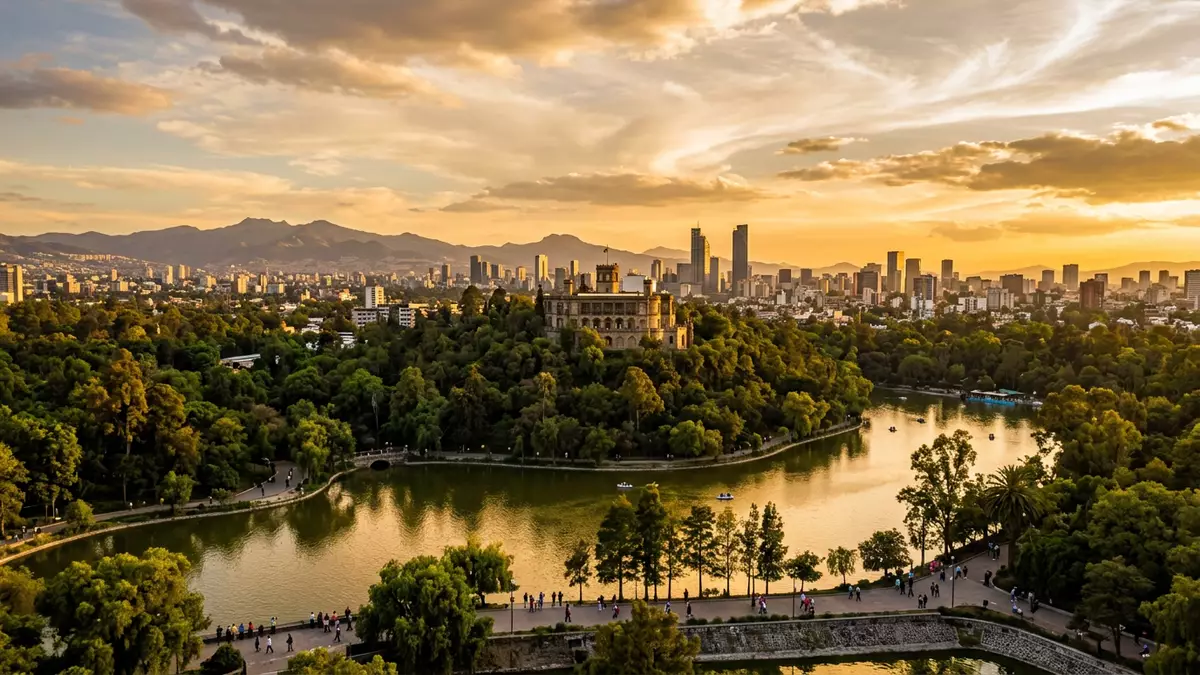
Bosque de Chapultepec in Mexiko-Stadt is an extensive urban forest where ancient springs, a wooded hill and major museums form a continuous landscape of history and leisure. It is one of the principal green spaces of Mexico City and a place where pre-Hispanic waterworks, a nineteenth-century castle and twentieth-century cultural institutions stand within the same park.
A forest with deep pre-Hispanic roots
The hill of Chapultepec and its surrounding forest form part of a settled landscape whose history reaches back several millennia, along the former shores of Lake Texcoco. Archaeological evidence indicates human presence here as early as the Preclassic period, with ceramics and burials marking early communities beside the lake.Preclassic period remains Long before the expansion of Mexico-Tenochtitlan, the forest’s natural springs provided potable water to neighbouring settlements.
In the Mexica era, Chapultepec became a sacred and strategic site, closely tied to the island capital of Mexico-Tenochtitlan. Springs here fed an aqueduct that carried drinking water into the heart of the empire, and the forest served as a place of rest and ceremony for the tlatoanis, or rulers.garden and aqueduct Mexica elites developed gardens, palatial structures and baths near the water sources, embedding political power in the landscape as well as in the city.
From royal retreat to public park
After the Spanish conquest in the early sixteenth century, Chapultepec retained its role as a water source for the growing colonial capital while also becoming a favoured retreat for viceroys and elites. In 1530, Emperor Charles V issued a royal decree that made the forest property of Mexico City, a status that opened the area formally to the city’s inhabitants.royal decree in 1530 Over the following centuries, the forest offered both recreation and crucial infrastructure in the form of its water supply.
The eighteenth and nineteenth centuries reshaped Chapultepec as both residence and symbol. Construction of Chapultepec Castle began in the 1780s on the prominent hill above the forest, and the building later served as a military academy, an imperial palace under Emperor Maximilian and a presidential residence.Chapultepec Castle’s evolving role Between the late nineteenth century and the early twentieth century, under President Porfirio Díaz, the forest was reorganised as a landscaped park with avenues, lakes and monuments, aligning it with contemporary ideas of an urban leisure ground.redesigned park opening in 1910
An urban forest of museums, lakes and paths
Bosque de Chapultepec occupies several sections of wooded terrain within the western part of Mexico City, forming a major component of the city’s urban forest.principal urban forest of the city The park is laid out with broad paths, tree-lined avenues and open clearings that connect its different areas, from hillside viewpoints to lakes with boating facilities. Sections of the forest retain stands of mature trees, reflecting centuries of planting and management.
Cultural institutions are embedded within the parkland. Chapultepec Castle crowns the hill and houses the National Museum of History, while nearby museums include the National Museum of Anthropology and the Museum of Modern Art, both established in the twentieth century.anthropology and modern art museums Elsewhere within the forest, a zoo dating from the 1920s and newer exhibition spaces add layers of scientific and environmental interpretation to the historic setting.
Visiting Bosque de Chapultepec: what travellers from Western Europe should know
- Bosque de Chapultepec lies to the west of Mexico City’s historic centre, with entrances along major avenues including Paseo de la Reforma. It is accessible by city transport, including the Metro and bus routes that serve the surrounding districts.
- Within the park, visitors encounter varied terrain, from gently sloping paths on the lower ground to steeper climbs up the hill towards Chapultepec Castle, including stairways and multi-level walks.
- The official language is Spanish and the currency is the Mexican peso.
- Entry requirements depend on your nationality; UK travellers can check the FCDO travel advice at gov.uk/foreign-travel-advice, Irish travellers the Department of Foreign Affairs at ireland.ie.
Searching for Bosque de Chapultepec on social platforms
These links open searches for Bosque de Chapultepec on each platform.
Frequently asked questions about Bosque de Chapultepec
Where is Bosque de Chapultepec located within Mexiko-Stadt?
Bosque de Chapultepec occupies a large expanse of parkland to the west of Mexico City’s historic centre, adjoining major thoroughfares such as Paseo de la Reforma.
What can visitors expect during a visit to Bosque de Chapultepec?
Visitors encounter wooded paths, lakes, a zoo and significant museums, alongside the hilltop Chapultepec Castle, all set within a broad urban forest.
What makes Bosque de Chapultepec distinctive among urban parks?
Its combination of ancient springs, pre-Hispanic history, a former imperial and presidential residence and major national museums within one continuous forested parkland gives it a distinctive character.


