
Bwindi Impenetrable National Park and its ancient rainforest
Published on 09/22/2026 at 18:46 | Editorial responsibility: Rafael Müller, Editor-in-Chief AD HOC NEWS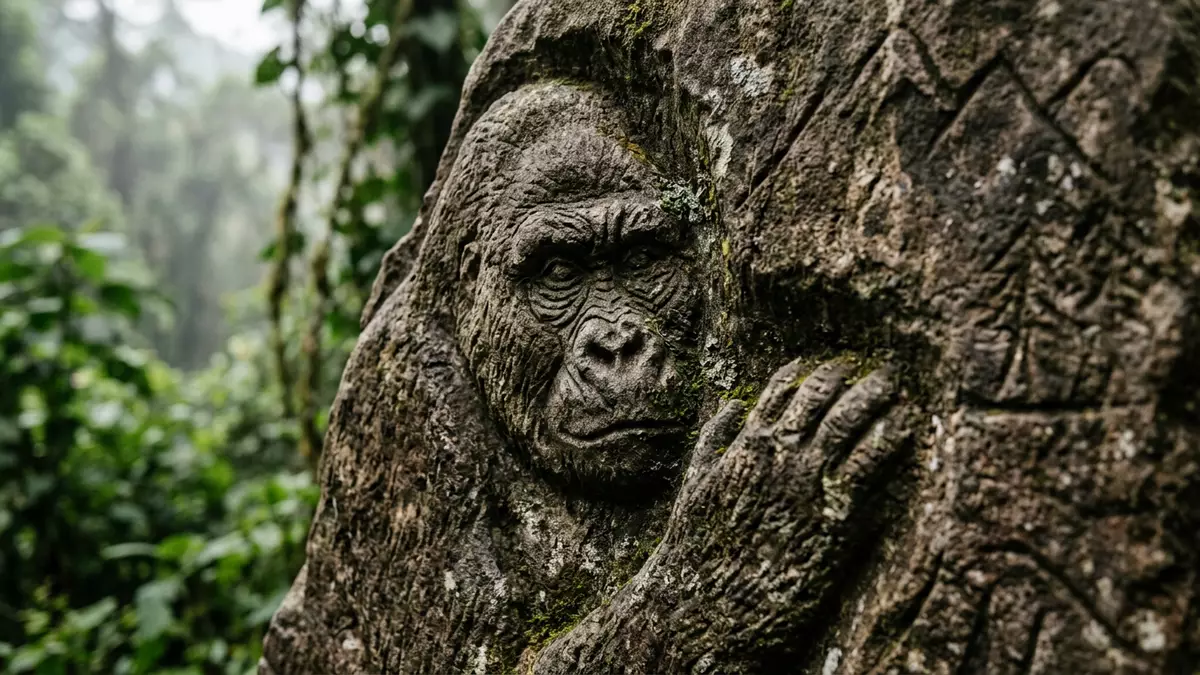
Bwindi Impenetrable National Park is a forest landscape of steep ridges, deep valleys and dense vegetation in south-western Uganda. Its rainforest covers 32,000 hectares at the meeting point of lowland and mountain forests, with the Albertine Rift and the Democratic Republic of the Congo border nearby.
The park’s character comes from the close relationship between altitude, forest and terrain. Paths cross a landscape that rises from lower valleys towards mountain ridges, while the vegetation includes towering trees, ferns and plants adapted to a range of elevations.
Bwindi’s forest on the Albertine Rift
Bwindi lies in the Kigezi Highlands, across parts of south-western Uganda. The nearest main town is Kabale, while the protected forest extends across the districts of Kabale, Kisoro, Rubanda and Kanungu.
The park occupies the western edge of the Albertine Rift, a major geological region associated with mountains, escarpments and deep valleys. Its position gives the forest a varied physical setting, with lowland and montane habitats joined within one protected area.
The forest reaches elevations from roughly 1,160 metres to 2,607 metres above sea level. This range places valleys, slopes and ridges within the same rainforest landscape, although the ground itself remains rugged and heavily wooded.
From forest reserve to national park
The protected area became a national park in 1991, when Uganda gave formal national-park status to Bwindi Impenetrable Forest. Its history as a protected forest reaches further back, with earlier conservation designations preceding the national park.
In 1994, UNESCO added Bwindi Impenetrable National Park to the World Heritage List. The World Heritage designation reflects the ecological importance of a forest containing exceptional plant and animal diversity.
The park covers approximately 32,000 hectares and contains more than 160 tree species and over 100 species of ferns. Its plant life also includes orchids, climbers and other vegetation associated with humid mountain forests.
Mountain gorillas and a layered ecosystem
Bwindi is closely associated with the mountain gorilla, a great ape found in the forested highlands of the Albertine Rift. Gorilla groups live among dense vegetation, steep slopes and valleys covered by rainforest.
The park also contains many bird species, mammals, butterflies and forest plants. Several birds belong to the Albertine Rift region, whose species are associated with the mountains and forests along the western branch of the Great Rift Valley.
The forest is not a single, uniform habitat. Differences in altitude and terrain create a succession of ecological settings, from lower forest to higher ridges. The park’s biodiversity profile includes trees, ferns, birds, butterflies and endangered wildlife.
A visit takes place within this living forest rather than beside a single monument. Routes pass through vegetation, slopes and narrow ground corridors, with the mountain gorilla as one part of a wider rainforest ecosystem.
Visiting Bwindi Impenetrable National Park: what travellers from Western Europe should know
- The park lies in south-western Uganda near Kabale, with access routes continuing through Kanungu towards sectors such as Buhoma. Road travel is the principal approach from the Ugandan interior.
- The terrain consists of steep ridges, deep valleys, forest paths and changing elevations. Travel within the forest takes place on foot across uneven ground.
- International routes commonly begin at Entebbe, Uganda’s main international gateway. Domestic flights can connect with airstrips serving parts of the region.
- The official language is English and the currency is the Ugandan shilling.
- Entry requirements depend on your nationality; UK travellers can check the FCDO travel advice at gov.uk/foreign-travel-advice, Irish travellers the Department of Foreign Affairs at ireland.ie.
Searching for Bwindi Impenetrable National Park on social platforms
These links open searches for Bwindi Impenetrable National Park on each platform.Frequently asked questions about Bwindi Impenetrable National Park
Where is Bwindi Impenetrable National Park?
Bwindi Impenetrable National Park is in south-western Uganda, near Kabale and close to the border with the Democratic Republic of the Congo. It occupies part of the Albertine Rift and the Kigezi Highlands.
What can travellers expect from a visit?
Travellers encounter dense rainforest, steep slopes, valleys, changing elevations and forest routes travelled on foot. Mountain gorillas are a central part of the park’s identity, alongside birds, plants, butterflies and other wildlife.
What makes the park distinctive?
Bwindi combines ancient rainforest, mountain terrain and exceptional biodiversity within a World Heritage site. Its forests range from lower elevations to high ridges and shelter mountain gorillas.


