
Candi Borobudur’s stone mountain of Buddhist stories
Published on 08/21/2026 at 22:24 | Editorial responsibility: Rafael Müller, Editor-in-Chief AD HOC NEWS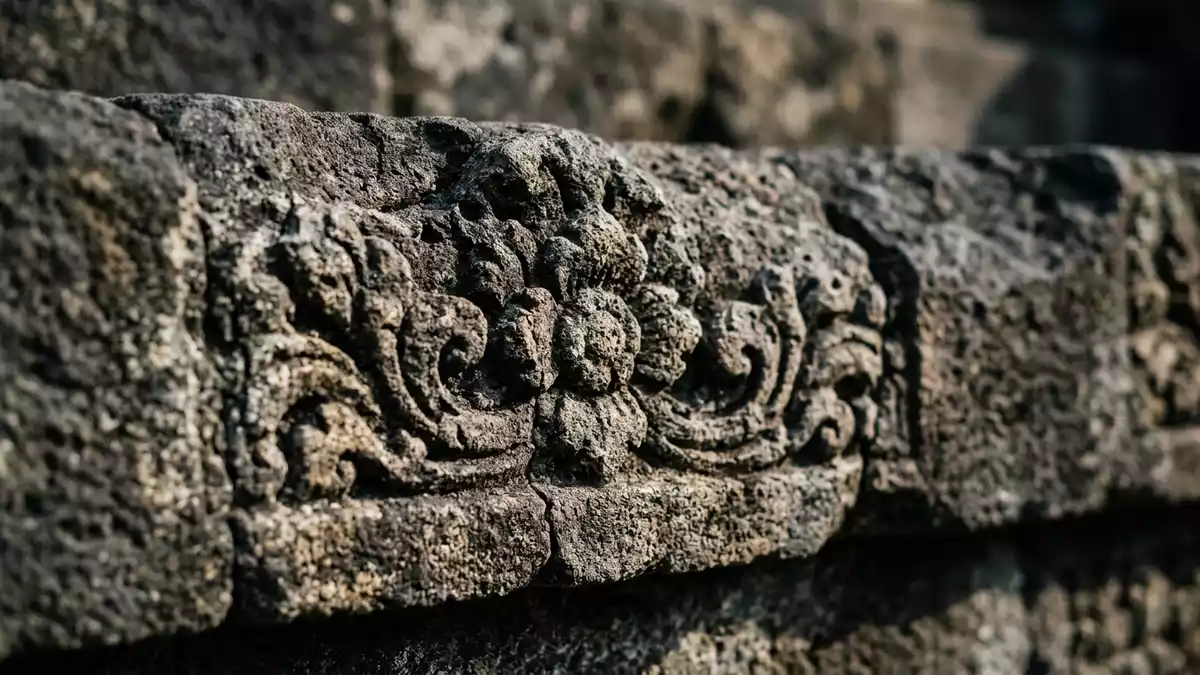
Candi Borobudur in Magelang, Central Java, is a vast stone Buddhist monument whose terraces rise like a stepped mountain above the Kedu plain. Built as a Mahayana Buddhist temple in the eighth and ninth centuries under the Sailendra dynasty, it combines religious symbolism with Javanese stonework on a monumental scale.Mahayana Buddhist temple
A three-dimensional mandala in volcanic stone
Candi Borobudur stands on a low hill in the Kedu Valley of Central Java, surrounded by a landscape marked by volcanoes and rice fields.Kedu Valley of Central Java The monument takes the form of a massive stone pyramid built from dark grey andesite, rising in stacked terraces that form a giant mandala when seen from above.
The lower levels are square with projecting corners, while the upper terraces become circular and support a central stupa. The whole structure reaches about 30 m (98 ft) in height from its base to the top of the main stupa, giving it the presence of an artificial mountain rather than a hollow building.about 30 m in height Reliefs and sculptures cover the stone surfaces, so that almost every stretch of wall, balustrade and terrace carries carved imagery.
Ninth-century Sailendra legacy and rediscovery
Construction of Candi Borobudur is usually placed between about 778 and 850 CE, during the rule of the Sailendra dynasty in Central Java.between about 778 and 850 CE This Mahayana Buddhist ruling house controlled parts of Java and Sumatra and left several major temples in the region, but Candi Borobudur is the largest and most elaborate.
Archaeological analysis links the temple’s completion to about the early ninth century, supported by inscriptions and stylistic comparisons with other Javanese monuments.completion to about the early ninth century Buddhist pilgrims used the monument for centuries, then the structure gradually fell out of use as power in Java shifted east and Islam became dominant on the island. Layers of volcanic ash and vegetation covered much of the stonework until Thomas Stamford Raffles, then lieutenant governor of Java, received reports of a great ruin in 1814 and ordered it cleared.
Walking the terraces: reliefs, Buddhas and pilgrimage
Candi Borobudur is designed as a pilgrimage route that spirals around the monument. Pilgrims start on the lowest terrace and follow corridors that wrap around the hill, rising level by level towards the summit stupa.pilgrimage route that spirals Along these paths, stone reliefs unfold scenes from Buddhist texts and everyday life in ancient Java.
The walls display hundreds of narrative panels showing episodes from the life of the Buddha, Jataka tales of his previous lives and depictions of ships, markets and palaces. Above, tiers of bell-shaped stupas pierce the sky, each sheltering a seated Buddha statue, while the highest level opens into a circular terrace around the great central stupa.tiers of bell-shaped stupas Seen from ground level, the combination of carved stone, steep flights and open terraces makes the monument feel both dense and open.
Visiting Candi Borobudur: what travellers from Western Europe should know
- Candi Borobudur stands in Borobudur district, Magelang Regency, in Central Java, Indonesia, north-west of Yogyakarta and inland from Java’s south coast.
- The monument rises on a hill with stepped stone terraces; visiting the upper levels involves climbing many stone stairways that can feel steep and uneven underfoot.
- The temple lies in a landscaped archaeological park, with open ground around the monument and views towards surrounding hills and volcanic peaks on clear days.
- The official language is Indonesian and the currency is the Indonesian rupiah.
- Entry requirements depend on your nationality; UK travellers can check the FCDO travel advice at gov.uk/foreign-travel-advice, Irish travellers the Department of Foreign Affairs at ireland.ie.
Searching for Candi Borobudur on social platforms
These links open searches for Candi Borobudur on each platform.
Frequently asked questions about Candi Borobudur
Where is Candi Borobudur?
Candi Borobudur stands in Borobudur district in Magelang Regency, Central Java, Indonesia, in the Kedu Valley north-west of Yogyakarta.
What can visitors expect when exploring it?
Visitors encounter stepped stone terraces covered in reliefs, steep stairways, multiple levels of circumambulatory corridors and upper terraces ringed with stupas and Buddha statues.
What makes Candi Borobudur distinctive among Buddhist sites?
Candi Borobudur combines a hill-like stepped pyramid, an intricately carved stone mandala and a long circumambulatory pilgrimage route built in the eighth and ninth centuries under the Sailendra dynasty.


