
Cape Coast Castle and the weight of Ghana’s coast
Published on 08/24/2026 at 16:17 | Editorial responsibility: Rafael Müller, Editor-in-Chief AD HOC NEWS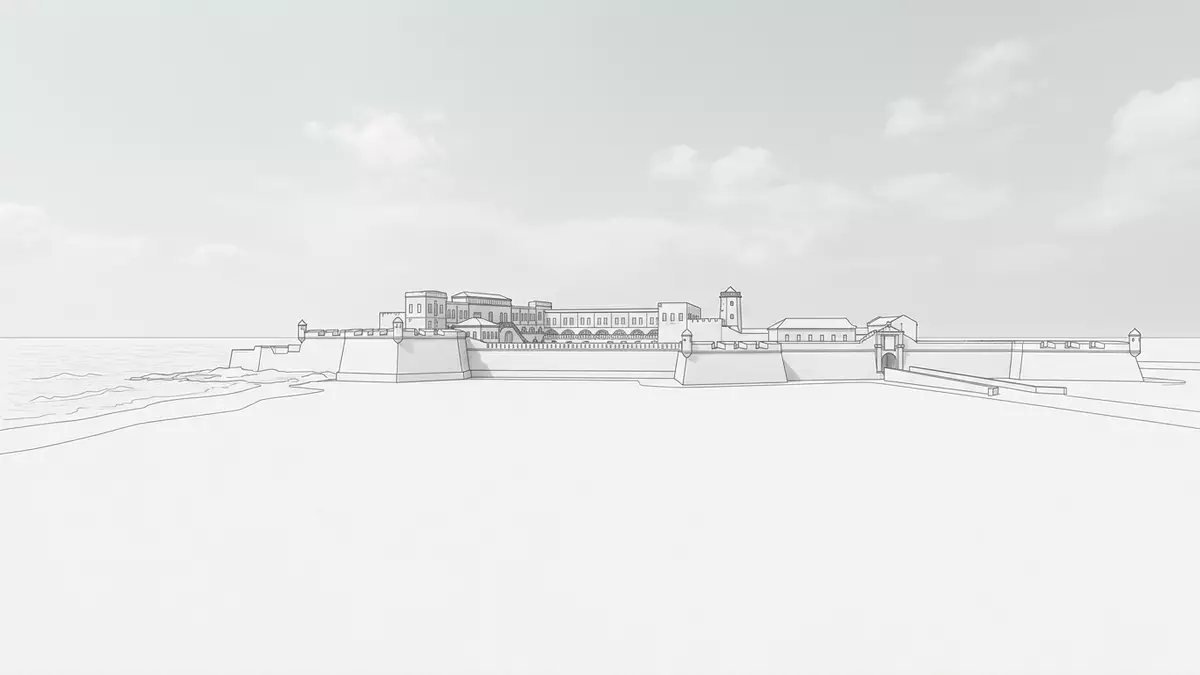
Cape Coast Castle stands above the Atlantic in Cape Coast, Ghana, as a stone fortress with a long colonial past. Its massing, courtyards and sea-facing walls make the history legible at a glance, while the site’s UNESCO World Heritage status links it to a wider line of forts along the Ghanaian coast.
Stone walls and sea-facing courtyards
The castle’s best-known form dates from the British expansion of a fort that had passed through Portuguese, Swedish, Danish and Dutch hands. Britannica places its present appearance by about 1795, and names the Swedish king Charles X Gustav in the earlier Carolusborg phase.present appearance
That layered past remains visible in the building’s heavy perimeter, enclosed courts and underground spaces. The site belongs to the UNESCO property that stretches along Ghana’s coast between Keta and Beyin, where fortified trading posts were erected between 1482 and 1786.fortified trading posts
From trading post to place of memory
The earliest phase began in 1555 as a Portuguese trading post called Cabo Corso, and the Swedish timber fort of 1653 was named Carolusborg. Those names matter because they show how the site shifted between European powers before becoming a British stronghold on the Gold Coast.Portuguese trading post
Inside the later castle, the dungeons sit below the more formal upper levels, a stark division that still structures the experience of the place. The castle’s role in the slave trade and its later use as a museum place it within a broader coastal chain of forts and castles that became part of Ghana’s national heritage.role in the slave trade
The castle in the Gold Coast period
Cape Coast Castle also carried administrative authority during the Gold Coast era. Britannica notes that from 1821 it served briefly as the seat of government of the British colony of the Gold Coast, before the capital moved to Accra in 1877.seat of government
That later use sits beside its earlier trading history, giving the building a double identity as fort and state house. The UNESCO property description also stresses that the castles and forts changed with successive European powers, and that many survive with altered fabric rather than in untouched form.changed with successive
Visiting Cape Coast Castle: what travellers from Western Europe should know
- The castle stands in Cape Coast on Ghana’s central coast. It belongs to the UNESCO-listed chain of forts and castles along the Atlantic edge of the country.
- The main route through the site runs through stone courtyards, upper rooms and underground chambers. The contrast between the open courts and the enclosed lower spaces is a defining part of the visit.
- The official language is English and the currency is the Ghanaian cedi.
- Entry requirements depend on your nationality; UK travellers can check the FCDO travel advice at gov.uk/foreign-travel-advice, Irish travellers the Department of Foreign Affairs at ireland.ie.
Searching for Cape Coast Castle on social platforms
These links open searches for Cape Coast Castle on each platform.
Frequently asked questions about Cape Coast Castle
Where is Cape Coast Castle?
It stands in Cape Coast, on the coast of Ghana. The castle is part of the UNESCO property of forts and castles scattered along the country’s Atlantic shore.
What does a visit involve?
The site combines courtyards, chambers above ground and underground rooms. The route through the building reveals how the fortified complex is arranged across different levels.
What makes Cape Coast Castle distinctive?
Its distinctive character lies in the combination of a seventeenth- and eighteenth-century fort with later administrative use and surviving slave-trade spaces. The names Carolusborg and Cabo Corso remain embedded in its history.


