
Casas Colgadas and the cliffside houses of Cuenca
Published on 08/15/2026 at 14:48 | Editorial responsibility: Rafael Müller, Editor-in-Chief AD HOC NEWS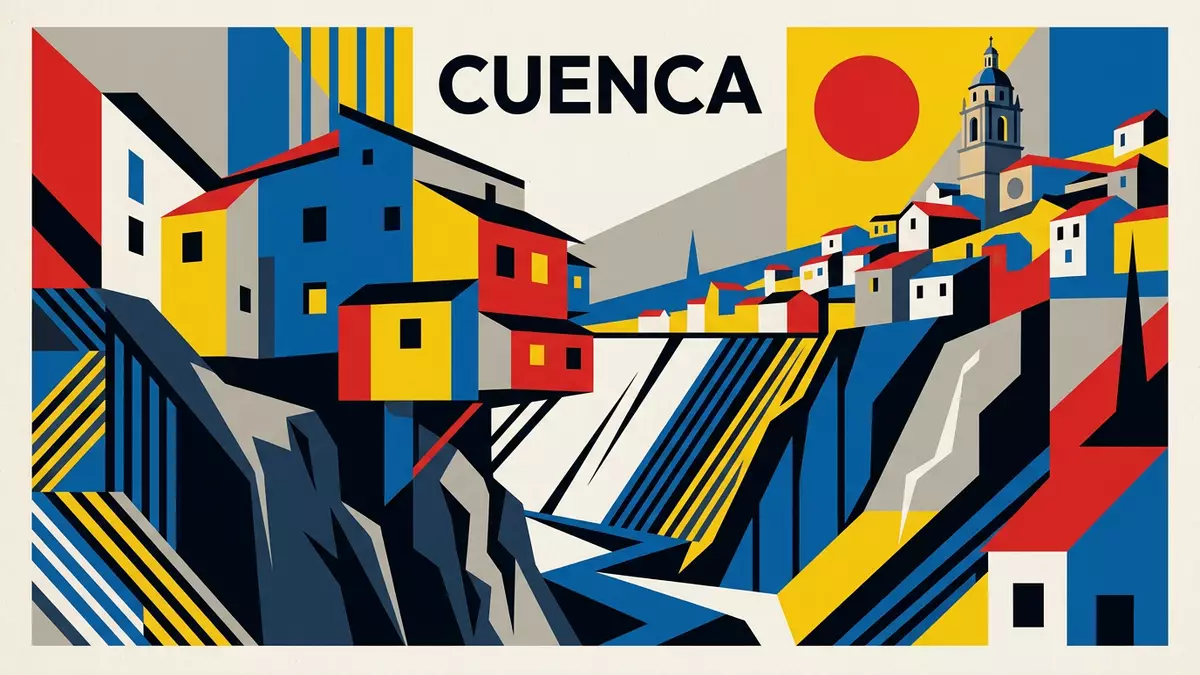
Casas Colgadas in Cuenca is a small group of medieval houses that project dramatically from a limestone cliff above the Huécar river gorge, their timber balconies suspended over the void and their interiors now home to Spanish abstract art.
Medieval houses hanging over the Huécar gorge
Casas Colgadas is a cluster of historic dwellings on the eastern edge of Cuenca’s old town, aligned along the high rocky cornice of the Huécar river gorge. The houses stand within the historic centre of Cuenca, a city in Castilla-La Mancha in central Spain, and form one of its clearest surviving links to medieval domestic architecture.historic dwellings on the eastern edge Their position above the gorge means that from the valley floor they appear to cling to the cliff, with upper storeys projecting out beyond the rock and wooden galleries looking down towards the river.
The present ensemble consists of three houses with masonry lower levels and timber-framed upper floors that extend outwards in cantilever, creating deep balconies above the drop. The rocky wall of the gorge forms part of their setting, so the façades facing the Huécar are built directly on the edge of the precipice, while the rear elevations address the narrow street of Calle Canónigos within the old town.three houses with masonry lower levels From the opposite side of the gorge, the projecting timber galleries give a clear sense of how living space was extended outwards in an urban area constrained by steep topography.
From Gothic town houses to an abstract art museum
The hanging houses belong to the tradition of late medieval town houses in Cuenca, with origins dating between the fourteenth and fifteenth centuries and elements associated with popular Gothic architecture.origins dating between the fourteenth and fifteenth centuries Inside, structural details from different phases survive, including timber beam ceilings, carved and painted wooden frameworks and decorative features in plaster and stone that reflect Gothic and later Renaissance tastes.timber beam ceilings and decorative features These internal elements make the houses a rare example of how domestic rooms were finished in a medieval Spanish town built on steep rock.
Two of the three houses now contain the Museo de Arte Abstracto Español, which has occupied part of Casas Colgadas since the 1960s and presents works by Spanish abstract painters of the twentieth century.Museo de Arte Abstracto Español Their rooms hold collections associated with artists such as Fernando Zóbel, who was among the figures involved in establishing the museum’s presence in Cuenca.artists such as Fernando Zóbel The third house, known as Casa de la Sirena, has long been associated with hospitality, and together the three buildings show how this narrow ledge above the gorge has combined everyday domestic life, dining and modern art within one built ensemble.
Names, layout and protected status
The name Casas Colgadas translates directly as “Hanging Houses” and refers to the way some sections project outwards, supported by beams and brackets, above the high rock face of the Huécar gorge. In Spanish these houses also carry other historical names, including Casas del Rey and Casas Voladas, terms that underline their civil character and their suspended appearance on the cliff.Casas del Rey and Casas Voladas Individual houses within the group, such as Casa de la Sirena and the two Casas de los Reyes, mark specific properties that together form the small terrace of hanging dwellings.
Architecturally, each house rises in several storeys, with masonry walls on the lower levels and increasingly prominent timber elements higher up, where the balconies extend beyond the line of the rock. Interior connections bind the houses together, so that passageways and staircases link the different parts of the ensemble across the cliff edge. The entire group has been recognised within Spain as a monument and is registered as a cultural property of interest, reinforcing its role as a symbol of Cuenca and as a preserved example of vernacular Gothic architecture on a dramatic urban site.registered as a cultural property of interest
Visiting Casas Colgadas: what travellers from Western Europe should know
- Casas Colgadas stands on the eastern side of Cuenca’s historic centre above the Huécar river gorge, reached along Calle Canónigos in the upper town.
- The approach runs along a narrow street that drops towards the gorge, with stone paving and changes of level that require steady footing on the way to the houses.
- The San Pablo bridge crosses the Huécar near Casas Colgadas and offers a clear elevated view of the façades and their timber balconies above the rock face.
- Cuenca lies in Spain, where the official language is Spanish and the currency is the euro.
Searching for Casas Colgadas on social platforms
These links open searches for Casas Colgadas on each platform.
Frequently asked questions about Casas Colgadas
Where is Casas Colgadas in Cuenca?
Casas Colgadas stands in the historic centre of Cuenca in Castilla-La Mancha, Spain, on the cliff edge above the Huécar river gorge on the town’s eastern side.
What can visitors expect when they reach Casas Colgadas?
Visitors encounter three historic houses with masonry and timber construction, projecting balconies above the gorge and interiors that host the Museo de Arte Abstracto Español.
What makes Casas Colgadas distinctive among Spanish town houses?
Casas Colgadas combines late medieval Gothic domestic architecture, a dramatic cliffside position over a river gorge and a twentieth-century abstract art museum within one compact group of houses.


