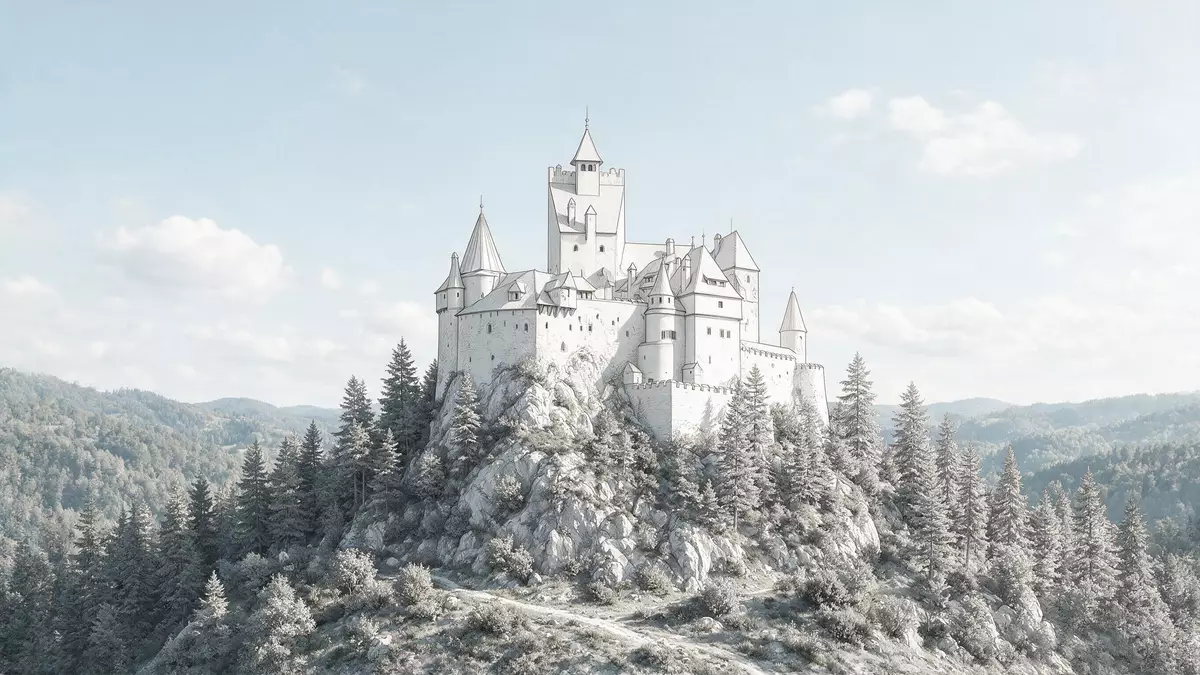
Castelul Bran and its steep stone silhouette
Published on 08/11/2026 at 15:17 | Editorial responsibility: Rafael Müller, Editor-in-Chief AD HOC NEWS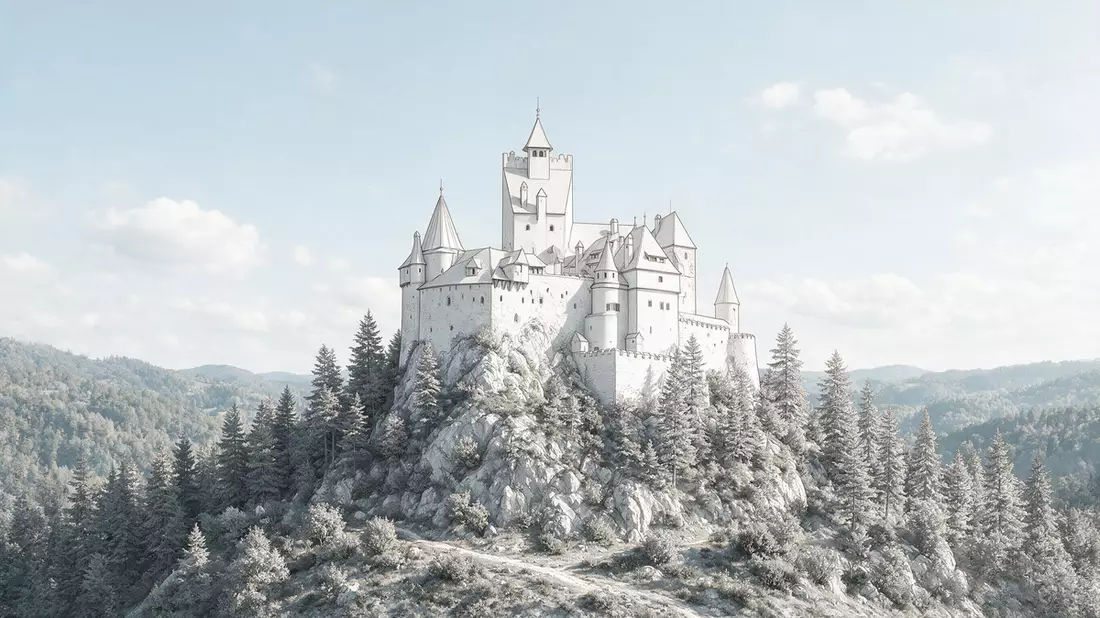
Castelul Bran rises above Bran as a compact stone castle with steep roofs, courtyards and narrow rooms spread across several levels. Built in the late medieval period and long associated with the borderlands between Transylvania and Wallachia, it is one of Romania’s best-known historic fortresses.
Stone walls above Bran
The castle’s massing is simple from a distance: pale masonry, red-tiled roofs and a tight cluster of towers and walls on a rocky height. Its profile is more defensive than palatial, and that contrast gives the place its force.
Inside, the spaces are smaller and more irregular than the exterior suggests. Stairs, landings and room sequences lead through a building that feels layered rather than symmetrical, with many parts reflecting different periods of use.
From fortress to museum rooms
The surviving fabric belongs to several phases, with a medieval core and later additions that shaped the castle’s present form. The site is strongly linked with the name of Vlad III, known as Vlad ?epe?, although the castle’s history is broader than that single association.
Today the building functions as a museum, and its rooms contain period furniture, weapons, domestic objects and displays about local history. That mix suits a structure that was once a frontier stronghold and later became a residence and heritage site.
The Bran landscape around the castle
Castelul Bran sits close to the Carpathian landscape, with wooded slopes and the built-up village below. The setting gives the castle a clear vertical presence, and the approach makes the stone walls visible from several angles.
Bran itself remains part of the experience, because the castle is tied to the name of the town and to the region that surrounds it. The result is a place where architecture, topography and historical memory meet in one compact ensemble.
Visiting Castelul Bran: what travellers from Western Europe should know
- Castelul Bran is reached from Bran by road and on foot through the local approach routes.
- Admission arrangements and opening hours are set by the site's operator and change with the season; the official website is the only binding source.
- Spring and autumn suit the castle well, with softer light on the stone and less glare on the roofs.
- The site includes steps, uneven surfaces and changes in level inside the castle.
- Romanian lei are used locally, and English is understood in many visitor-facing settings; restrictions may apply on site.
- Entry requirements depend on your nationality. UK travellers should check the FCDO travel advice at gov.uk/foreign-travel-advice; Irish travellers the Department of Foreign Affairs at ireland.ie; EU and EEA citizens their own national foreign ministry.
Searching for Castelul Bran on social platforms
These links open searches for Castelul Bran on each platform.
Frequently asked questions about Castelul Bran
Where is Castelul Bran?
It stands in Bran, in Romania, on a rocky site above the local settlement. The castle is closely linked with the Transylvanian border region.
What should visitors expect?
Expect stone rooms, stairs, narrow passages and museum displays rather than a single grand hall. The interior feels compact and varied, with a strong sense of movement between levels.
What makes it distinctive?
Its steep silhouette, medieval character and association with Vlad ?epe? set it apart. The castle is also distinctive for the way its fortress form survives within a museum setting.