
Catedral de Sevilla, a Gothic colossus on Almohad foundations
Published on 09/08/2026 at 06:55 | Editorial responsibility: Rafael Müller, Editor-in-Chief AD HOC NEWS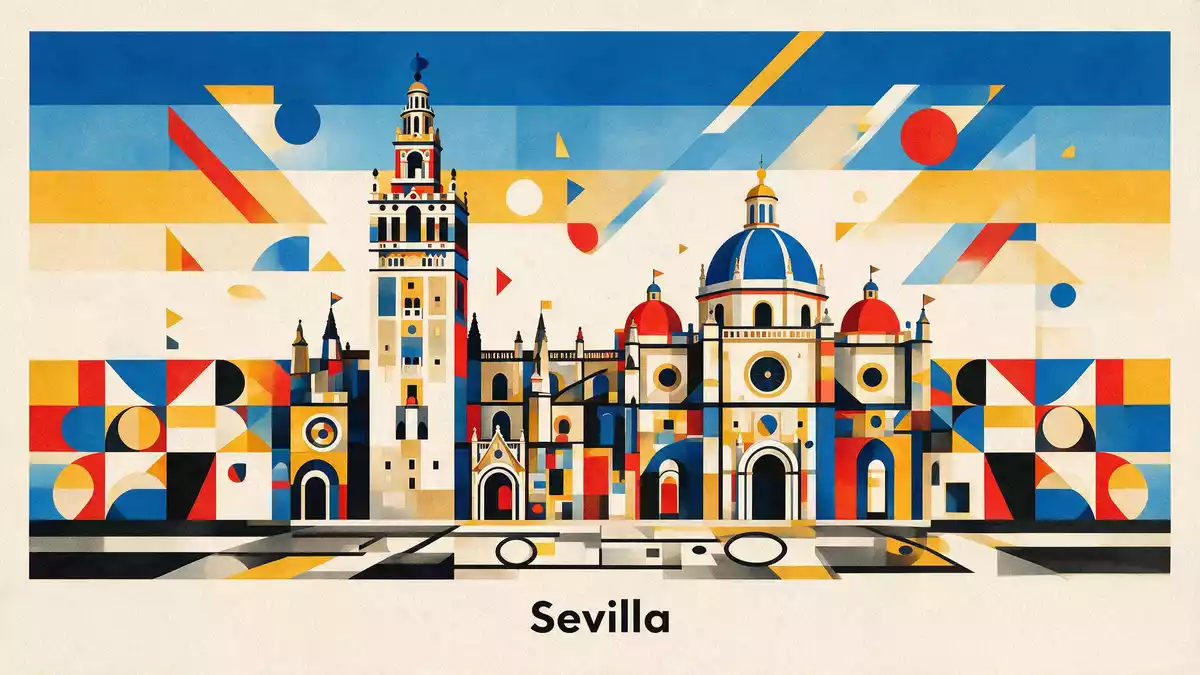
Catedral de Sevilla dominates central Sevilla, a vast Gothic cathedral raised on the foundations of the city’s former Almohad mosque and crowned by the Giralda bell tower. Built through the fifteenth and early sixteenth centuries in Gothic style, with Renaissance and later additions, it forms part of the monumental ensemble that UNESCO inscribed as a World Heritage Site in 1987 alongside the Royal Alcázar and the Archivo de Indias.World Heritage ensemble
A mosque reborn as a Gothic giant
The story of Catedral de Sevilla begins with the Great Mosque of Sevilla, constructed in the late twelfth century under the Almohad dynasty, whose remains survive in the Patio de los Naranjos and the lower part of the Giralda tower.Almohad mosque and Giralda After Ferdinand III of Castile took Sevilla in 1248, the mosque was consecrated as a cathedral and served Christian worship for more than a century.Consecration in 1248
In the early fifteenth century the cathedral chapter resolved to replace the ageing prayer hall with a new church on a grand scale, using the rectangular footprint of the mosque as its base.New Gothic project Groundbreaking for the Gothic structure is recorded in the 1430s, and the main fabric rose through the fifteenth century before consecration in 1507 and completion of the principal works in the early sixteenth century.Gothic construction and consecration
Scale, layout and layered styles
Catedral de Sevilla is recognised as the largest Gothic cathedral in the world, with a Gothic section about 126 m long, 83 m wide and a vault rising to around 37 m (121 ft).Gothic dimensions Its interior is organised in five naves, creating a vast stone volume where clustered piers and ribbed vaults carry the weight of the roof and frame chapels along the sides.Largest Gothic cathedral
The cathedral’s architecture brings together Gothic, Moorish and Renaissance elements within one complex structure.Mixed architectural styles The main body of the church, largely in stone, belongs to the late Gothic period, while Renaissance additions include spaces such as the Chapter House with its distinctive elliptical plan designed by Hernán Ruiz in the sixteenth century.Elliptical Chapter House Later Baroque work added the Parish Church of the Tabernacle and smaller chapels, and nineteenth- and early twentieth-century projects completed major portals and corners of the building.Later phases of construction
The Giralda and the orange-tree courtyard
Beside the main body of Catedral de Sevilla rises the Giralda, a bell tower that began life as the Almohad minaret of the mosque and gained its Renaissance belfry in the sixteenth century.Giralda bell tower The tower reaches about 96 m (315 ft) from ground to weather vane and is regarded as a major work of Almohad architecture, later crowned by Christian additions.Height of the Giralda
On the north side of the cathedral the Patio de los Naranjos preserves the courtyard arrangement of the mosque, adapted over centuries as part of the Christian complex.Patio de los Naranjos Together, the Giralda and the courtyard make the Islamic origins of the site legible alongside the vast Gothic interior and Renaissance chapels, illustrating the coexistence of Almohad and Christian Andalusian traditions that UNESCO highlighted in its inscription.Testimony to Almohad and Christian Andalusia
Visiting Catedral de Sevilla: what travellers from Western Europe should know
- Catedral de Sevilla stands in the historic centre of Sevilla, directly beside the Royal Alcázar and close to the Archivo de Indias, all forming a compact monumental group.
- The cathedral’s interior involves walking across extensive stone floors and, for those who ascend the Giralda, following a long series of gently sloping ramps within the tower.
- Sevilla is served by Sevilla-Santa Justa railway station to the north-east of the historic core, with city streets and squares linking the station area to the cathedral precinct.
- The official language is Spanish and the currency is the euro (EUR).
Searching for Catedral de Sevilla on social platforms
These links open searches for Catedral de Sevilla on each platform.Frequently asked questions about Catedral de Sevilla
Where is Catedral de Sevilla located?
Catedral de Sevilla stands in the historic centre of Sevilla in southern Spain, adjoining the Royal Alcázar and close to the Archivo de Indias.
What can visitors expect inside Catedral de Sevilla?
Visitors enter a vast Gothic interior arranged in five naves, with tall stone columns, ribbed vaults, numerous chapels and access to spaces such as the Chapter House.
What makes Catedral de Sevilla distinctive among European cathedrals?
Its combination of Almohad heritage, including the Giralda and courtyard, with the scale of the Gothic nave and later Renaissance and Baroque additions gives the building a layered character.


