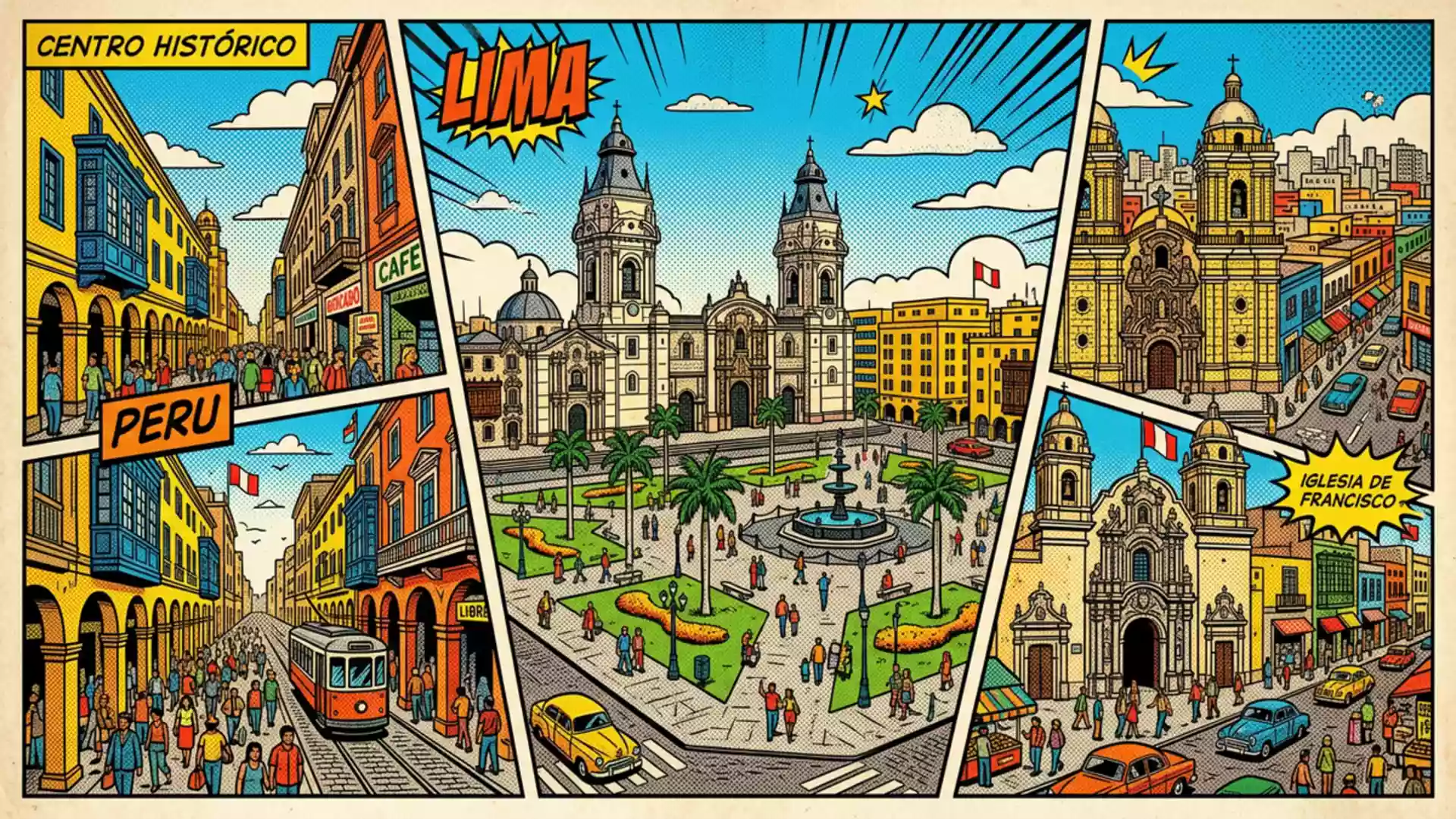
Centro Historico de Lima and its colonial grid of plazas and churches
Published on 08/14/2026 at 14:50 | Editorial responsibility: Rafael Müller, Editor-in-Chief AD HOC NEWS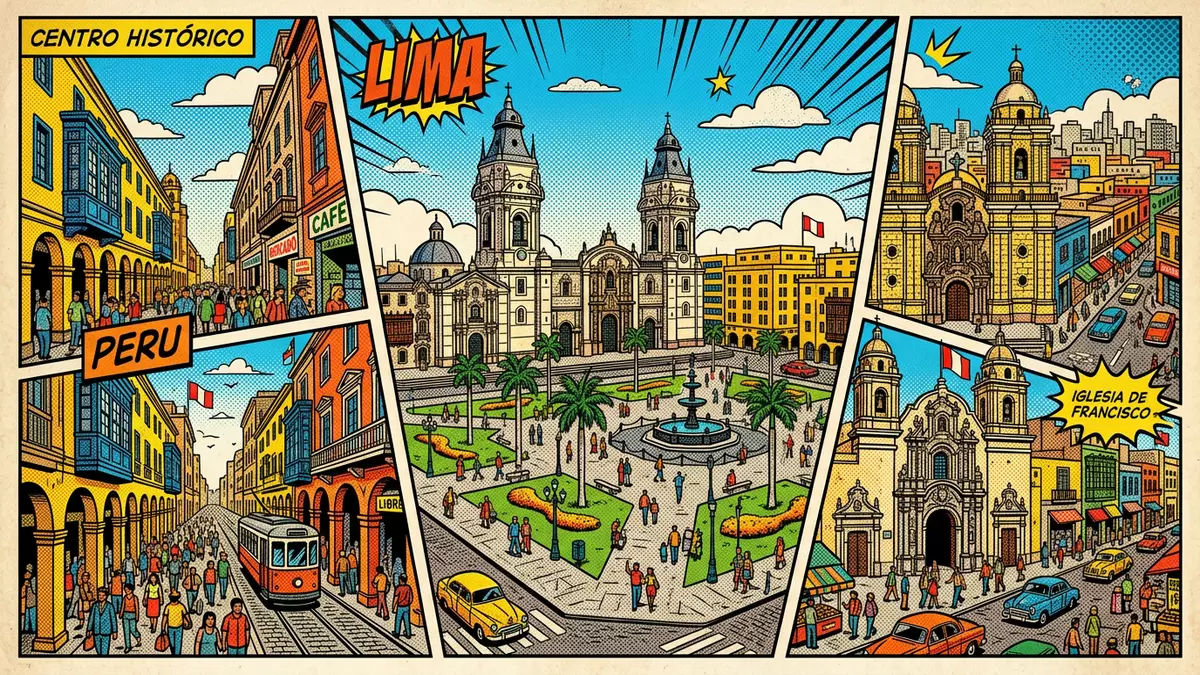
Centro Historico de Lima is the colonial heart of Peru’s capital, laid out as a Spanish grid around Plaza Mayor and lined with churches, civic buildings and long timber balconies. Founded as the “Ciudad de los Reyes” by Francisco Pizarro in January 1535, the historic centre later gained formal protection as a World Heritage Site, securing its role as a record of viceregal urban life.World Heritage inscription
The colonial grid and Plaza Mayor
The core of Centro Historico de Lima follows the regular grid pattern used in Spanish colonial town planning, with straight streets radiating from Plaza Mayor. The square, also known as Plaza de Armas, marks the foundation site of Lima and anchors the surrounding urban fabric.Plaza Mayor foundation
Plaza Mayor is framed by key institutions of colonial and republican power: the Cathedral of Lima on one side, the Government Palace facing it, and municipal buildings with arcades completing the ensemble. The layout gives the visitor a compact sense of how religious and civic authority shared space in the viceregal capital, with processional routes and official ceremonies centred on this open square.
Churches, convents and wooden balconies
Beyond the main square, Centro Historico de Lima is characterised by a dense concentration of religious complexes dating from the seventeenth and eighteenth centuries, including the convent of San Francisco de Lima.San Francisco convent ensemble These churches and cloisters introduce stone and adobe facades, courtyards and towers into the street grid, while their interiors house altarpieces and chapels shaped by colonial craftsmanship.
Running along many streets are timber balconies projecting from upper floors of town houses and commercial buildings, forming continuous rows above the pavements. Some are enclosed with intricate latticework, others more open, but together they give the historic centre a distinctive layered elevation and a sense of vertical privacy over busy streets.traditional wooden balconies
World Heritage status and urban scale
Centro Historico de Lima holds formal recognition as a cultural World Heritage Site, first linked to the convent ensemble of San Francisco de Lima in 1988 and later extended to cover a wider portion of the historic town on both sides of the Rimac river.mapped heritage area This status reflects its architectural, technological and urban values as a Spanish colonial centre of political and economic power in Latin America.
The protected area spans a sizeable part of central Lima, with streets that still follow the grid laid out in the sixteenth century and blocks that preserve historic plots. Walking through the centre reveals transitions from heavily monumental zones near Plaza Mayor to more mixed residential and commercial streets, with the Rimac river cutting a clear line between districts yet remaining closely integrated into the historic cityscape.historic centre description
Visiting Centro Historico de Lima: what travellers from Western Europe should know
- Centro Historico de Lima lies in central Lima on both banks of the Rimac river and is reached by city roads from districts such as Miraflores and San Isidro.
- Many streets in the historic centre are narrow and paved, and approaches to towers and choir lofts inside churches usually involve staircases without lifts.
- The terrain is essentially flat at low altitude, but pedestrians share space with traffic, so crossings, kerbs and arcades require attention on foot.
- The official language is Spanish and the currency is the Peruvian sol.
- Entry requirements depend on your nationality; UK travellers can check the FCDO travel advice at gov.uk/foreign-travel-advice, Irish travellers the Department of Foreign Affairs at ireland.ie.
Searching for Centro Historico de Lima on social platforms
These links open searches for Centro Historico de Lima on each platform.Frequently asked questions about Centro Historico de Lima
Where is Centro Historico de Lima located within the city?
Centro Historico de Lima occupies the central districts of Lima and Rimac along the Rimac river, forming the historic core of Peru’s capital.
What should a visitor expect on a first walk through the historic centre?
A first walk passes grid-planned streets, colonial churches, civic buildings around Plaza Mayor and continuous rows of traditional timber balconies above shopfronts.
What makes Centro Historico de Lima distinctive among Latin American city centres?
It combines a formally protected World Heritage core, a high concentration of colonial religious complexes and a streetscape marked by projecting wooden balconies.