
Centro Historico de Managua and its earthquake-scarred heart
Published on 08/23/2026 at 14:50 | Editorial responsibility: Rafael Müller, Editor-in-Chief AD HOC NEWS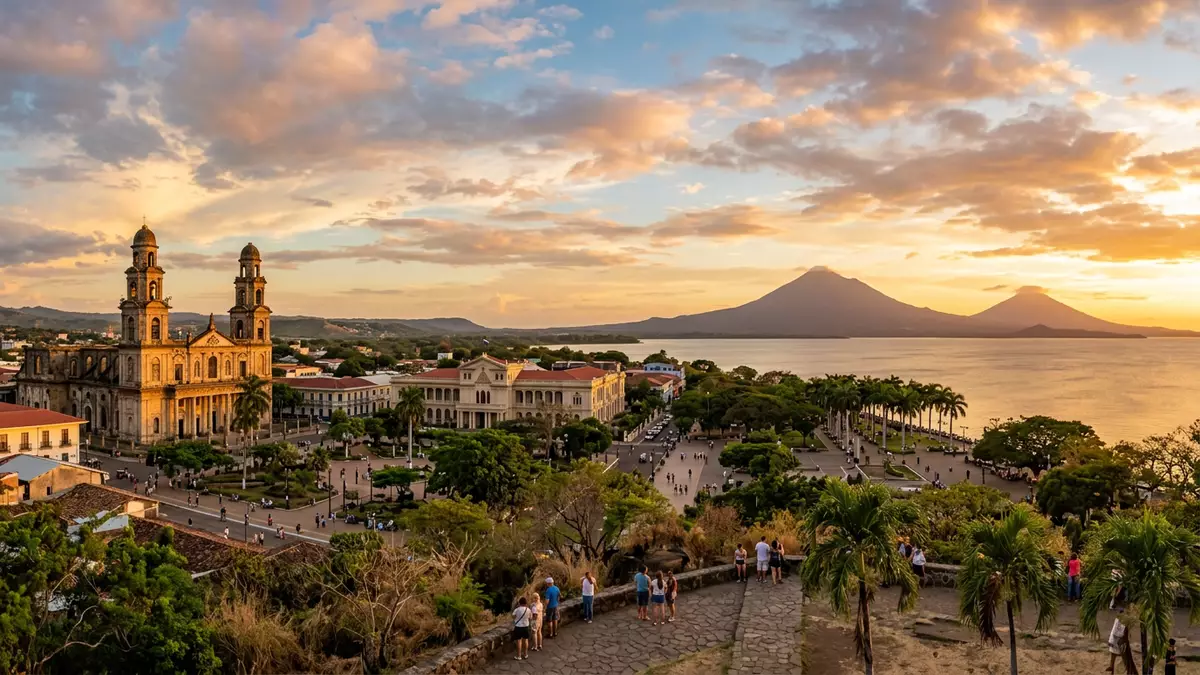
Centro Historico de Managua is the historic core of Managua, the capital of Nicaragua, where ruined cathedral walls, formal plazas and the shoreline of Lake Managua form a compact urban landscape marked by a twentieth-century earthquake. It lies beside Lake Managua, also known as Lake Xolotlán, and centres on Plaza de la Revolución, framed by the Antigua Catedral de Managua and the former Palacio Nacional.
Plaza de la Revolución and the civic heart
The clearest way to understand Centro Historico de Managua is to start in Plaza de la Revolución, the main square of Managua’s old centre. This public space, renamed Plaza de la Revolución in 1979 after being known as Plaza de la República, lies in the historic downtown close to the southern shore of Lake Managua.Plaza de la Revolución Around it stand some of the city’s most recognisable civic buildings, including the ruins of the Antigua Catedral de Managua and the former Palacio Nacional de la Cultura, which once housed the country’s legislative and governmental functions.the former Palacio Nacional
The square occupies part of the original urban nucleus of Managua that developed after the city was named capital of Nicaragua in 1852.the original urban nucleus of Managua Its broad paved expanse, edged by trees and monuments, gives clear sightlines to the facades of the civic buildings that survived or were rebuilt after the 1972 earthquake, and to the open parkland that connects towards the lakeside promenade.
Antigua Catedral de Managua and the open-air ruins
On the eastern side of the historic core stands the Antigua Catedral de Managua, also known as the Catedral de Santiago, whose damaged structure is one of the most recognisable silhouettes in the city.Antigua Catedral de Managua The cathedral’s concrete and masonry shell was badly damaged in the 1972 earthquake, leaving its walls and towers standing while the interior remains unsafe and officially closed. Visitors view the nave and aisles from outside through metal barriers, where birds and vegetation share the space with surviving carved figures and partially preserved murals.
The building dates from the early twentieth century and reflects the period when Managua consolidated its role as Nicaragua’s capital in the late nineteenth and early twentieth centuries.Managua consolidated its role as capital Its damaged state has become part of Centro Historico de Managua’s character: the cathedral stands as an open-air monument to the 1972 disaster, with its ash-coloured facade facing Plaza de la Revolución and its interior preserved as a visible reminder of the city that stood before the earthquake.
Lakeside setting and layered public spaces
Centro Historico de Managua stretches from Plaza de la Revolución towards the lakeside promenades along Lake Managua, linking civic buildings with open spaces and views across the water.the lakeside promenades along Lake Managua The area includes the Parque Central, monuments to Nicaraguan historical figures and a waterfront walkway that traces the line where the city meets the lake. Between these spaces stand restored government buildings, cultural institutions and preserved ruins, creating a sequence of plazas, lawns and paved terraces.
The historic district forms part of Managua’s District I and remains closely tied to nearby neighbourhoods such as Cristo del Rosario and residential Bolonia in the urban fabric of the capital.Managua’s District I From many points in Centro Historico de Managua, Lake Managua is visible beyond the trees and buildings, underlining the way this historic core occupies a strip of land between the water and the rest of the city.
Visiting Centro Historico de Managua: what travellers from Western Europe should know
- Centro Historico de Managua lies near the southern shore of Lake Managua in the northern part of the urban area of Managua, centred on Plaza de la Revolución and the Antigua Catedral de Managua.
- The historic core forms part of District I of Managua and is reached by city streets; taxis and local buses run to the vicinity of Plaza de la Revolución and the lakeside promenade.
- The terrain in Centro Historico de Managua is largely level, with broad paved squares and promenades; some older buildings around the plaza are approached by flights of steps and raised terraces.
- The official language is Spanish and the currency is the córdoba.
- Entry requirements depend on your nationality; UK travellers can check the FCDO travel advice at gov.uk/foreign-travel-advice, Irish travellers the Department of Foreign Affairs at ireland.ie.
Searching for Centro Historico de Managua on social platforms
These links open searches for Centro Historico de Managua on each platform.
Frequently asked questions about Centro Historico de Managua
Where is Centro Historico de Managua located?
Centro Historico de Managua is in Managua, the capital of Nicaragua, near the southern shore of Lake Managua in the area around Plaza de la Revolución.
What can visitors expect when exploring Centro Historico de Managua?
Visitors encounter a mix of preserved ruins and restored civic buildings around broad plazas, including the damaged Antigua Catedral de Managua, the former Palacio Nacional and lakeside promenades.
What makes Centro Historico de Managua distinctive among historic districts?
Its combination of earthquake-damaged cathedral walls, functioning government and cultural buildings and proximity to Lake Managua creates a historic core where open-air ruins and active civic spaces stand side by side.


