
Centro Historico de Quito and its layered stone streets
Published on 08/16/2026 at 14:52 | Editorial responsibility: Rafael Müller, Editor-in-Chief AD HOC NEWS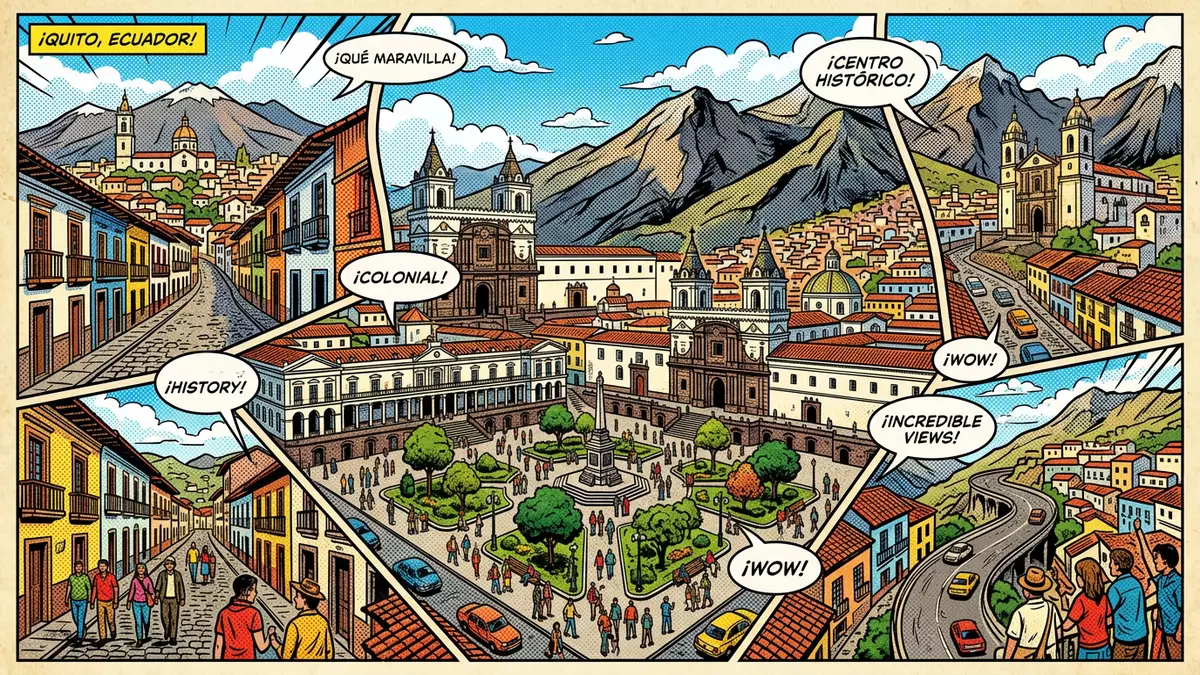
Centro Historico de Quito is Quito’s UNESCO-listed old core, a district of churches, plazas and narrow streets set in the city’s southern centre. It was inscribed in 1978 and remains one of the clearest historic ensembles in Latin America.
Quito’s colonial core in stone and plaster
The centre’s streets and squares hold churches, convents and civic buildings from the colonial period. Their facades mix plastered walls, volcanic stone and carved detail in a dense urban fabric linked to the World Heritage listing.
The historic area is closely associated with the Spanish colonial city and with the artistic tradition known as the Quito School. That tradition appears in altarpieces, sculpture and painting across the district’s religious buildings, and it gives the centre a recognisable visual language.
A city centre shaped by slope and altitude
Centro Historico de Quito lies on steep ground in the Andean capital, with streets that rise and fall between plazas and church fronts. The urban grain is compact, and the district extends across about 320 hectares, a figure that helps explain its scale without turning the place into a map.
The setting also belongs to the city’s wider history. Quito’s old centre sits within a highland capital, and the historic core forms part of the larger city rather than a separate preserved enclave; the district’s streets remain tied to ordinary urban life.
Religion, art and public memory
The district is known for its concentration of religious architecture, including major churches and convents that anchor its public spaces. Colonial art is not confined to museums here; it remains embedded in the buildings themselves, especially in interiors where gilding, painting and sculpture meet.
Quito’s historic centre also carries civic memory. The Plaza Grande and surrounding streets have long served as the setting for public life, and the city’s World Heritage status reflects both the architecture and the urban form that survived across centuries.
Visiting Centro Historico de Quito: what travellers from Western Europe should know
- Centro Historico de Quito lies in the centre-south of Quito, and the historic streets are reached on foot from the surrounding city.
- The district includes steep streets, plazas and uneven pavements, so the terrain changes from one block to the next.
- The Spanish colonial grid is visible in the street pattern, while churches and convents interrupt the blocks with large facades.
- The official language is Spanish and the currency is the United States dollar.
- Entry requirements depend on your nationality; UK travellers can check the FCDO travel advice at gov.uk/foreign-travel-advice, Irish travellers the Department of Foreign Affairs at ireland.ie.
Searching for Centro Historico de Quito on social platforms
These links open searches for Centro Historico de Quito on each platform.
Frequently asked questions about Centro Historico de Quito
Where is Centro Historico de Quito?
It is the historic centre of Quito, in the city’s southern core. The district sits in Ecuador’s capital and forms part of the wider urban centre.
What should be expected on a visit?
Expect churches, convents, plazas and streets that climb through a compact colonial layout. The ground is uneven in places, and the district keeps a strongly urban character.
What makes Centro Historico de Quito distinctive?
Its combination of colonial architecture, the Quito School and its UNESCO inscription gives it a clear identity. The district also preserves a large historic core within an Andean capital.


