
Centro Historico de Sucre and its white colonial grid
Published on 08/24/2026 at 13:04 | Editorial responsibility: Rafael Müller, Editor-in-Chief AD HOC NEWS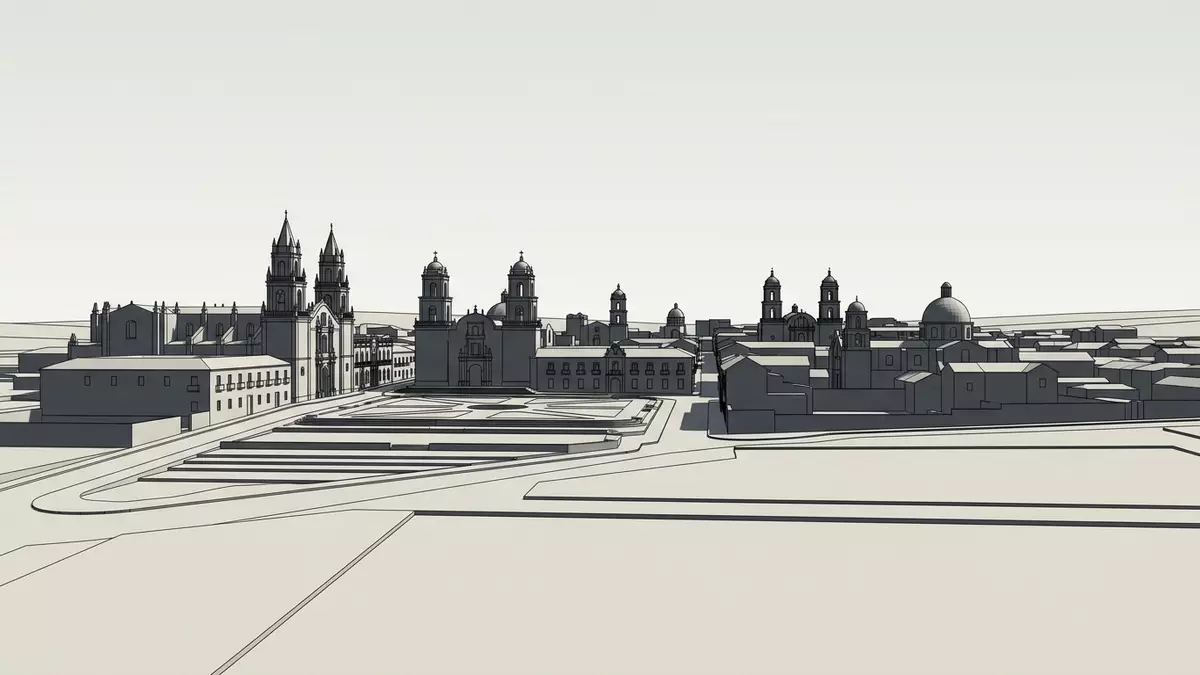
Centro Historico de Sucre is the historic core of Sucre in Bolivia, laid out as a regular grid of whitewashed streets climbing gentle Andean slopes. Recognised as the Historic City of Sucre on the UNESCO World Heritage List since 1991, it preserves a concentration of colonial and republican architecture that gives the centre a distinct period character among Andean cities.Historic City of Sucre
A white city in the Andean foothills
Centro Historico de Sucre occupies the oldest part of Sucre on the foothills of the Sica Sica and Churuquella hills in south-central Bolivia.foothills of the Sica Sica and Churuquella Within this area, blocks follow a rectilinear pattern inherited from sixteenth-century Spanish town planning, with streets meeting at right angles and vistas closing on church towers or civic buildings.clear urban pattern from the Spanish colonial era
The dominant impression is of white lime-washed façades lined along these straight streets, broken by dark wooden balconies, iron grilles and carved stone portals around doors and windows.white lime-washed walls set along an ordered street pattern Terracotta-tiled roofs rise above the façades, so that religious, civil and domestic buildings share similar colours and proportions and form a continuous white cityscape across the historic basin.
From Plaza 25 de Mayo to cloisters and courtyards
The centre of this urban grid is Plaza 25 de Mayo, a tree-lined square framed by some of Sucre’s most important buildings, including the metropolitan cathedral and the Casa de la Libertad.Plaza 25 de Mayo is flanked by the Cathedral and the Casa de la Libertad The Casa de la Libertad occupies an eighteenth-century complex that once formed part of a Jesuit institution and became the setting for the signing of Bolivia’s declaration of independence on 6 August 1825.place where the declaration of independence was signed in 1825
Around the plaza and in neighbouring streets, convents, churches and town houses are organised around internal patios, with arcades and galleries overlooking planted courtyards.internal courtyards with fountains and local materials Cloister roofs and bell towers provide elevated viewpoints over the red-tiled roofs and white façades, a layered landscape of walls, domes and towers that reveals how religious and civic complexes fit into the wider street grid.bell towers and cloister rooftops overlooking the city
Protected heritage and blended architecture
The historic centre covers an area of several dozen urban blocks that Bolivia has designated for intensive preservation, transitional protection and landscape protection, forming a managed heritage zone.three areas of protection defined for its conservation Sucre received national recognition as a Ciudad Histórica Monumental in 1969 and as Patrimonio Histórico de los Bolivianos in 1970, underlining the importance of its built fabric for the country’s identity.declared Ciudad Histórica Monumental in 1969 and Patrimonio Histórico de los Bolivianos in 1970
When UNESCO inscribed the Historic City of Sucre on the World Heritage List in 1991, it emphasised how the streets and buildings illustrate the fusion of European styles with local traditions across the sixteenth to nineteenth centuries.inscription on the World Heritage List in 1991 Baroque and neoclassical façades appear on churches and civic buildings, while houses retain simpler lines, yet all use local materials and share the white façades and tiled roofs that tie the historic centre together.blend of Spanish colonial architecture with Baroque and neoclassical influences
Visiting Centro Historico de Sucre: what travellers from Western Europe should know
- Centro Historico de Sucre lies in central Sucre, Bolivia, around Plaza 25 de Mayo, which forms the main square and reference point for exploring the surrounding streets.
- The historic centre occupies an undulating hillside setting, so walks between plazas and viewpoints involve gradual slopes and occasional short flights of steps.
- Within the district, many sights such as the Casa de la Libertad and the cathedral cluster around Plaza 25 de Mayo, keeping walking distances between major landmarks relatively compact.
- Sucre is in Bolivia, where the official language is Spanish and the currency is the boliviano.
- Entry requirements depend on your nationality; UK travellers can check the FCDO travel advice at gov.uk/foreign-travel-advice, Irish travellers the Department of Foreign Affairs at ireland.ie.
Searching for Centro Historico de Sucre on social platforms
These links open searches for Centro Historico de Sucre on each platform.
Frequently asked questions about Centro Historico de Sucre
Where is Centro Historico de Sucre?
Centro Historico de Sucre occupies the historic core of Sucre, Bolivia’s constitutional capital, on Andean foothills in the central-southern part of the country.
What can visitors expect when walking through the historic centre?
Visitors encounter straight, colonial-era streets lined with whitewashed buildings, plazas such as Plaza 25 de Mayo and a sequence of churches, courtyards and cloisters.
What makes Centro Historico de Sucre distinctive among Andean cities?
The district combines a regular Spanish colonial grid, a consistent white cityscape and a concentration of colonial and republican architecture recognised by UNESCO as a World Heritage Site.


