
Chateau de Chenonceau striding across the River Cher
Published on 08/15/2026 at 14:20 | Editorial responsibility: Rafael Müller, Editor-in-Chief AD HOC NEWS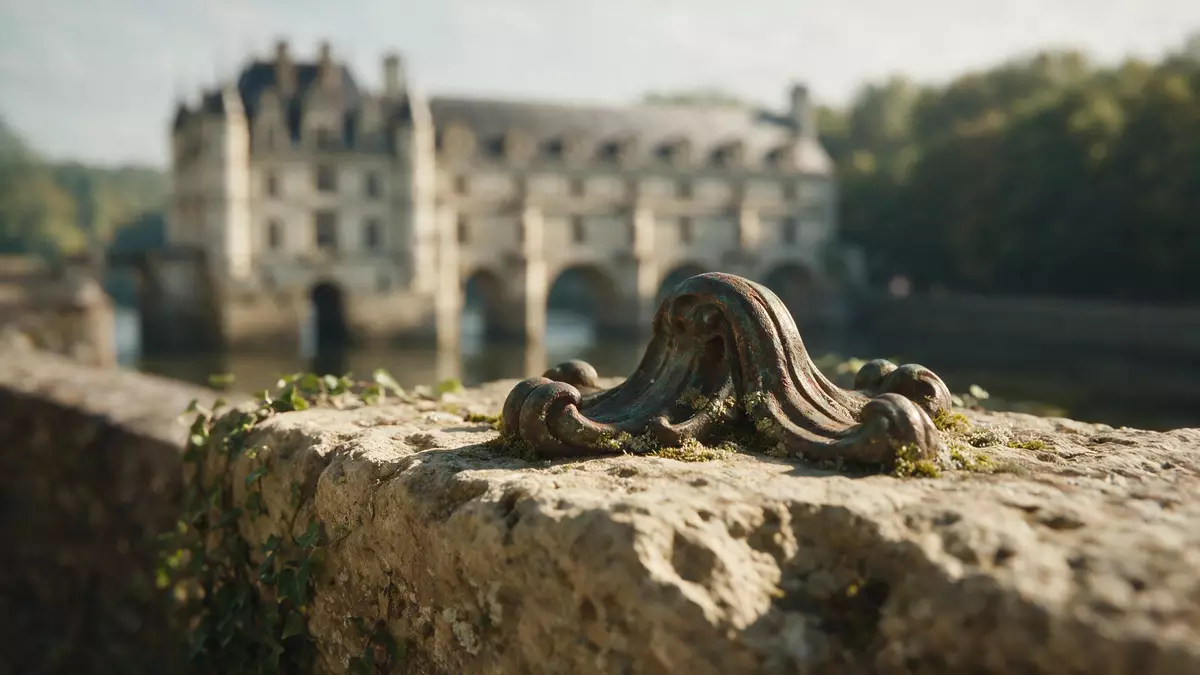
Chateau de Chenonceau near Chenonceaux in central France is a Renaissance castle that extends across the River Cher on a long stone bridge, turning architecture and river into a single composition. Built in the sixteenth century by Thomas Bohier and Catherine Briçonnet, then reshaped by Diane de Poitiers and Catherine de’ Medici, it condenses centuries of court politics, patronage and personal taste into one riverside silhouette.
A castle carried out over the Cher
The defining experience of Chateau de Chenonceau is the way the building reaches out from the riverbank and runs along the River Cher itself. The main residential block rises from solid foundations at the edge of the water, its pale masonry forming a compact rectangle that faces the river and the formal approach. From this block, a series of arches stride over the river, supporting a long gallery that turns the bridge into enclosed rooms.
This bridge-gallery sequence gives the castle its recognisable outline: a vertical house on one side and a horizontal extension threading across the water. The effect is heightened by the contrast between the river’s dark surface and the light stone of the walls, a relationship that is visible from the grounds and from the opposite bank. The bridge structure dates from the second half of the sixteenth century, associated with architect Philibert de l’Orme and commissioned in the period when Diane de Poitiers held Chenonceau as a gift from King Henry II, while the gallery above followed in the 1570s under Jean Bullant during Catherine de’ Medici’s tenure.bridge across the River Cher Inside, the gallery runs along the full length of the bridge, lined with windows on both sides and paved with a distinctive chequered floor, so that every step takes visitors between architecture and water rather than through a conventional courtyard.gallery on the bridge
From medieval stronghold to Renaissance “Chateau des Dames”
Chenonceau’s riverside setting was already valued in the Middle Ages, when a fortified residence stood here to control traffic on the Cher and protect the approaches to Tours during the Hundred Years’ War.medieval fortress controlling river traffic The surviving cylindrical tower, known as the Tour des Marques, is the most visible remnant of that period and stands slightly apart from the main block, its defensive origins softened by later decorative work.Tour des Marques In the early sixteenth century, Thomas Bohier, a royal tax official, acquired the site and, together with his wife Catherine Briçonnet, replaced most of the medieval buildings with a new residence in an emerging French Renaissance style.
The new house, built between 1513 and 1517, shows a blend of late Gothic and early Renaissance forms: steep roofs with dormers, corner turrets and finely carved window surrounds coexist with more regular facades and classical details.current château built between 1513 and 1517 Royal involvement soon followed. Francis I drew Chenonceau into the Crown Estate in the 1530s as part of a settlement, and Henry II later granted it outright to his favourite, Diane de Poitiers, who developed the first formal garden on the riverbank and oversaw the construction of the bridge. After Henry’s death, Catherine de’ Medici forced Diane to exchange Chenonceau for another castle and took over the estate herself, adding the gallery above the bridge and using the river-borne rooms for festivities and displays of power. Her role, along with those of Diane de Poitiers, Catherine Briçonnet, Louise of Lorraine and Enlightenment salon host Louise Dupin, gave Chenonceau its enduring nickname “Chateau des Dames”.Chateau des Dames shaped by women
Gardens, interiors and the wider Loire Valley setting
Beyond the bridge and tower, Chateau de Chenonceau sits within carefully ordered grounds on the gentle valley floor of the Cher. Formal gardens flank the castle, laid out in geometric patterns edged by low stone walls and clipped hedges. One garden near the river follows a broad, symmetrical plan linked to Diane de Poitiers, while another closer to the house is associated with Catherine de’ Medici and has a more intimate parterre. Together, they extend out from the castle’s facades so that architecture and planting form one continuous composition along the water.two remarkable gardens Tree-lined approaches and woodland walks on the estate frame long views of the bridge and gallery, reinforcing the sense that the castle is suspended between river, garden and forest.
Inside, Chenonceau functions as both historic residence and museum. Rooms retain tapestries, paintings and furnishings that refer to their former royal occupants, including Catherine de’ Medici’s Green Room and spaces linked to Louise Dupin’s eighteenth-century literary salon.Green Room and Louise Dupin The great gallery over the river has served different roles through history, notably as a hospital ward during the First World War and as a passage between occupied and free zones during the Second World War, but its lasting character is as a long, light-filled hall resting on arcades above the Cher.Renaissance masterpiece with unique architecture The castle stands within the broader landscape of the Loire Valley chateaux, but its position astride the river and its association with influential women give it a distinct place among them.
Visiting Chateau de Chenonceau: what travellers from Western Europe should know
- Chateau de Chenonceau stands on the River Cher in the commune of Chenonceaux in the Loire Valley, south-west of the city of Tours, and is reached by road and by regional rail services that stop at Chenonceaux station.
- The estate is largely level, but the castle interior includes staircases between floors and the long gallery over the river involves a walk along its full length.
- The official language is French and the currency is the euro.
- Chateau de Chenonceau lies among other Loire Valley chateaux, with river views from the grounds and countryside walks extending into the surrounding landscape.
Searching for Chateau de Chenonceau on social platforms
These links open searches for Chateau de Chenonceau on each platform.
Frequently asked questions about Chateau de Chenonceau
Where is Chateau de Chenonceau and what is its setting?
Chateau de Chenonceau stands on the River Cher in the commune of Chenonceaux in the Loire Valley region of central France, with gardens and woodland around it.
What should visitors expect inside Chateau de Chenonceau?
Visitors encounter furnished rooms linked to royal and aristocratic residents, a long enclosed gallery carried over the river, and formal gardens that extend the architecture into the landscape.
What makes Chateau de Chenonceau distinctive among Loire Valley castles?
Its combination of a Renaissance residence with a bridge and gallery spanning the Cher, together with its strong association with influential women patrons, gives Chenonceau a distinctive character.


