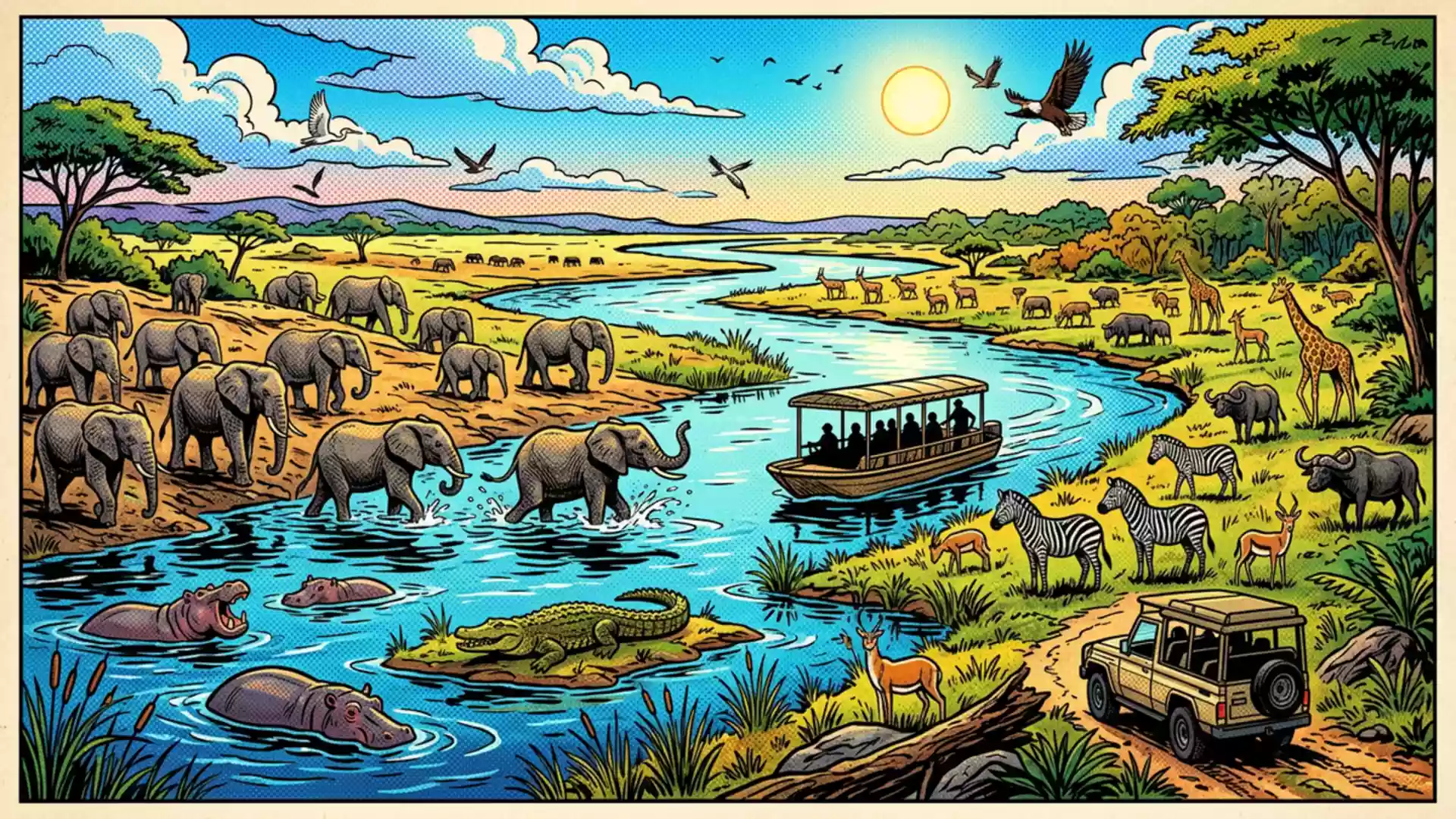
Chobe National Park’s river and wildlife around Kasane
Published on 08/20/2026 at 06:43 | Editorial responsibility: Rafael Müller, Editor-in-Chief AD HOC NEWS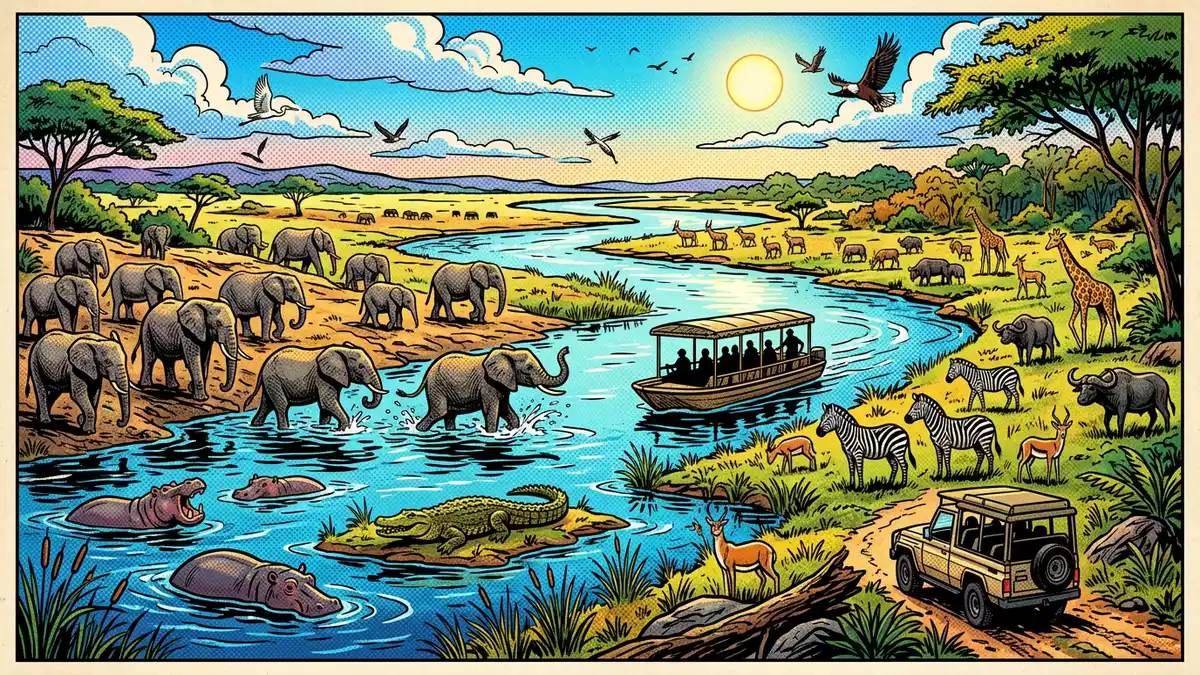
Chobe National Park in northern Botswana is anchored by the broad sweep of the Chobe River, a corridor of water that shapes a dense belt of woodland and floodplain near Kasane. Established as a national park in 1968, it has become one of southern Africa’s best known wildlife areas, with elephants, buffalo and predators moving between open grasslands, marshes and forest along the river’s edge.Established in 1968
River, boundaries and distinct landscapes
Chobe National Park lies in the far north-east of Botswana, close to the border junction with Namibia, Zambia and Zimbabwe, and its northern boundary follows the line of the Chobe River past Kasane.The preserve borders Namibia and touches Zimbabwe and Zambia The protected area covers around 11,700 sq km (about 4,500 sq miles), taking in riverfront, pans, marsh and dry woodland in a single park.
The Chobe Riverfront near Kasane is the most accessible part of the park and forms a ribbon of floodplain and thicket along the water. Inland, the Ngwezumba pans stretch across seasonal depressions; further south, the Savuti area is marked by open grassland and the channel that has alternated between flowing and dry phases; to the west, Linyanti is a mosaic of swamp, woodland and lagoon.Four distinct geographical areas Together, these regions give Chobe a varied terrain in which wildlife can move between water, shade and open savanna.
Elephants, big game and birdlife along the Chobe River
Chobe National Park is widely recognised for its large elephant population, which has been estimated in the hundreds of thousands and is among the biggest concentrations of elephants in Africa.One of the largest concentrations of elephants in Africa Herds of buffalo are also a characteristic sight, especially along the riverbank and in the Savuti area, where open grassland offers grazing.
Alongside these two species, Chobe supports plains zebra, giraffe, kudu, impala, warthog and a range of other antelopes that use the woodland and floodplain. Lions and spotted hyenas are present as dominant predators, and leopards and cheetahs hunt in more wooded or open sections of the park.The big predators dominating Chobe Wild dogs roam widely, and smaller carnivores such as serval and African wild cat occupy the margins of reedbeds and thickets.
The Chobe River itself adds a further layer of wildlife. Hippos rest in channels and lagoons; Nile crocodiles occupy sandbanks and quiet backwaters. The mix of open water, reed fringe and woodland supports many bird species, including fish eagles, kingfishers, herons and a wide range of other water-associated birds. Surveys have recorded several hundred species in the park, underlining the diversity of habitats packed into its area.Over 450 species of birds
Origins, protection and Kasane as gateway
Chobe’s protected status traces back to an era when the area was first set aside as a game reserve around 1960, before being formally declared a national park later in that decade.Chobe Game Reserve was officially established in 1960 It is regarded as Botswana’s first national park and remains one of its largest, providing a continuous block of habitat from the river to the interior woodlands.Botswana’s first national park
The town of Kasane stands just downstream of the main riverfront section and functions as the northern entrance to Chobe National Park.Kasane serves as the northern entrance An airport on the edge of the town connects the area with other parts of Botswana and neighbouring countries, and road routes from the nearby border posts link Kasane with Victoria Falls and Livingstone. From Kasane, vehicles and boats depart towards the riverbank and tracks that follow the water westwards into the park’s riverfront section.
Visiting Chobe National Park: what travellers from Western Europe should know
- Chobe National Park stretches south from the Chobe River in north-eastern Botswana, with Kasane on its northern edge; access commonly begins in Kasane by vehicle or boat along the riverfront tracks.
- The riverbank in the Chobe Riverfront area consists of floodplain and low rises of sand or soil, and many viewing points are reached along unpaved tracks that can be sandy or rutted.
- Further inside the park, areas such as Savuti and Linyanti involve travel on longer sections of earth or sand tracks, and some routes pass through open grassland with limited shade.
- The official language is English and the currency is the Botswana pula.
- Entry requirements depend on your nationality; UK travellers can check the FCDO travel advice at gov.uk/foreign-travel-advice, Irish travellers the Department of Foreign Affairs at ireland.ie.
Searching for Chobe National Park on social platforms
These links open searches for Chobe National Park on each platform.
Frequently asked questions about Chobe National Park
Where is Chobe National Park located?
Chobe National Park is in north-eastern Botswana, with its northern boundary along the Chobe River near the town of Kasane.
What can visitors expect on a visit to Chobe National Park?
Visitors encounter riverside floodplains, grassland and woodland where elephants, buffalo, antelopes, predators and diverse birdlife share a large protected landscape.
What makes Chobe National Park distinctive among African parks?
Chobe combines a major river, several contrasting regions such as Savuti and Linyanti, and one of Africa’s largest elephant populations within a single national park.