Colosseo’s stone ring in Rom
Published on 08/11/2026 at 15:09 | Editorial responsibility: Rafael Müller, Editor-in-Chief AD HOC NEWS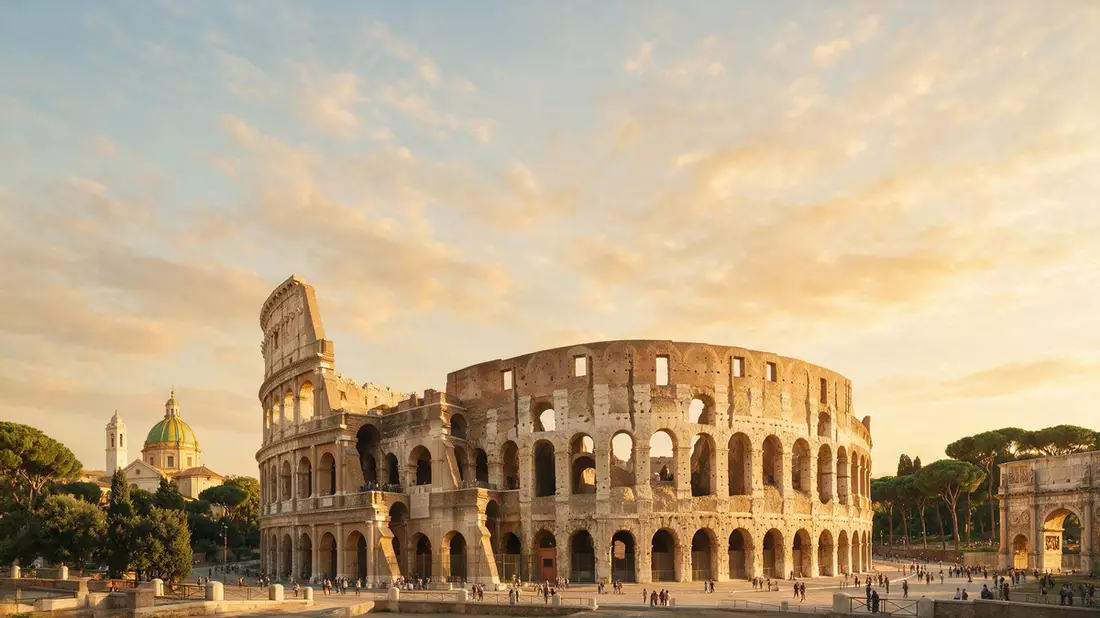
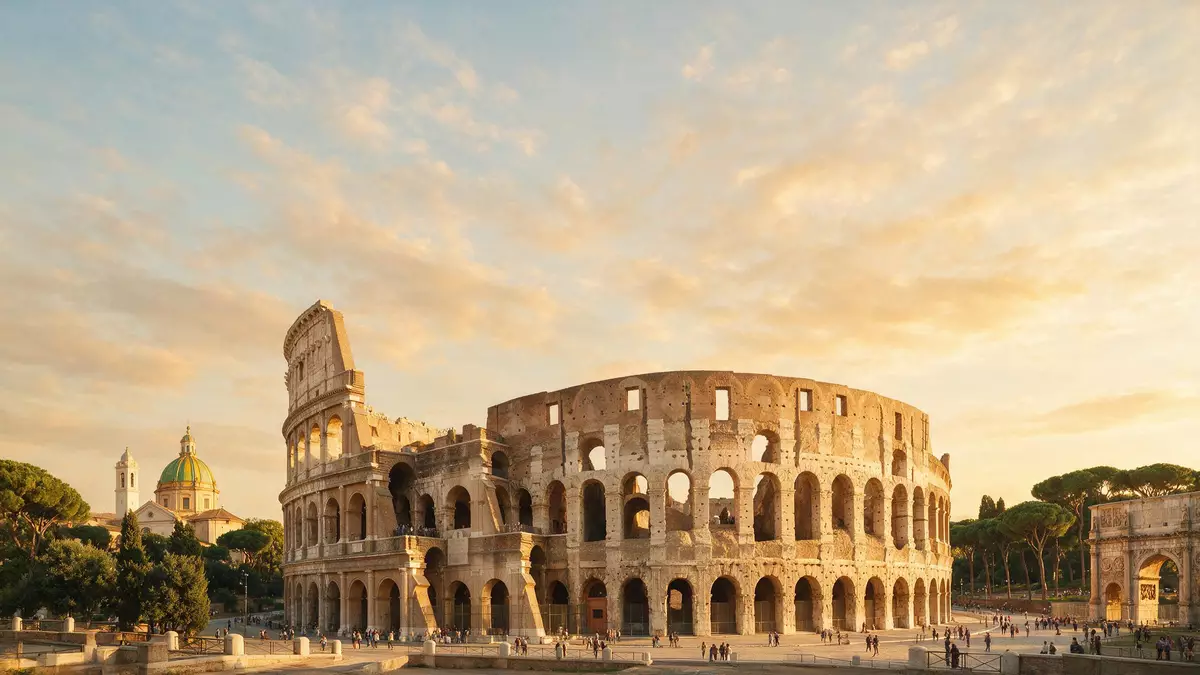
Colosseo in Rom is the Roman Colosseum, the amphitheatre built under Vespasian and completed under Titus in the first century AD. Its great stone ring and exposed interior make it one of the clearest surviving landmarks of imperial Rome.
The Flavian amphitheatre in stone and concrete
The structure rises in tiers of travertine, brick, and Roman concrete, with an outer shell that once carried four storeys. Inside, the arena floor no longer survives, and the substructure beneath it is visible in parts, with walls, passages, and service spaces laid bare.
Colosseo belongs to the Flavian period, when the emperors Vespasian, Titus, and Domitian reshaped the centre of Rome. The building’s long ellipse and repeated arches make its outline easy to read from close by or from the surrounding streets.
A stage for imperial Rome
The amphitheatre was used for public spectacles in ancient Rome, including gladiatorial contests and other mass entertainments. Its seating once formed a rigid social order, with places assigned by status and rank.
Even in its ruined state, the building preserves that arrangement in outline. The arcades, the surviving walls, and the exposed inner framework give a direct sense of scale without needing restoration to complete the picture.
Damage, reuse, and survival
Earthquakes and stone robbing altered the monument over centuries. Parts of the structure were reused in later Roman building campaigns, and the surviving shell became one of the most recognisable fragments of ancient architecture in Europe.
The Colosseo’s present appearance is unfinished and monumental at once. That combination, with its broken outer ring and open interior, is part of what makes the site so compelling to walk around and through.
Visiting Colosseo: what travellers from Western Europe should know
- The site is in central Rom and is reached by metro, bus, taxi, and on foot from nearby historic areas.
- Admission and opening hours are set by the site's operator and change with the season; the official website is the only binding source.
- Late afternoon light suits the exterior, while mornings can feel calmer around the surrounding streets.
- The ground includes steps, uneven stone, and long stretches of walking, so sturdy footwear helps.
- Basic services in the area are oriented towards visitors, and card payment is common in Rom.
- Entry requirements depend on your nationality. UK travellers should check the FCDO travel advice at gov.uk/foreign-travel-advice; Irish travellers the Department of Foreign Affairs at ireland.ie; EU and EEA citizens their own national foreign ministry.
Searching for Colosseo on social platforms
These links open searches for Colosseo on each platform.
Frequently asked questions about Colosseo
Where is Colosseo?
Colosseo stands in central Rom, beside the archaeological core of ancient Rome. It is one of the easiest major landmarks to locate in the city.
What should visitors expect?
Expect a large ruined amphitheatre with stone steps, arches, and exposed inner spaces. The visit involves walking on uneven surfaces and around a busy urban setting.
What makes Colosseo distinctive?
Its elliptical form, surviving outer shell, and visible interior framework make it immediately legible as a Roman amphitheatre. The building’s scale and state of survival set it apart within the ancient cityscape of Rom.