Copan’s stone courts and carved stelae
Published on 08/11/2026 at 15:18 | Editorial responsibility: Rafael Müller, Editor-in-Chief AD HOC NEWS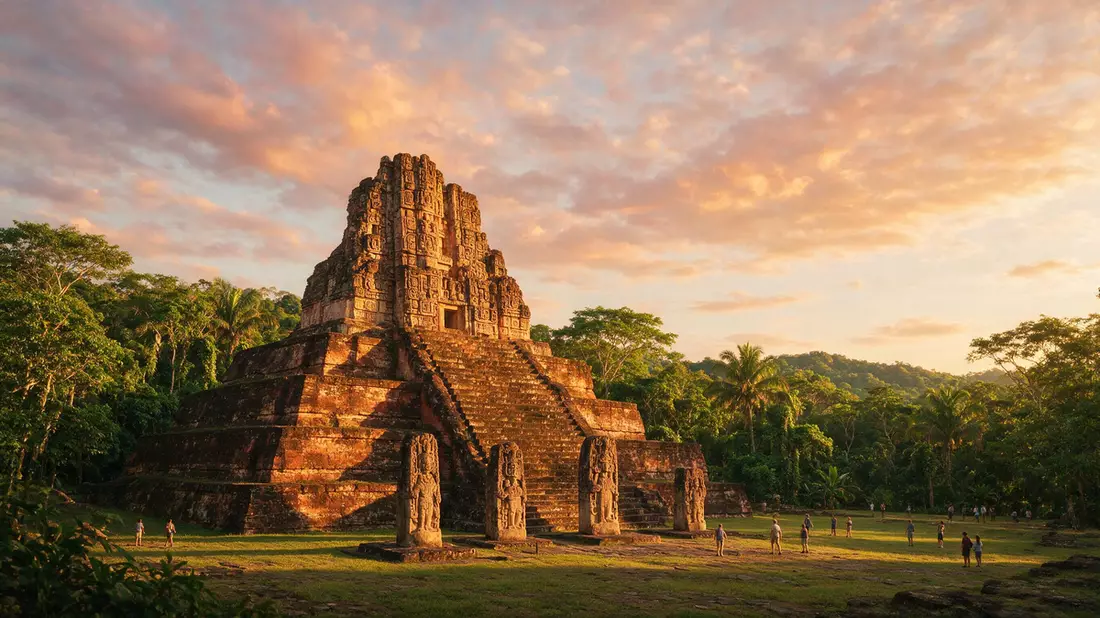
Copan in Copan Ruinas, Honduras, is a Maya archaeological site known for stone courtyards, carved stelae and long hieroglyphic inscriptions. The core of the place belongs to the Classic Maya world, with major construction associated with the 7th to 9th centuries CE.
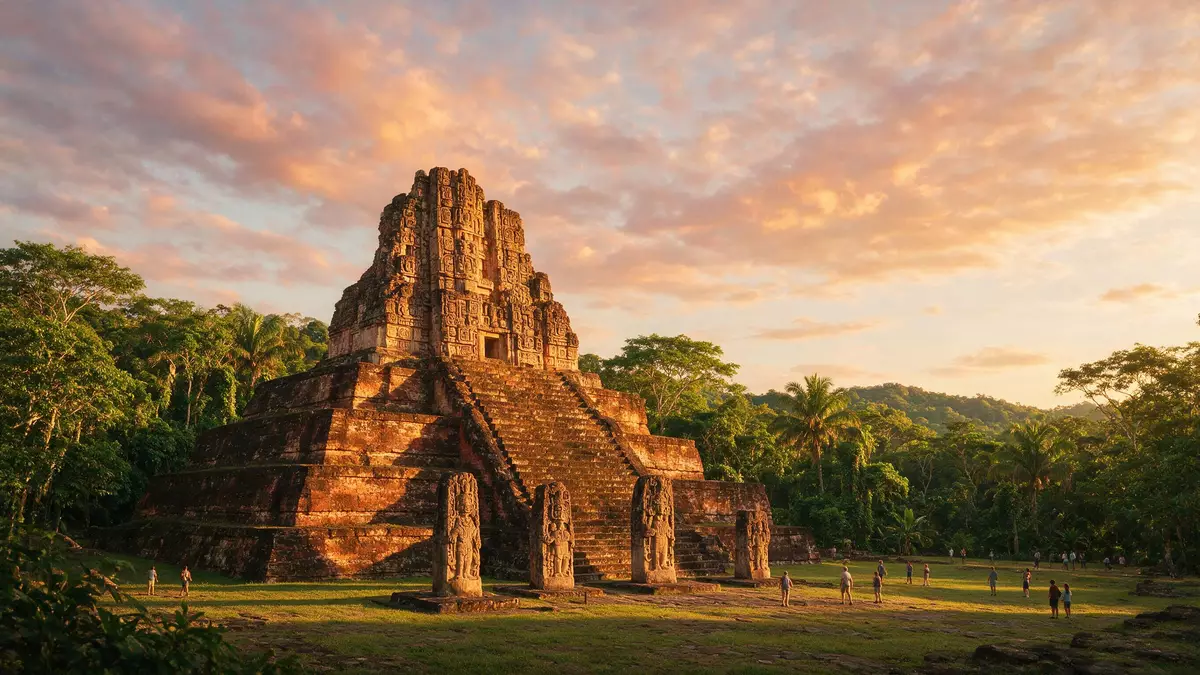
Stone courts and carved monuments at Copan
The site is organised around ceremonial spaces edged by steps, terraces and masonry platforms. Carved stelae stand among them, with figures and text cut into stone, while the Hieroglyphic Stairway remains one of Copan’s defining features.
Copan is also strongly associated with the dynastic history of the Maya city state. Kings such as K’inich Yax K’uk’ Mo’ and later rulers left monuments that still define the site’s public identity and visual rhythm.
The Classic Maya city and its inscriptions
Copan belonged to the Classic Maya period, when elite courts, temples and sculptural programmes shaped political life across much of the lowland world. Its inscriptions and monuments make the site an important place for reading Maya names, titles and dates in stone.
The sculpture at Copan is notable for its density and finish. Stelae, altars and architectural carving give the site a layered appearance, with writing and imagery sharing the same limestone surfaces.
What survives in the archaeological park
Visitors encounter broad open plazas, stepped structures and freestanding monuments rather than a single enclosed building. The Acropolis rises over the main ceremonial core, and the ballcourt adds another recognisable Maya form to the layout.
The landscape around Copan Ruinas frames the ruins with river valley terrain and green slopes. That setting makes the masonry feel anchored to the ground, even where the carving is elaborate and formal.
Visiting Copan: what travellers from Western Europe should know
- The site is reached from Copan Ruinas by road.
- Admission arrangements and opening hours are set by the site's operator and change with the season; the official website is the only binding source.
- Dry months are often the most comfortable for outdoor walking, while the midday sun can be strong.
- Expect uneven stone, steps and a substantial amount of walking between the main parts of the park.
- Spanish is the main language in the area, and cash may be useful for small purchases.
- Entry requirements depend on your nationality. UK travellers should check the FCDO travel advice at gov.uk/foreign-travel-advice; Irish travellers the Department of Foreign Affairs at ireland.ie; EU and EEA citizens their own national foreign ministry.
Searching for Copan on social platforms
These links open searches for Copan on each platform.
Frequently asked questions about Copan
Where is Copan?
Copan is in western Honduras, near the town of Copan Ruinas. It sits in a river valley close to the Guatemalan border.
What does a visit involve?
A visit means walking through an archaeological park with plazas, monuments and stepped structures. The terrain is uneven, and much of the site is outdoors.
What makes Copan distinctive?
Its carved stone, dense inscriptions and dynastic monuments make it one of the clearest Maya city sites for reading elite history in place. The Hieroglyphic Stairway is especially closely associated with that character.