
Corn Islands where coral reefs meet Creole culture
Published on 09/24/2026 at 11:31 | Editorial responsibility: Rafael Müller, Editor-in-Chief AD HOC NEWS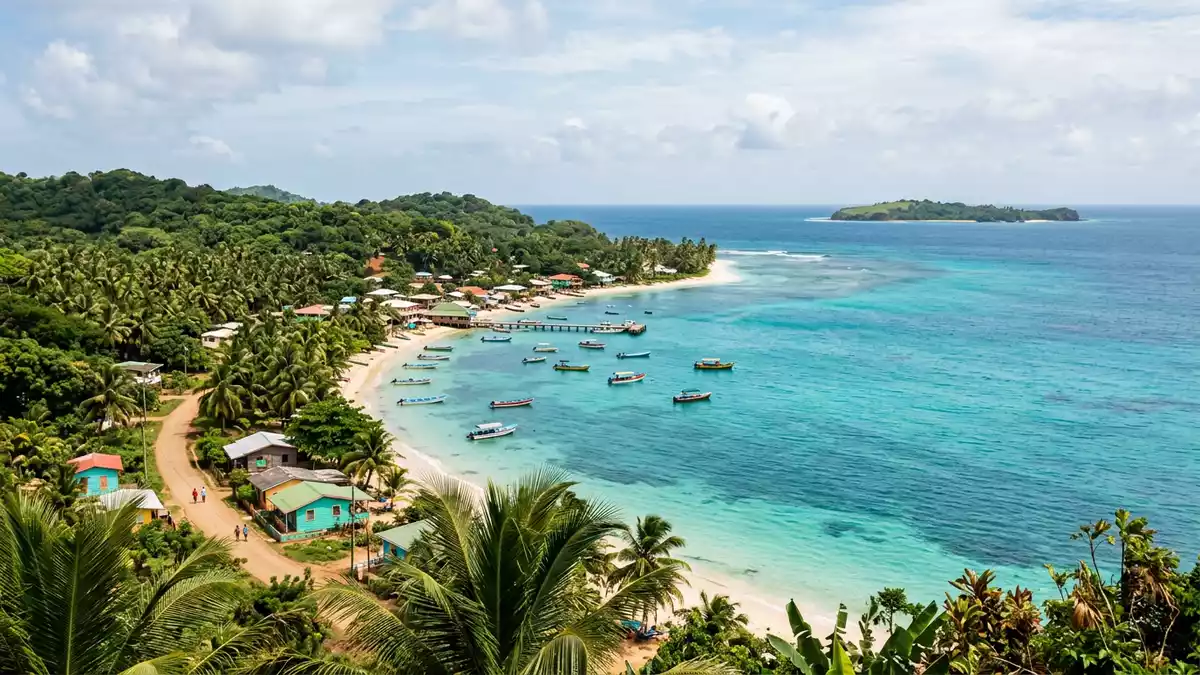
Corn Islands are two Caribbean islands belonging to Nicaragua, about 70 kilometres east of the mainland. Big Corn Island and Little Corn Island combine low tropical hills, beaches, coral reefs and an Afro-Caribbean cultural identity.
Corn Islands spread across two Caribbean islands
Big Corn Island covers approximately 10 square kilometres, while Little Corn Island covers approximately 3 square kilometres. The larger island contains the municipality’s principal settlement areas, including Brig Bay, Quinn Hill, South End, Sally Peachie and North End.
Little Corn Island lies north-east of Big Corn Island and has no motor vehicles. Its small scale makes walking the ordinary way to move between beaches, settlements and coastal viewpoints. Big Corn Island has roads, cars, motorbikes and bicycles. The islands’ physical contrast is therefore visible in both their landscapes and their daily movement.
A British and Afro-Caribbean historical inheritance
The islands were part of the British protectorate of the Kingdom of Mosquitia from 1740 to 1860. British settlers and enslaved Africans reached the islands during the eighteenth century, creating the historical setting for the Creole culture associated with Corn Islands.
In 1894, the islands were incorporated into Nicaragua under the Harrison–Altamirano Treaty. The municipality was established in 1940. English-based Creole and Spanish are widely spoken, while music, religious practice, seafood and coconut-based dishes remain visible parts of island culture.
Fishing shaped the economy through much of the twentieth century. Coconut production was followed by commercial fishing, lobster fishing and shrimp fishing. The marine environment remains closely connected with island life, particularly through fishing, diving and snorkelling.
Coral reefs, beaches and marine life
Coral reefs and seagrass beds surround the islands, forming part of the wider Caribbean marine ecosystem. The coastal waters contain habitats associated with lobster, sea turtles, rays and reef fish.
Long Bay is a named coastal area on Big Corn Island, while Sally Peachie is another recognised beach district. Beaches, shallow coastal water and reef areas shape the island scenery. The sea is not a distant backdrop here; it borders settlements, roads, fishing grounds and the routes between both islands.
Big Corn Island rises gently towards Mount Pleasant, the highest point in the municipality. Its terrain remains low compared with mainland mountain regions, but the island’s hills provide views across the Caribbean and towards the neighbouring island.
At the coast, the Corn Islands Lighthouse is a concrete-and-metal structure with a 15 m (49 ft) tower. Its light marks the island waters, adding a working maritime feature to a landscape otherwise defined by beaches, palms, reefs and small settlements.
Visiting Corn Islands: what travellers from Western Europe should know
- Corn Islands lie in Nicaragua’s South Caribbean Coast Autonomous Region, about 70 kilometres east of the Caribbean mainland. Flights from Managua or Bluefields reach Corn Island Airport on Big Corn Island.
- Little Corn Island is reached by boat from Big Corn Island. The smaller island has no motor vehicles, so movement there takes place on foot.
- Big Corn Island has a paved road running around the island’s main coastal areas. Cars, motorbikes and bicycles are used on the larger island.
- The official languages are Spanish and English-based Creole, while the currency is the Nicaraguan córdoba.
- Entry requirements depend on your nationality; UK travellers can check the FCDO travel advice at gov.uk/foreign-travel-advice, Irish travellers the Department of Foreign Affairs at ireland.ie.
Searching for Corn Islands on social platforms
These links open searches for Corn Islands on each platform.Frequently asked questions about Corn Islands
Where are Corn Islands?
Corn Islands lie in the Caribbean Sea, about 70 kilometres east of Nicaragua’s mainland. The municipality consists of Big Corn Island and Little Corn Island.
What can visitors expect on the islands?
Visitors encounter beaches, low hills, coral reefs, fishing communities, roads on Big Corn Island and walking routes on Little Corn Island. Diving, snorkelling and seafood form part of the island experience.
What makes Corn Islands distinctive?
The islands combine Caribbean marine habitats with an English-based Creole culture shaped by British and Afro-Caribbean history. Their contrasting transport patterns also make Big Corn Island and Little Corn Island visibly different places.


