
Cueva de las Manos and the painted canyon of Patagonia
Published on 08/16/2026 at 14:40 | Editorial responsibility: Rafael Müller, Editor-in-Chief AD HOC NEWS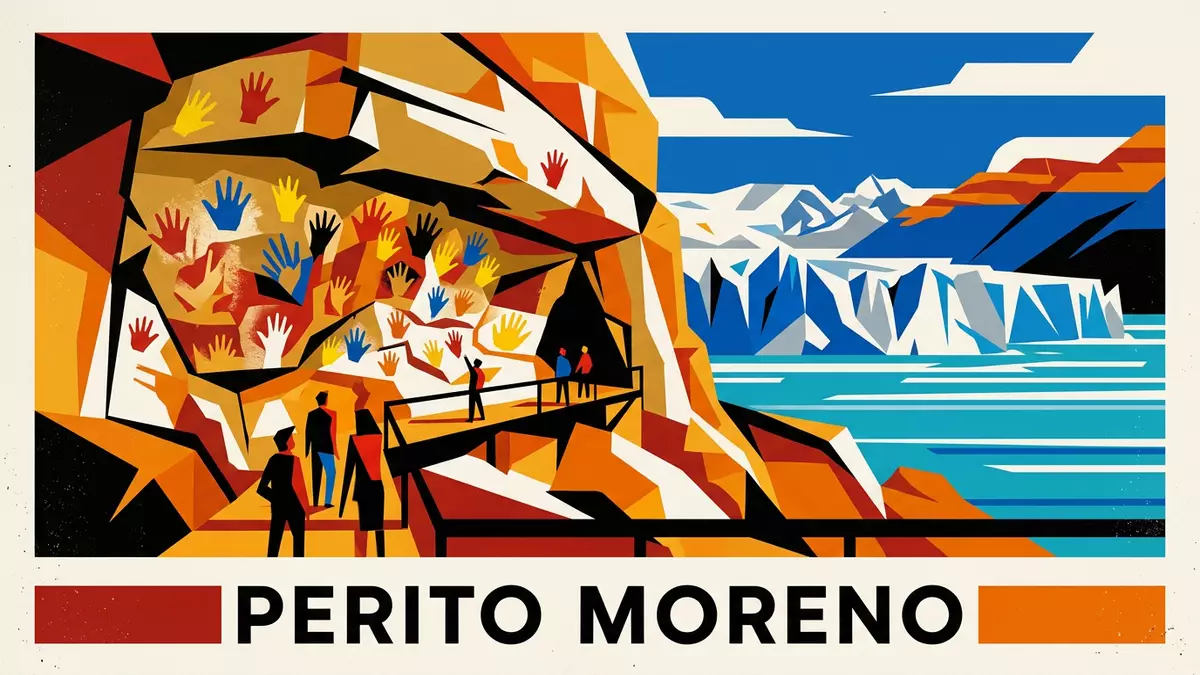
Cueva de las Manos near Perito Moreno in southern Argentina is a remote Patagonian canyon where thousands of painted hands and hunting scenes cover the cliff, tracing human presence across many millennia.
A canyon wall turned into a painted archive
The site lies in the province of Santa Cruz, in the canyon of the Pinturas River between the towns of Perito Moreno and Bajo Caracoles in north-west Patagonia.The cave is located in the province of Santa Cruz Here a deep gorge cuts through the basalt plateau, exposing rock faces that were used as canvases by hunter-gatherer communities.
Cueva de las Manos takes its name from the large panels of stencilled human hands on the rock, which appear in dense clusters and overlapping layers.The site contains stencilled outlines of human hands Black, white, red, yellow and other colours are sprayed around hands pressed to the stone, leaving negative silhouettes that form collages stretching along the canyon wall.More than 2,000 stencilled handprints are recorded
Layers of images over thousands of years
Archaeological work places the earliest phases of painting at the beginning of the Holocene, with some images dating back more than 9,000 years.The rock art was executed between about 9,000 and 1,300 years ago Later generations continued to add figures and motifs, so that the rock shelters preserve a long sequence of visual traditions.
The hand stencils are accompanied by animals such as guanacos, rheas and feline figures, as well as human silhouettes and hunting scenes in which groups of people appear driving herds across the plateau.Depictions include animals and hunting scenes Geometric shapes, zigzag lines, dots and sun-like discs are scattered between the figures, creating bands of imagery that extend along rock overhangs and into a small cave.
World Heritage rock art and Patagonian landscape
Cueva de las Manos, Río Pinturas, is recognised by UNESCO as a World Heritage Site for the quality and age of its parietal art and the surrounding canyon landscape.The site was inscribed on the World Heritage List in 1999 The rock paintings are considered among the earliest and best preserved examples of prehistoric art in South America.They were made by local hunter-gatherers between 9,000 and 1,300 years ago
The setting is a rugged Patagonian gorge, with the Pinturas River winding far below the painted cliffs and dry steppe stretching across the plateau above.The site is described as part of both a provincial and a national park Rock shelters, overhangs and a small cave form a chain of painted surfaces along the canyon, creating a continuous band of imagery that visitors follow on foot.
Visiting Cueva de las Manos: what travellers from Western Europe should know
- Cueva de las Manos lies in Argentina’s Santa Cruz Province, in the Pinturas River canyon south of the town of Perito Moreno, reached on roads that cross the Patagonian steppe.
- The approach to the painted cliffs involves walking along paths above a river gorge and spending time on uneven rock surfaces, so sturdy footwear is important.
- The official language is Spanish and the currency is the Argentine peso.
- Entry requirements depend on your nationality; UK travellers can check the FCDO travel advice at gov.uk/foreign-travel-advice, Irish travellers the Department of Foreign Affairs at ireland.ie.
Searching for Cueva de las Manos on social platforms
These links open searches for Cueva de las Manos on each platform.
Frequently asked questions about Cueva de las Manos
Where is Cueva de las Manos located?
It is in the Pinturas River canyon in Santa Cruz Province, Patagonia, between Perito Moreno and Bajo Caracoles in southern Argentina.
What can visitors expect to see at the site?
Visitors follow paths along the canyon wall past panels of stencilled hands, animal figures, hunting scenes and geometric motifs on rock shelters and a small cave.
What makes Cueva de las Manos distinctive among rock art sites?
The density of hand stencils, the long time span of painting from the early Holocene and the setting in a deep Patagonian gorge together give the site its character.


