
Dai Noi Hue, the walled imperial heart of Hue
Published on 08/22/2026 at 09:18 | Editorial responsibility: Rafael Müller, Editor-in-Chief AD HOC NEWS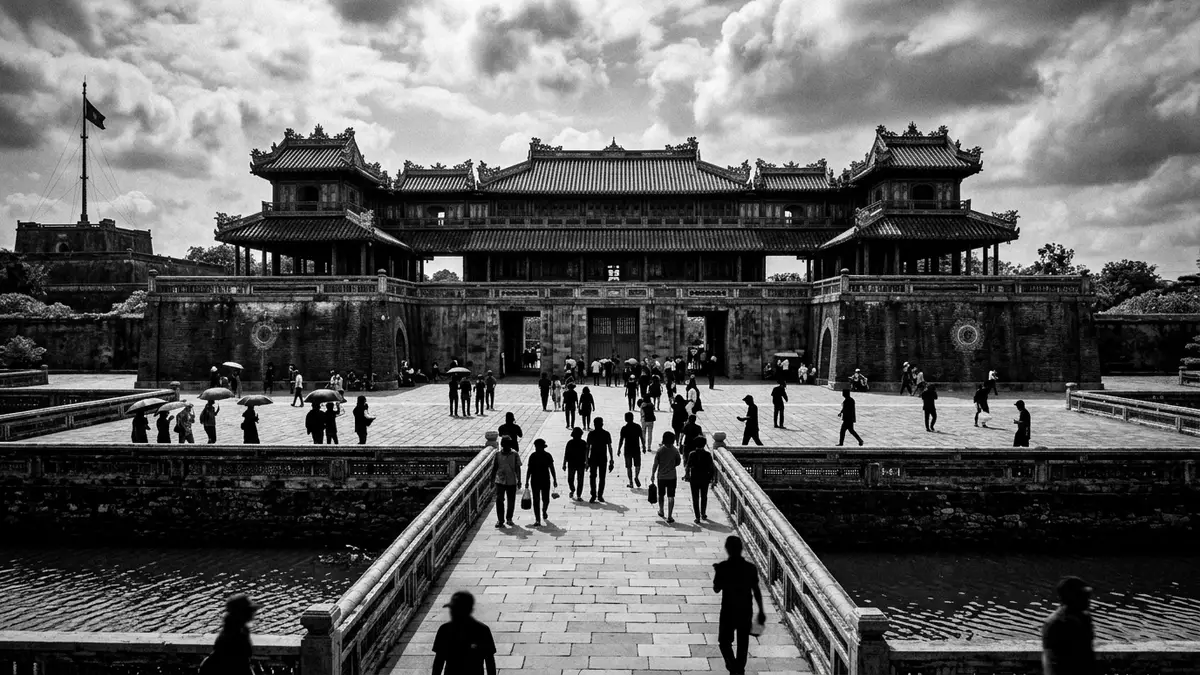
Dai Noi Hue is the imperial enclosure at the core of Hue’s walled citadel, a Chinese-style royal city on the north bank of the Perfume River in central Vietnam. The complex formed the ceremonial and political heart of the Nguyen dynasty, whose emperors ruled Vietnam from the nineteenth century into the early twentieth century.
A royal city within walls and moats
The most striking feature of Dai Noi Hue is its layered defensive layout, which still reads as a self-contained inner city set apart from the streets of modern Hue. The royal enclosure sits inside the larger walled city known as the Kinh Thanh, with moats and ramparts enclosing palace precincts, temples and administrative compounds.imperial citadel Within this system Dai Noi marks the second defensive ring, protecting the most important palaces and the inner Forbidden City reserved for the emperor and his household.Hoang Thanh, also known as Dai Noi
Construction of the imperial city began in 1804 under Emperor Gia Long, the founder of the Nguyen dynasty, and continued under his successors as new halls and gates were added.construction began in 1804 under Emperor Gia Long The plan followed principles of East Asian palace architecture, with axial symmetry along a central north–south line and key buildings aligned with that axis. Brick and stone ramparts define the outer geometry, while timber halls with tiled roofs and carved decoration form the inner architectural focus.
Nguyen emperors and a UNESCO-listed monument
Dai Noi Hue is closely tied to the history of the Nguyen dynasty, the last royal house of Vietnam. From this imperial city the court administered the country and staged major ceremonies, embedding Confucian ritual and dynastic symbolism in its layout. Ancestral temples, such as those within the imperial enclosure, underscore the role of lineage in Nguyen political culture.royal enclosure within the walled city of Hue
The Hue Imperial City, including Dai Noi, forms part of the Complex of Hue Monuments, which has been inscribed on the UNESCO World Heritage List since 1993.Complex of Hue Monuments, UNESCO World Heritage Site This designation reflects both the architectural value of the citadel and its significance as the seat of the Nguyen emperors. The ensemble brings together defensive works, palaces, gardens and ritual spaces, preserving a rare example of a planned imperial capital in Southeast Asia.
Layout, architecture and atmosphere
Dai Noi Hue combines large-scale fortification with finely detailed wooden architecture. Massive earth and brick ramparts trace a near-rectangular outline around the royal precinct, bordered by moats that draw water from the Perfume River system.Chinese-style Vietnamese imperial citadel Within this perimeter lie palace courts, audience halls, side pavilions and garden areas, many arranged around paved courtyards and ornamental ponds. Roof ridges carry ceramic ornament and stylised motifs, while timber pillars and beams support broad overhanging eaves.
The imperial city also incorporates the Forbidden Purple City, a smaller inner compound where the emperor’s private residence stood.Hue Imperial City and Forbidden Purple City Passing through successive gates leads from the outer squares towards these more secluded spaces, with each threshold marked by changes in scale and ornament. The layered sequence of walls, courtyards and ceremonial buildings still conveys the separation between public state ritual and the more private realms of the Nguyen court.
Visiting Dai Noi Hue: what travellers from Western Europe should know
- Dai Noi Hue lies in Hue in central Vietnam, on the north bank of the Perfume River opposite the modern commercial districts. The main entrances face the broad moat and ramparts of the imperial citadel.
- Within the enclosure the terrain is largely level but movement involves crossing wide courtyards, stone steps and long axial routes between gates and halls, so visits include extended walking in exposed spaces.
- The imperial city sits close to the historic core of Hue, with the Perfume River forming a clear landmark between the citadel to the north and the later urban districts to the south.
- The official language is Vietnamese and the currency is the Vietnamese dong.
- Entry requirements depend on your nationality; UK travellers can check the FCDO travel advice at gov.uk/foreign-travel-advice, Irish travellers the Department of Foreign Affairs at ireland.ie.
Searching for Dai Noi Hue on social platforms
These links open searches for Dai Noi Hue on each platform.
Frequently asked questions about Dai Noi Hue
Where is Dai Noi Hue located?
Dai Noi Hue stands within the imperial citadel of Hue in central Vietnam, on the north bank of the Perfume River opposite the city’s later commercial districts.
What can visitors expect inside the imperial enclosure?
Visitors encounter ramparts, moats, gates, palace courts and garden areas, with timber halls, tiled roofs and formal courtyards illustrating Nguyen dynasty architecture and ceremonial space.
What makes Dai Noi Hue distinctive among historic sites in Vietnam?
Dai Noi Hue is distinctive as the royal enclosure of the Nguyen emperors, combining a planned palace city, layered defences and the Forbidden Purple City within a UNESCO-listed monument complex.


