
Dazu Shike: stone cliffs filled with medieval China
Published on 09/22/2026 at 09:16 | Editorial responsibility: Rafael Müller, Editor-in-Chief AD HOC NEWS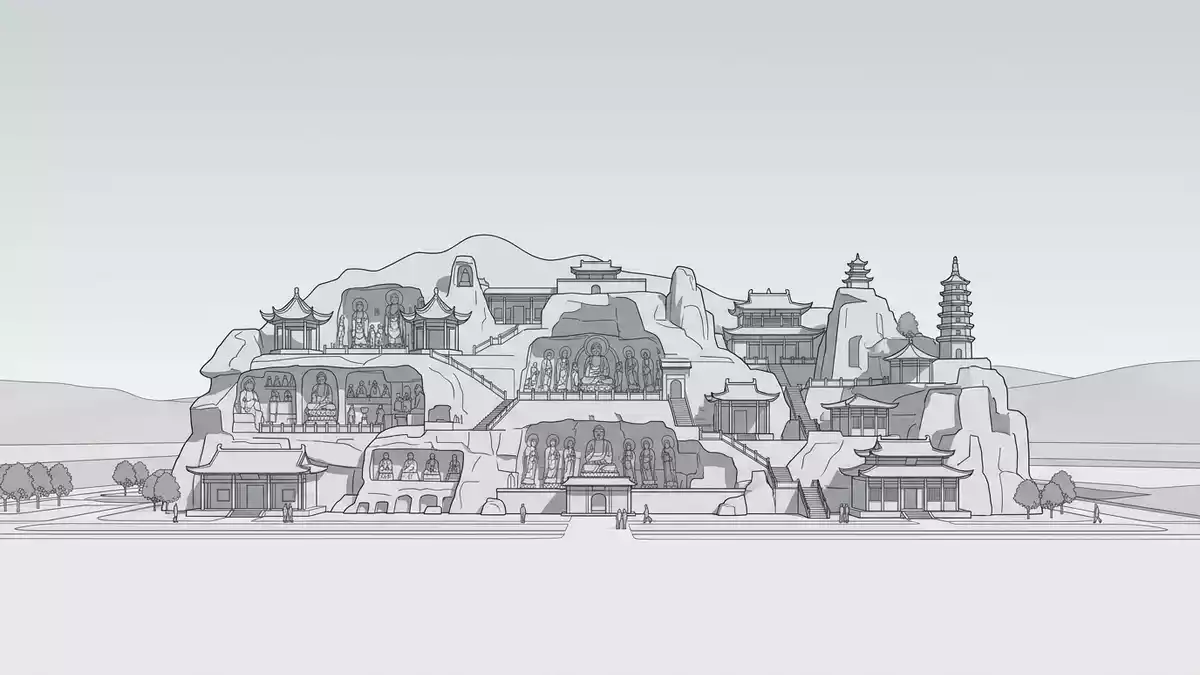
Dazu Shike is a landscape of cliff carvings near Chongqing, where stone surfaces carry Buddhist, Taoist and Confucian images. The sculptures date mainly from the ninth to the thirteenth century, turning steep hillsides into a vast record of medieval Chinese belief and daily life.
Dazu Shike and the long life of cliff carving
The earliest carvings in Dazu date from around AD 650, during the Tang dynasty. The main artistic period began in the late ninth century and continued through the Five Dynasties and the Song dynasty.
Work at Beishan began in 892 under Wei Junjing, a prefect of Changzhou. Carving resumed in 1078 during the Northern Song and continued at several locations, including Beishan, Nanshan and Shimenshan. Between 1174 and 1252, the monk Zhao Zhifeng promoted Tantric Buddhism at Baodingshan.
The ensemble is a group of five principal clusters within a wider protected property. Together, the sites contain thousands of statues, inscriptions and epigraphs. Their subjects range from deities and sacred teachings to animals, occupations, clothing and scenes of ordinary life.
Baodingshan, Beishan and the language of stone
Baodingshan occupies a U-shaped gorge near the Holy Longevity Monastery. Its cliff face extends for about 500 metres and contains long sequences of carved figures. Among its subjects are the Buddhist Wheel of Life, the Thousand-Hand Avalokitesvara, the Nine Dragons Bathing and a reclining Buddha.
The Baodingshan gorge carvings belong chiefly to the late twelfth and mid-thirteenth centuries. Their scenes combine religious imagery with figures from pastoral and domestic life, placing doctrine beside recognisable human activity.
Beishan contains a cliff face about 300 metres long and between 7 and 10 metres high. More than 10,000 carvings occupy its niches, with images linked to Tantric Buddhism and Taoism. The figures include richly dressed bodhisattvas, guardians and worshippers.
Nanshan extends across 86 metres and focuses mainly on Taoist subjects. Shizhuanshan extends across 130 metres and brings Buddhist, Taoist and Confucian images into a single arrangement. Shimenshan extends across 72 metres and combines Buddhist and Taoist themes.
Religious ideas beside everyday life
Dazu Shike does not present religious art as a separate world. Alongside Buddhas, bodhisattvas and immortals appear herdsmen, buffaloes, musicians, officials and other figures connected with society.
This range of subjects is central to the character of the site. The carvings preserve religious ideas, artistic conventions and glimpses of social life within the same stone environment. Inscriptions add names, dates and historical information to the visual scenes.
The UNESCO nomination record describes the carvings as a synthesis of Buddhism, Taoism and Confucianism. That combination appears across the five clusters, although individual sites have different emphases.
Dazu Shike entered the UNESCO World Heritage List in 1999. Its formal recognition rests on aesthetic quality, subject diversity and the evidence the carvings provide for religious and social life in China between the ninth and thirteenth centuries.
The stone itself remains part of the experience. Figures project from cliff faces, occupy recessed niches and gather in extended compositions. The arrangement makes the rock surface both sculpture and setting, with the surrounding hills forming the physical backdrop.
Visiting Dazu Shike: what travellers from Western Europe should know
- Dazu Shike lies in Dazu District of Chongqing Municipality, south-west of central Chongqing. Baodingshan and Beishan are the principal clusters associated with visits to the heritage property.
- Beishan occupies a wooded hillside, while Baodingshan lies beside a U-shaped gorge. The sites involve sloping ground, outdoor paths and stone steps.
- The official language is Mandarin Chinese and the currency is the Chinese yuan.
- Entry requirements depend on your nationality; UK travellers can check the FCDO travel advice at gov.uk/foreign-travel-advice, Irish travellers the Department of Foreign Affairs at ireland.ie.
Searching for Dazu Shike on social platforms
These links open searches for Dazu Shike on each platform.
Frequently asked questions about Dazu Shike
Where is Dazu Shike?
Dazu Shike is in Dazu District, within Chongqing Municipality in south-western China. The heritage property includes the principal clusters at Baodingshan, Beishan, Nanshan, Shizhuanshan and Shimenshan.
What can visitors expect to see?
Visitors encounter carved cliff faces, recessed niches, religious figures, inscriptions and scenes from social life. Baodingshan and Beishan contain especially extensive groups of sculpture.
What makes Dazu Shike distinctive?
The carvings combine Buddhism, Taoism and Confucianism with images of ordinary life. Their principal artistic phases span the ninth to the thirteenth century, and UNESCO recognised the property in 1999.


